3 Days in South Korea: A Day-by-Day Itinerary
A detailed 3-day itinerary for South Korea with daily activities, costs, neighborhoods, and transport tips.
By Hello Travel Team
This article contains affiliate links. If you book through them, Hello may earn a commission at no additional cost to you. Our editorial recommendations are independent. Learn more.
- 1
Historic Seoul: Palaces, Bukchon & Insadong
- MorningArrival or transfer into central Seoul (AREX or taxi)~$7
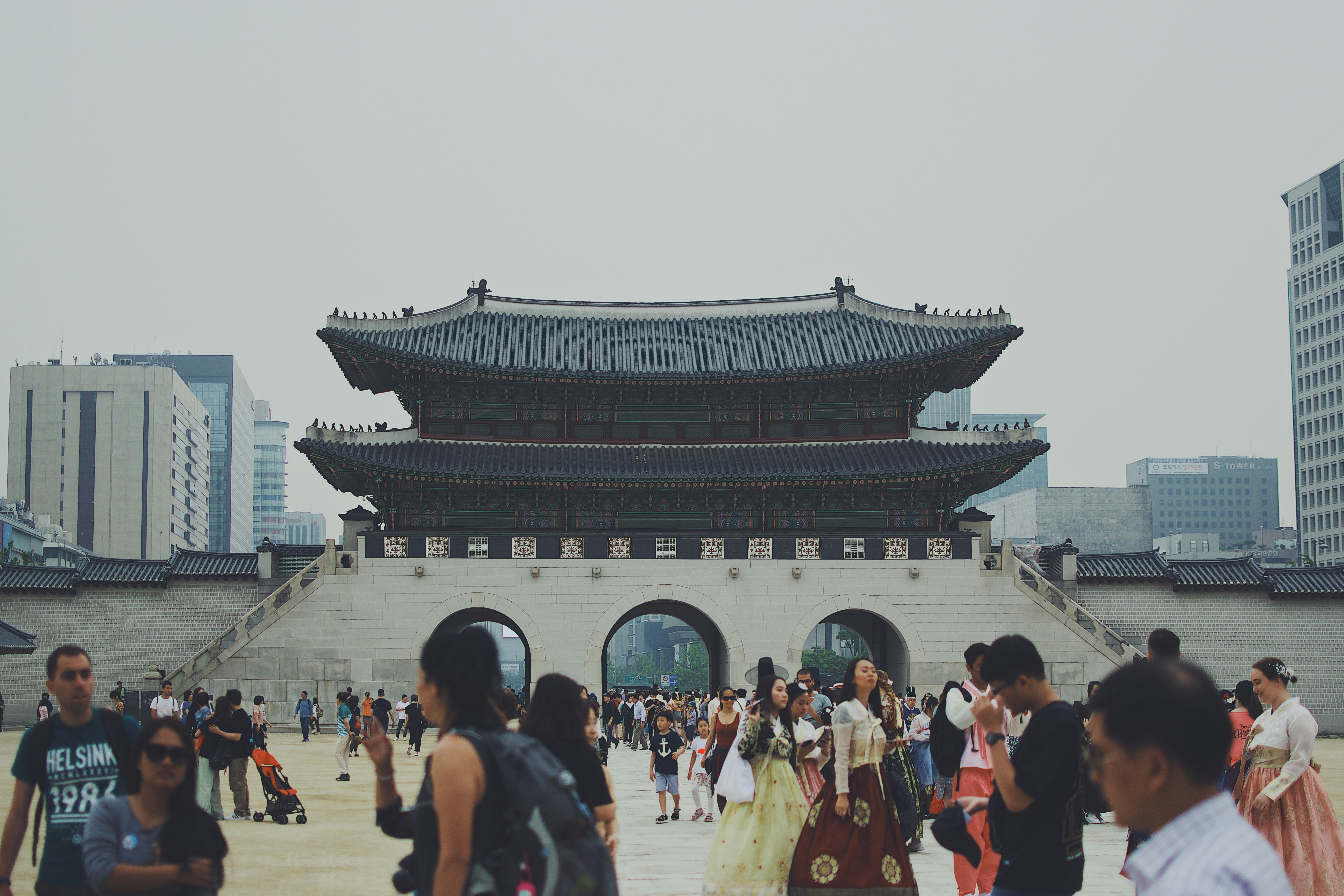
- Late MorningGyeongbokgung Palace visit (with guard ceremony)~$2.5
- AfternoonBukchon Hanok Village walk & hanbok rental (optional)~$15
- AfternoonTraditional lunch & tea in Insadong~$15
- EveningCheonggyecheon stream stroll & Jongno dinner (BBQ or pojangmacha)~$22
Jongno-gu (Gyeongbokgung, Bukchon, Insadong)Jung-gu (Cheonggyecheon fringe)Use T-Money card on subway and buses; expect ~$1–1.20 per ride. Walking covers most of the day between palace, Bukchon, and Insadong.
Budget$60Mid-range$140Luxury$260 - 2
Modern Seoul: Gangnam, COEX & Han River
- MorningSubway to Gangnam Station and brunch~$12
- Late MorningGangnam area walk & shopping
- AfternoonCOEX Mall, Starfield Library & optional COEX Aquarium~$28
- AfternoonVisit Bongeunsa Temple
- EveningSubway to Banpo Hangang Park & Han River picnic~$12
Gangnam-gu (Gangnam Station, COEX, Bongeunsa)Seocho-gu (Banpo Hangang Park)Rely on Line 2 and 9 subways for Gangnam and Han River; taxis back to hotel at night cost ~$8–15 depending on distance.
Budget$70Mid-range$150Luxury$300 - 3
Trendy Seoul: Hongdae, Myeongdong & Namsan Tower
- MorningExplore Hongdae cafes, street art & markets~$10
- AfternoonSubway to Myeongdong & K-beauty shopping~$20
- AfternoonStreet food snack tour in Myeongdong~$10
- EveningNamsan cable car & Seoul Tower observation deck~$20
- EveningFarewell Korean BBQ or hotpot dinner~$25
Mapo-gu (Hongdae)Jung-gu (Myeongdong, Namsan)Use Line 2 to reach Hongdae, then Line 2/4 to Myeongdong. Namsan cable car is a short uphill walk from Myeongdong Station; taxis are a good option after late BBQ.
Budget$70Mid-range$160Luxury$340
Trip Summary
Trip starter
Turn this 3-day itinerary into a Hello trip
Start with a prefilled trip for South Korea, then add dates, invite friends, track expenses, and pick an eSIM before you land.
Name and destination carried into the app.
Split costs and settle up during the trip.
Choose data for the destination before departure.
TL;DR: The Perfect 3-Day South Korea Itinerary in Seoul
A 3-day South Korea itinerary is easiest and most rewarding if you base yourself in Seoul, using the subway, T-Money transit card, and neighborhood-hopping days to experience palaces, markets, K‑culture, and nightlife. In 3 days you can see the city’s classic sights without feeling rushed.
Think of this South Korea 3 day itinerary as a Seoul city sampler: traditional palaces and hanok villages by day, buzzing food streets and neon districts at night, with everything stitched together by one of the world’s most efficient metro systems.
You’ll spend:
- Day 1: Historic Seoul – royal palaces, Bukchon Hanok Village, Insadong tea houses, and the Cheonggyecheon stream.
- Day 2: Modern Seoul – Gangnam, COEX, Lotte World Tower views, and a Han River sunset.
- Day 3: Trendy Seoul – Hongdae, Myeongdong, and Namsan Seoul Tower.
Average daily budgets for 2026 are roughly $60–80 (budget), $120–170 (mid-range), and $250+ (luxury) depending on hotel, food, and shopping choices, based on 2025 price data from the Korea Tourism Organization and hotel booking platforms.
Use the Hello app as your lightweight South Korea trip planner: buy and activate a Hello eSIM before you land, then use built‑in budget tracking and expense splitting to keep subway fares, BBQ dinners, and café runs organized as you go.
Day 1 – Palaces, Bukchon Hanok Village & Insadong: Classic Seoul in One Day
Day 1 in Seoul is best spent in Jongno-gu, where you can walk between royal palaces, hanok alleys, and traditional markets without wasting time in transit.
Morning: Gyeongbokgung Palace & Bukchon Hanok Village
Aim to reach Gyeongbokgung for the 10:00 or 14:00 royal guard changing ceremony; entry is about ₩3,000 (~$2.30) in 2026, according to the Cultural Heritage Administration. Renting a hanbok (traditional dress) nearby costs ₩15,000–₩25,000 ($11–19) for 2–4 hours, and hanbok wearers enter most palaces free. From here, walk 10–15 minutes uphill to Bukchon Hanok Village for views of tiled roofs against the modern skyline.
Respect that Bukchon is a residential neighborhood: keep voices low, avoid photographing inside homes, and stick to the marked walking routes the Seoul Metro Government publishes.
Afternoon: Lunch & Insadong
Have lunch near Bukchon or Insadong – a sit‑down bibimbap or Korean set menu typically runs ₩10,000–₩15,000 ($8–12) in 2026. Insadong’s main street is packed with tea houses, calligraphy shops, and casual dessert cafés. Try traditional tea and tteok (rice cakes) for ₩8,000–₩12,000 ($6–9).
Evening: Cheonggyecheon & Jongno
Walk or take the subway (₩1,400–₩1,550 per ride with T‑Money) to Cheonggyecheon Stream for a gentle evening stroll, then grab dinner at a barbecue or pojangmacha (street tent bar). A basic BBQ meal is ₩18,000–₩25,000 ($14–19) per person without alcohol.
Use the Hello app to log first‑day costs in won, while its automatic FX rates keep your home currency up to date.
Day 2 – Gangnam, COEX Mall & Han River: Modern South Korea Itinerary Highlights
Day 2 of your South Korea 3 day itinerary showcases modern Seoul: Gangnam’s glass towers, huge malls, and a sunset over the Han River.
Morning: Gangnam Streets & Brunch
Start around Gangnam Station (Line 2/Shinbundang). According to the Seoul Metropolitan Government, this area is one of the busiest shopping and nightlife hubs in the country. Cafe brunch here (coffee + toast/eggs) averages ₩10,000–₩16,000 ($8–12) in 2026. Wander Gangnam’s side streets for K‑beauty stores and office‑tower plazas.
Afternoon: COEX, Bongeunsa Temple & Starfield Library
Subway to Samseong Station (Line 2) for COEX Mall, Asia’s largest underground shopping mall per Korea Tourism Organization. Don’t miss Starfield Library’s 13‑meter bookshelves and the Instagram‑famous COEX Aquarium (entry around ₩32,000–₩34,000, about $25–26). Cross the road to tranquil Bongeunsa Temple, a calm contrast to the mall.
A food‑court lunch in COEX goes for ₩9,000–₩13,000 ($7–10). Many places accept credit cards and mobile wallets, but it’s still handy to have a bit of cash for small snacks.
Evening: Han River Park & Night Views
Head to Banpo Hangang Park via subway and a short walk for riverfront cycling, convenience‑store picnics, or the Banpo Bridge Rainbow Fountain (seasonal evenings). Convenience‑store picnic food is ₩7,000–₩12,000 ($5–9) per person.
Keep subway directions, café recommendations, and live navigation running easily with Hello eSIM for South Korea from the South Korea eSIM page, so you’re never hunting for Wi‑Fi between Gangnam and the river.
Day 3 – Hongdae, Myeongdong & Namsan: Trendy Streets and City Views
Use your final day to immerse in K‑culture neighborhoods: Hongdae’s youth energy, Myeongdong’s shopping, and night views from Namsan Seoul Tower.
Morning: Hongdae (Hongik University Area)
Hongdae is known for street performances, indie shops, and themed cafés. Arrive around 10:00–11:00 when shops start opening. A simple breakfast or early lunch (kimbap, noodles, or fried chicken) near Hongik University Station costs ₩7,000–₩11,000 ($5–8). On weekends, check out the Hongdae Free Market, a local art market typically running spring–fall.
Afternoon: Myeongdong Shopping & Street Food
Take Line 2 then Line 4 to Myeongdong Station. Once Korea’s most famous shopping street, Myeongdong is again filling with visitors; South Korea welcomed over 17 million international tourists in 2023, according to the Korea Tourism Organization, and a large share passes through this district. Budget ₩20,000–₩40,000 ($15–30) if you plan to buy skincare or souvenirs.
Myeongdong’s street food alleys come alive mid‑afternoon: try hotteok (sweet pancakes), tornado potatoes, and grilled skewers for ₩3,000–₩6,000 each ($2–5).
Evening: Namsan Seoul Tower & Farewell Dinner
Walk or take the Namsan cable car from Myeongdong; a round trip is typically ₩15,000–₩17,000 ($11–13) in 2026. Observation deck tickets add about ₩11,000–₩13,000 ($8–10). Time your visit for sunset to see the city lights flick on.
Finish with a farewell Korean BBQ or hotpot meal (₩20,000–₩30,000 / $15–23 per person). Use the Hello app to split the bill in won with friends while it automatically converts to each person’s home currency.
Budget Breakdown: Daily Costs for a 3-Day South Korea Travel Plan
Most travelers can comfortably enjoy this South Korea itinerary on $120–170 per day, though backpackers can go lower and luxury travelers much higher.
Here’s a 2026 per‑day estimate in Seoul (excluding flights), based on typical prices reported by the Korea Tourism Organization and major booking sites:
| Category | Budget traveler | Mid-range traveler | Luxury traveler |
|---|---|---|---|
| Accommodation (per night) | ₩30,000–₩55,000 ($23–42) in guesthouses/hostels | ₩90,000–₩170,000 ($70–130) 3–4★ hotels | ₩250,000+ ($190+) 5★ hotels & suites |
| Food & drinks | ₩20,000–₩35,000 ($15–27) street food & casual | ₩40,000–₩70,000 ($31–54) mix of casual & BBQ | ₩80,000+ ($62+) fine dining & cocktails |
| Transport (subway/bus/taxi) | ₩5,000–₩8,000 ($4–6) | ₩8,000–₩12,000 ($6–9) | ₩20,000+ ($15+) frequent taxis |
| Sightseeing & activities | ₩7,000–₩15,000 ($5–12) | ₩20,000–₩35,000 ($15–27) | ₩40,000+ ($31+) premium tickets & shows |
That gives approximate daily totals of:
- Budget: $50–70
- Mid‑range: $120–170
- Luxury: $250+
For 3 days, plan around $150–210 (budget), $360–500 (mid‑range), and $750+ (luxury). Set these as target caps in the Hello app’s budget tracking, then let AI receipt scanning and multi‑currency support keep your South Korea travel plan on track without manual spreadsheets.
Getting Around Seoul: Transport, Neighborhoods & Connectivity Tips
Seoul’s subway and buses make this South Korea 3 day itinerary straightforward, with most rides costing under ₩1,550 ($1.20) when using a T‑Money card.
Transport basics for 3 days
- T‑Money card: Buy at airport or convenience stores (~₩4,000 card cost) and top up cash for subway/bus.
- Subway fares: About ₩1,400–₩1,550 ($1–1.20) per ride within central zones as of 2025.
- Airport transfer: AREX all‑stop train from Incheon to central Seoul is around ₩4,150–₩4,750 ($3–4); the faster express is roughly ₩9,500–₩10,000 ($7–8).
- Taxis: Start around ₩4,800 ($3.70) for the base fare; useful late at night.
Key neighborhoods in this itinerary
- Jongno-gu: Palaces, Bukchon, Insadong, Cheonggyecheon.
- Gangnam-gu: Gangnam Station, COEX, Bongeunsa.
- Mapo-gu: Hongdae nightlife and cafés.
- Jung-gu: Myeongdong and Namsan cable car.
Since data roaming can be expensive, most visitors now rely on eSIMs. With a Hello eSIM for South Korea, you can land at Incheon already connected, load Naver Map or KakaoMap in English, and check live subway transfers without hunting for Wi‑Fi.
Use the Hello app as your compact South Korea trip planner: store booking details, note subway routes in your trip plan, and keep everything in one place rather than juggling screenshots.
Common Questions about a 3-Day South Korea Itinerary in Seoul
A 3-day South Korea itinerary based in Seoul is enough for first‑timers to see palaces, markets, and modern districts, especially if you follow a focused neighborhood plan like this one.
Is 3 days enough for South Korea?
For the whole country, no – but 3 days in Seoul is a great introduction. To add Busan or the countryside, most travelers need at least 7–10 days, according to common recommendations from the Korea Tourism Organization.
When is the best time to visit Seoul?
Spring (April–May) and autumn (late September–early November) offer comfortable temperatures (~10–22°C) and cherry blossoms or foliage, based on Korean Meteorological Administration climate data. Summer is hot and humid; winter is cold but atmospheric.
How much cash do I need in 3 days?
Cards are widely accepted, but having ₩60,000–₩100,000 ($45–75) in cash helps with street food and smaller shops. Many travelers in 2024 reported card‑friendly payments at most major venues.
Is tipping expected?
Tipping is not customary in South Korea; service charges are usually built into prices.
Can I manage everything in English?
Yes in tourist areas, but signage and websites can still be Korean‑first. Keep translation apps and maps online through Hello eSIM, and store your hotel address in Korean in the Hello app notes so taxi drivers can easily understand your destination.
How do I track and split trip costs with friends?
Use the Hello app’s expense splitting: scan Korean receipts, assign them to friends, and let the app convert between won and your home currencies automatically.
How to Use Hello App & eSIM in Your South Korea Trip Planner
Using the Hello app as your South Korea trip planner keeps your 3-day itinerary, budgets, and connectivity in one place from the moment you book your flight.
Before you go
- Purchase and preload a Hello eSIM for South Korea from Hello eSIM for South Korea; plans start from 5GB with live pricing updated in‑app.
- Create a 3-day trip in Hello and add key stops: Gyeongbokgung, Bukchon, Gangnam, COEX, Hongdae, Myeongdong, and Namsan Tower.
- Set daily budget caps (e.g., $70, $150, or $250) so the app can track against your targets in real time.
During your trip
- Use AI receipt scanning to log Korean receipts from BBQ restaurants, cafés, and subway top‑ups – Hello reads multiple currencies and languages automatically.
- If you’re traveling with friends, use expense splitting for shared taxis, hotel nights, or group meals; Hello handles multiple currencies and exchange rates in the background.
- Import any online booking confirmations via Gmail auto‑import or upload PDFs so all your QR codes and addresses live in one trip dashboard.
According to South Korea’s tourism statistics, international arrivals exceeded 17 million visitors in 2023, and crowds are growing again in 2024–2025; having offline‑ready plans and always‑on data from Hello reduces stress when popular spots are busy.
At the end of your 3 days, you’ll have a clear record of what you spent on transport, food, and shopping – making it far easier to plan a longer return trip to South Korea next time.
Explore These Destinations
Stay Connected
Book this trip
Compare options on trusted travel sites
Plan stays for this trip
Continue to a reviewed booking partner to check current property details and terms.

Make the most of South Korea
From eSIM connectivity to expense tracking, Hello is the all-in-one companion that keeps your trip stress-free.
Related Articles
South Korea Safety Guide: Tips for a Safe Trip
Safety tips, health advisories, emergency contacts, common scams, and travel insurance advice for South Korea.
22 July 2026
1 Week in South Korea: Seoul, Busan, and Jeju
Seven-day South Korea itinerary with KTX train tips, food trails, and daily budgets.
14 July 2026
South Korea Visa & Entry Requirements for Singapore Passport Holders
Visa requirements, passport validity, customs allowances, and entry tips for Singapore citizens travelling to South Korea.
13 July 2026