1 Week in South Korea: Seoul, Busan, and Jeju
Seven-day South Korea itinerary with KTX train tips, food trails, and daily budgets.
By Hello Travel Team
- 1
Arrival in Seoul, Myeongdong, and N Seoul Tower
- MorningAREX airport transfer and hotel check-in~$4
- AfternoonMyeongdong street-food lunch and shopping~$20
- EveningN Seoul Tower and Namsan viewpoint~$30
MyeongdongNamsanTake the AREX all-stop train for about ₩4,750 or the express train for about ₩11,000; use a T-money card for Seoul transit.
Budget$65Mid-range$140Luxury$350 - 2
Gyeongbokgung Palace, Bukchon, Insadong, and Gwangjang Market
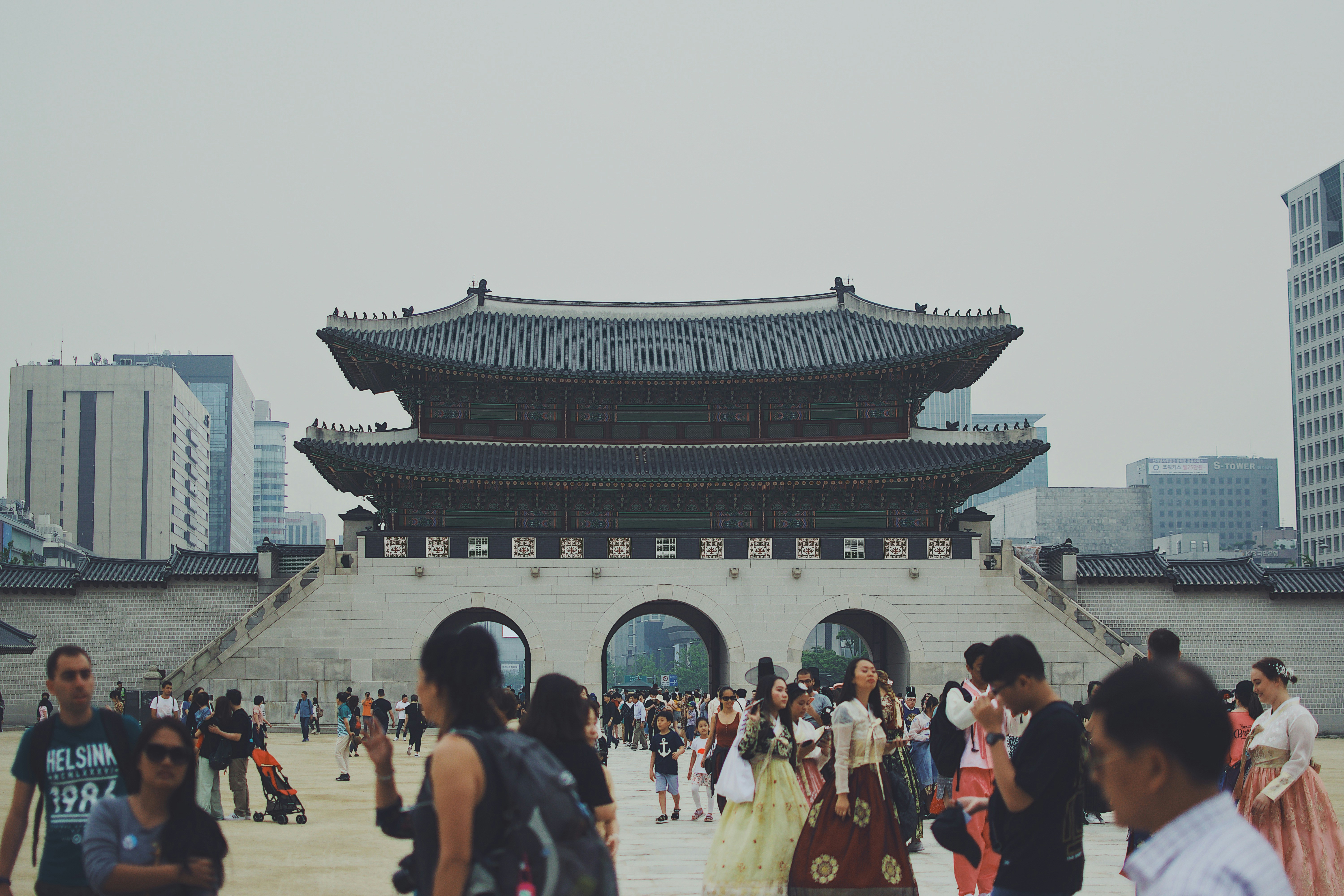
- MorningGyeongbokgung Palace and optional hanbok rental~$25
- AfternoonBukchon Hanok Village and Insadong~$15
- EveningGwangjang Market food trail~$25
JongnoBukchonInsadongUse the subway or walk between Jongno sights; local rides generally cost around ₩1,500-₩2,000.
Budget$55Mid-range$130Luxury$300 - 3
Hongdae, Mangwon Market, and the Han River
- MorningHongdae cafés and independent shops~$15
- AfternoonMangwon Market lunch~$12
- EveningHan River sunset and Hongdae dinner~$35
HongdaeMangwonUse Seoul subway Line 2 and local buses; allow roughly ₩5,000-₩8,000 total for a day of local rides.
Budget$50Mid-range$120Luxury$280 - 4
KTX to Busan, Gamcheon Culture Village, and Jagalchi Market
- MorningKTX Seoul to Busan~$40
- AfternoonGamcheon Culture Village~$8
- EveningJagalchi Market and BIFF Square dinner~$35
Busan StationGamcheonNampoReserve a morning KTX ticket; the 2026 standard Seoul-Busan fare is about ₩54,400 and travel time is approximately 2 hours 30 minutes.
Budget$100Mid-range$210Luxury$550 - 5
Haedong Yonggungsa, Haeundae Beach, and Gwangalli
- MorningHaedong Yonggungsa Temple~$6
- AfternoonHaeundae Beach and Blue Line Park area~$25
- EveningGwangalli sunset and dwaeji gukbap or seafood~$30
HaeundaeGwangalliUse Busan Metro and local buses; taxis are useful for Haedong Yonggungsa if travelling in a group.
Budget$65Mid-range$150Luxury$400 - 6
Flight to Jeju, Seogwipo Waterfalls, and Black Pork
- MorningGimhae to Jeju domestic flight~$70
- AfternoonCheonjiyeon or Jeongbang Waterfall~$5
- EveningSeogwipo waterfront and Jeju black pork dinner~$40
SeogwipoJeju South CoastDomestic flights can range from ₩30,000-₩100,000 one way; buses are cheapest, while taxis or rental cars save time.
Budget$115Mid-range$230Luxury$600 - 7
Seongsan Ilchulbong, East Coast, and Departure
- MorningSeongsan Ilchulbong~$4
- AfternoonSeopjikoji and coastal café~$20
- EveningTransfer to Jeju Airport and departure~$45
SeongsanSeopjikojiJeju AirportAllow extra time for the airport transfer; a cross-island taxi can cost ₩50,000-₩100,000, while buses are cheaper but slower.
Budget$75Mid-range$150Luxury$500
Trip Summary
Trip starter
Turn this 7-day itinerary into a Hello trip
Start with a prefilled trip for South Korea, then add dates, invite friends, track expenses, and pick an eSIM before you land.
Name and destination carried into the app.
Split costs and settle up during the trip.
Choose data for the destination before departure.
TL;DR: The Best 1 Week South Korea Itinerary
The most efficient 1 week South Korea itinerary combines four nights in Seoul, two nights in Busan, and one night in Jeju, using the KTX train and a short domestic flight. This Korea travel plan covers palaces, markets, beaches, temples, volcanic scenery, and Korea’s essential food trails while keeping travel time manageable. South Korea welcomed more than 15 million international visitors in the first eight months of 2026, according to Yonhap citing Korea’s culture ministry and tourism organization, so book popular trains, flights, and accommodation early. South Korea is easiest to navigate with a T-money card, a translation app, and Hello eSIM connectivity. For a comfortable mid-range trip, plan approximately $1,050-$1,450 per person, excluding international flights. Budget travellers can reduce that to roughly $650-$850 by staying in hostels, eating at local restaurants, and using public transport. Prices below are practical 2026 estimates and vary with season, exchange rates, and booking time.
Days 1-3: Seoul Palaces, Markets, and Neighborhood Food Trails
Spend your first three days in Seoul to adjust, explore the historic centre, and experience the capital’s best food and design districts without rushing between distant sights.
Day 1 – Arrival, Myeongdong, and N Seoul Tower
- Morning: From Incheon Airport, take the AREX all-stop train to Seoul Station for about ₩4,750, approximately $3-$4, or the express train for about ₩11,000, approximately $8. Allow 60-90 minutes including transfers. Leave luggage at your hotel.
- Afternoon: Walk through Myeongdong, try mandu dumplings, tteokbokki, hotteok, and Korean fried chicken. Budget ₩15,000-₩30,000, or $11-$22, for lunch and snacks.
- Evening: Ride the cable car or bus toward N Seoul Tower. A tower observatory ticket is commonly around ₩26,000, or $19, while the viewpoint around Namsan is free. Dinner at a barbecue restaurant usually costs ₩25,000-₩50,000 per person.
Day 2 – Gyeongbokgung, Bukchon, and Insadong
- Morning: Rent a hanbok near Gyeongbokgung Palace and visit the palace when gates open. Palace admission is about ₩3,000, or $2, and hanbok rental is commonly ₩15,000-₩40,000, or $11-$29, for several hours.
- Afternoon: Walk through Bukchon Hanok Village, then continue to Insadong for tea, crafts, and bibimbap. Remember that Bukchon is a residential area: keep voices low and avoid entering private lanes.
- Evening: Eat at Gwangjang Market. Try bindaetteok, mayak gimbap, yukhoe, and noodles for roughly ₩15,000-₩30,000, or $11-$22.
Day 3 – Hongdae, Mangwon, and the Han River
- Morning: Explore Hongdae’s cafés, street art, and independent shops.
- Afternoon: Visit Mangwon Market for a casual lunch, usually ₩8,000-₩15,000, or $6-$11, then take the subway to the Han River.
- Evening: Enjoy Korean barbecue, dakgalbi, or a restaurant meal in Hongdae. The Seoul subway and buses generally cost around ₩1,500-₩2,000 per ride, or approximately $1-$2, with a T-money card.
Days 4-5: Seoul to Busan by KTX, Haeundae, and Coastal Korea
Take the KTX from Seoul to Busan early on Day 4, then spend two days combining markets, beaches, temples, and seafood; the standard Seoul-Busan fare is about ₩54,400, approximately $40, after the 2026 fare adjustment, and the journey takes around two hours and 30 minutes.
Day 4 – KTX, Gamcheon, and Jagalchi
- Morning: Take a 7:00-8:00 a.m. KTX from Seoul Station. Reserve through the official Korail booking system several days ahead, especially on Fridays, weekends, and Korean public holidays. Arrive at Busan Station before late morning.
- Afternoon: Leave luggage at your hotel, then visit Gamcheon Culture Village. Allow ₩3,000-₩10,000, or $2-$7, for local buses, snacks, and small gallery admissions. Wear comfortable shoes because the village has steep lanes.
- Evening: Walk through Jagalchi Fish Market and BIFF Square. A seafood dinner costs roughly ₩20,000-₩50,000 per person, or $15-$36; street-food snacks may cost only ₩5,000-₩10,000.
Day 5 – Haedong Yonggungsa, Haeundae, and Gwangalli
- Morning: Visit Haedong Yonggungsa Temple, one of Korea’s most scenic Buddhist temples, using the subway and local bus. Entry is generally free; allow ₩3,000-₩8,000, or $2-$6, for transport.
- Afternoon: Relax at Haeundae Beach, browse the Blue Line Park area, or reserve a Sky Capsule. Combined attractions can range from ₩10,000-₩35,000, or $7-$25, depending on the route and booking.
- Evening: Watch the sunset from Gwangalli Beach and eat dwaeji gukbap, grilled clams, or seafood. Expect ₩10,000-₩35,000, or $7-$25, per person.
Days 6-7: Jeju Island Waterfalls, Coastlines, and Volcanic Landscapes
Use a short flight from Busan to Jeju for the final two days, focusing on one side of the island rather than attempting a complete loop; Jeju rewards slower exploration and is much easier with a rental car or carefully planned taxi transfers.
Day 6 – Busan to Jeju, Seogwipo, and the South Coast
- Morning: Fly from Gimhae Airport to Jeju International Airport. One-way fares often range from ₩30,000-₩100,000, or $22-$73, depending on demand and baggage. Allow at least 90 minutes at the airport.
- Afternoon: Base yourself in Seogwipo and visit Cheonjiyeon Waterfall or Jeongbang Waterfall. Admission is typically around ₩2,000-₩3,000, or $1-$2, per site. Lunch featuring abalone porridge, seafood noodles, or black-pork dishes costs ₩12,000-₩30,000, or $9-$22.
- Evening: Walk the Seogwipo waterfront and eat Jeju black pork. A restaurant meal generally costs ₩25,000-₩50,000 per person, or $18-$36.
Day 7 – Seongsan Ilchulbong and Departure
- Morning: Visit Seongsan Ilchulbong, a UNESCO-listed volcanic tuff cone. Admission is approximately ₩5,000, or $4. Start early to avoid heat and crowds.
- Afternoon: Stop at Seopjikoji or a nearby coastal café, then return to Jeju Airport. Public buses are inexpensive but slow; a taxi across the island can cost ₩50,000-₩100,000, or $36-$73, so share rides where possible.
- Evening: Depart Jeju or connect through Seoul for an international flight. Keep a generous buffer because domestic and international terminals are separate travel steps.
South Korea Trip Budget: Budget, Mid-Range, and Luxury Costs
A realistic seven-day Korea trip planner should budget around $650-$850 for a frugal traveller, $1,050-$1,450 for a comfortable mid-range traveller, or $2,500-$4,000 for a luxury trip, excluding international flights. These estimates include accommodation, meals, domestic transport, sightseeing, and the Busan-to-Jeju flight.
| Travel style | Accommodation per night | Meals per day | Transport and activities per day | Estimated seven-day total |
|---|---|---|---|---|
| Budget | $25-$55 | $20-$35 | $15-$30 | $650-$850 |
| Mid-range | $80-$160 | $40-$75 | $30-$65 | $1,050-$1,450 |
| Luxury | $250-$600+ | $100-$220 | $100-$250 | $2,500-$4,000 |
A budget day might include a hostel bed, convenience-store breakfast, market lunch, inexpensive soup for dinner, and subway travel. A mid-range day could include a three-star hotel, café breakfast, one sit-down meal, one market meal, KTX or flight costs, and two paid attractions. Luxury travellers should allow for upscale hotels, private transfers, premium seafood, guided tours, and a Jeju rental car.
Use the Hello app to scan receipts in different languages and currencies, import bank statements, categorize spending with AI, and split shared costs automatically when travelling with friends. Live exchange-rate conversion makes it easier to see whether a ₩100,000 seafood dinner is still within the day’s target.
KTX, Public Transport, and Hello eSIM Tips for Korea
The simplest way to stay mobile in South Korea is to combine a T-money card for local transport, advance KTX reservations for Seoul-Busan, domestic-flight planning for Jeju, and reliable mobile data from Hello eSIM. Buy a T-money card at a convenience store or transport station, load it with Korean won, and tap in and out on Seoul and Busan buses and subways.
For KTX, choose Seoul Station for central Seoul departures and Busan Station for the main Busan arrival. A regular Seoul-Busan ticket costs about ₩54,400, or $40, in the 2026 fare schedule, while the trip takes approximately two and a half hours. Book a morning train so that the afternoon remains available for Gamcheon Culture Village or Jagalchi Market.
Jeju is different: buses cover the main tourist routes, but connections can be infrequent outside urban areas. A rental car is convenient if you have a valid licence and meet local rental requirements; otherwise, group tours or pre-booked taxis can reduce wasted time.
Before departure, activate Hello eSIM for South Korea so maps, translation, restaurant searches, train information, and ride-hailing work as soon as you land. Hello offers instant activation, plans starting from 5GB, and coverage in more than 200 countries through the Hello app for iOS and Android. Prices are updated live, so select a plan based on expected video, navigation, and hotspot use.
Common Questions About a One-Week Seoul Busan Jeju Itinerary
The best one-week route is Seoul for three to four nights, Busan for two nights, and Jeju for one to two nights, provided you book transport early and accept that this schedule highlights each destination rather than exploring every corner.
Is seven days enough for Seoul, Busan, and Jeju? Yes, but the pace is active. This itinerary gives Seoul three full sightseeing days, Busan one and a half days, and Jeju roughly one full day plus travel. For a slower trip, remove Jeju and add two nights to Busan or Seoul.
Should I visit Jeju before Busan? Usually, ending in Jeju works well if your international flight connects through Seoul. If flights from your home country connect directly through Busan, reverse the order and fly Jeju to Busan instead.
How much cash should I carry? Keep around ₩50,000-₩100,000, or approximately $36-$73, in cash for markets, transit-card top-ups, small cafés, and rural areas. Cards are widely accepted in cities, but some market stalls and small restaurants remain cash-oriented.
What etiquette should visitors know? Remove shoes where requested, avoid sticking chopsticks upright in rice, wait for older diners to begin in formal meals, and do not photograph people without permission. At temples, dress modestly and keep voices low.
What should I eat? Try kalguksu or market dumplings in Seoul, dwaeji gukbap and seafood in Busan, and black pork, abalone, or seafood noodles in Jeju. A typical inexpensive meal costs ₩8,000-₩15,000, or $6-$11, while barbecue and seafood meals cost considerably more.
Explore These Destinations
Stay Connected
Make the most of South Korea
From eSIM connectivity to expense tracking, Hello is the all-in-one companion that keeps your trip stress-free.
Related Articles
South Korea Safety Guide: Tips for a Safe Trip
Safety tips, health advisories, emergency contacts, common scams, and travel insurance advice for South Korea.
22 July 2026
South Korea Visa & Entry Requirements for Singapore Passport Holders
Visa requirements, passport validity, customs allowances, and entry tips for Singapore citizens travelling to South Korea.
13 July 2026
eSIM for South Korea: Best Plans, Coverage, and Setup Tips
Everything you need to know about using eSIM in South Korea. Best data plans, network coverage, and setup instructions.
4 July 2026