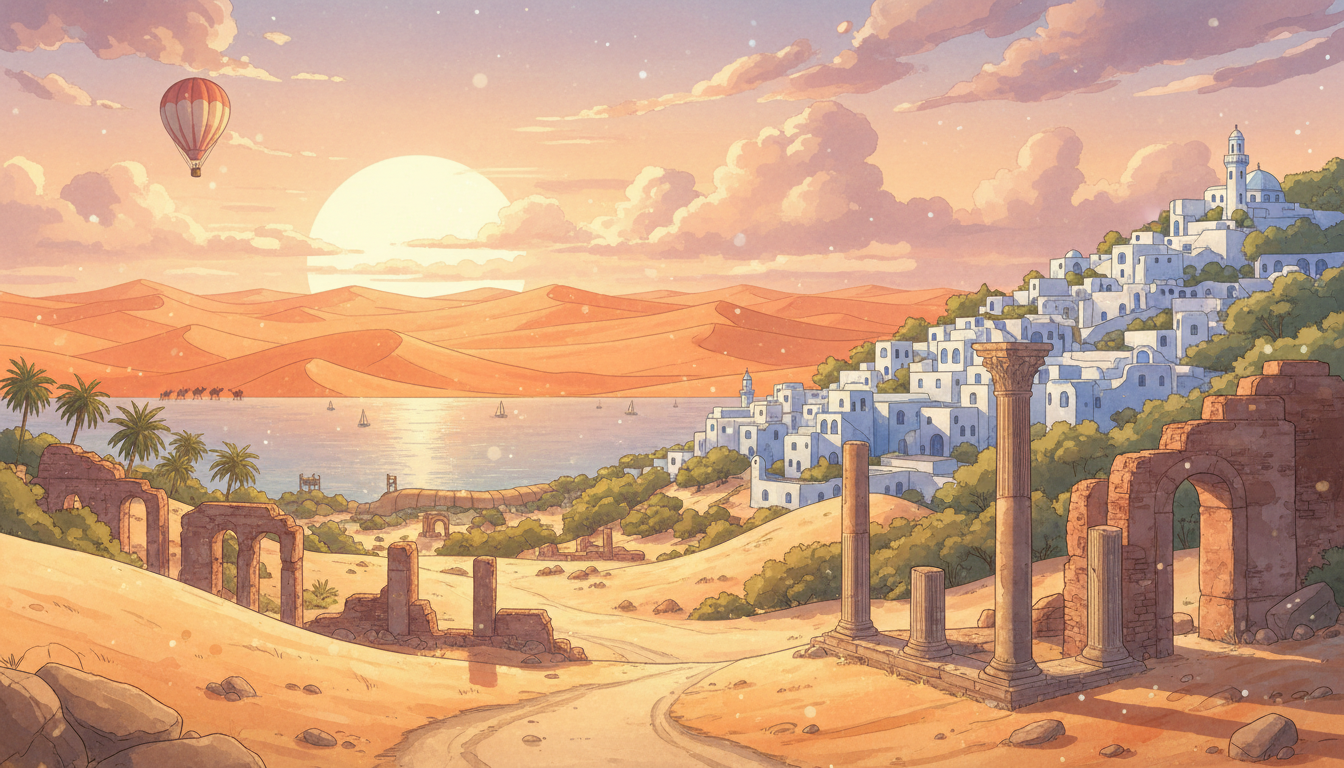
Tunisia
Discover Tunisia's ancient ruins, beaches, and vibrant souks
eSIM Plans for Tunisia
From $12.00
5 GB
30 days · El Jem Communications
$12.00
USD
10 GB
30 days · El Jem Communications
$20.00
USD
Unlimited
3 days · El Jem Communications
$20.50
USD
Unlimited
5 days · El Jem Communications
$28.00
USD
20 GB
30 days · El Jem Communications
$31.50
USD
Unlimited
7 days · El Jem Communications
$35.00
USD
Prices updated live. Purchase in the Hello app.
Daily Budget Guide
| Category | Budget | Mid-Range | Luxury |
|---|---|---|---|
| Stay | TND 40 | TND 120 | TND 400 |
| Food | TND 30 | TND 60 | TND 150 |
| Transport | TND 20 | TND 40 | TND 100 |
| Activities | TND 20 | TND 30 | TND 50 |
| Daily Total | TND 110 | TND 250 | TND 700 |
Tipping: Tipping is customary in restaurants (10% if not included) and for services like taxis or guides. Small amounts of 1-5 TND are appreciated.
Stay Connected in Tunisia
Coverage
5G Available
Airport WiFi
Recommended Data
eSIM tip: eSIMs from providers like Ooredoo or Orange Tunisia available online; activate before arrival for instant connectivity.
Quick Reference
- Visa
- Visa-free for up to 90 days for EU, US, Canada, Australia, Japan citizens; visa on arrival or e-visa for many others; check requirements by nationality.
- Language
- Arabic (official), French widely spoken, English in tourist areas
- Best Time
- March to May, September to November
- Timezone
- CET (UTC+1)
- Power
- Types C/E, 230V
- Emergency
- 190 (All services)
Top Cities to Visit
Tunis
Gateway to Carthage and medina vibes
Explore the UNESCO-listed medina and ancient Carthage ruins. Bardo Museum houses world-class mosaics. Vibrant markets and modern coastal charm.
Sousse
Ribat fortress and sandy beaches
UNESCO medina with historic ribat and souks. Long beaches ideal for relaxation. Easy access to Monastir's golf courses and marinas.
Hammamet
Sunny beaches and thalassotherapy
Miles of white-sand beaches and luxury spas. Charming medina and vibrant nightlife. Golf resorts and water parks for families.
Sfax
Authentic souks and coastal forts
Largest medina in Tunisia with genuine markets. Kerkennah Islands nearby for fishing villages. Less touristy, authentic southern vibe.
Djerba
Island oasis with Star Wars lore
Mythical island with beaches, synagogues, and souks. Star Wars filming sites in nearby desert. Relaxed vibe with flamingo reserves.
What to Eat in Tunisia
Expect to spend $30–$150 per day on food, depending on your style.
Getting Around Tunisia: Transport Tips for Every Journey
Tunisia's transport network is surprisingly well-connected, making it easy to explore from the Mediterranean coast to the Sahara. Trains are your best friend for longer distances—a ticket from Tunis to Sousse costs around 10,000 dinars (~$3 USD) and takes just over 2 hours, with several departures daily. For shorter hops and routes without rail lines, louages (shared minibuses) are the local standard; they're cheap, frequent, and authentic, though journeys can take longer than you'd expect.
If you want flexibility to explore at your own pace, car rental opens up hidden gems like the Roman sites at Dougga and Bulla Regia, or the mountain oases near Tozeur. Just note that rental shops typically open around 9-10am, so plan accordingly. For day trips from major hubs like Sousse, organized tours are convenient and often include transport plus a knowledgeable guide.
Pro tip: Use the Hello app to track your transport expenses in dinars as you go—it's easy to lose track of costs when switching between trains, louages, and taxis. Stay connected throughout your journey with an eSIM so you can access maps, book transport, and stay in touch with fellow travellers.
Where to Stay: From Budget Medinas to Luxury Retreats
Tunisia offers accommodation for every budget, often with authentic character you won't find elsewhere. In the medina (old city) of Sousse or Tunis, budget travellers can find basic but comfortable riads and traditional hotels like Hotel Paris for a fraction of what you'd pay in Europe. Mid-range options like Dar Antonia offer fancy traditional dars (courtyard houses) with all the charm and modern amenities.
For those seeking luxury, the Dar El Jeld Hotel and Spa in Tunis is a stunning 5-star property that preserves traditional architecture while offering contemporary comforts. Sousse makes an excellent base thanks to its large selection of hotels, restaurants, and cafés—plus it's well-positioned for day trips to Kairouan, Monastir, and the spectacular El Jem amphitheater.
Whatever you choose, use the Hello app's expense splitting feature if you're travelling with friends—it makes settling accommodation costs painless. Book through platforms like GetYourGuide for tours that often include transport from your hotel, saving you the hassle of figuring out connections yourself.
The Best Time to Visit: Timing Your Tunisia Adventure
Tunisia is genuinely a year-round destination, but timing depends on what you want to experience. The northern Mediterranean coast—think Tunis, Carthage, and Sidi Bou Said—enjoys mild winters and hot summers, making it pleasant any time. If you're after beach days in places like Hammamet or Sousse, July and August deliver the warmest waters, though expect crowds.
The real magic happens when you head south to the Sahara and mountain oases near Tozeur. Here's the catch: the arid south becomes brutally hot in summer, so visit in winter (November to March) when temperatures are comfortable for exploring desert landscapes, hiking the Dahar Mountains, or experiencing nights under stars in Berber villages.
February, like now, is actually ideal—mild enough for both northern sightseeing and southern desert adventures without the summer heat. You'll also dodge peak tourist season, meaning shorter queues at sites like the Bardo Museum's world-class Roman mosaics and more authentic interactions in less-visited towns like El Kef. Use the Hello app's trip planning feature to map out your itinerary based on weather patterns and the specific regions you want to explore.
Money Matters: Spending Smart in Tunisia
Tunisia uses the Tunisian dinar (TND), and understanding local prices helps you budget effectively. A train ticket costs around 10,000 dinars, a louage ride might be 5,000-15,000 dinars depending on distance, and budget accommodation runs 30,000-50,000 dinars per night. Mid-range restaurants serve excellent couscous or brik (fried pastry) for 8,000-15,000 dinars.
Most nationalities receive a generous 3-month visa-free entry, so focus your money on experiences rather than bureaucracy. ATMs are readily available in cities, and cards are accepted in tourist areas, though smaller towns and souks operate cash-only. The beauty of Tunisia is that it remains relatively unvisited compared to Morocco, meaning prices stay reasonable—you genuinely get more for your money.
Use the Hello app's budget tracking feature to monitor spending in dinars as you move between regions. This is especially helpful when splitting meals or accommodation costs with travel companions using the expense splitting tool. Keep some cash handy for louages, market haggling, and tips at restaurants—it's expected and appreciated. Exchange rates are generally fair at official ATMs, so avoid money changers unless absolutely necessary.
Frequently Asked Questions About Tunisia
Is it safe to travel to Tunisia?
Do I need a visa for Tunisia?
What's the best time to visit Tunisia?
How much does a trip to Tunisia cost per day?
What language do people speak in Tunisia?
Is there good mobile data coverage in Tunisia?
Can I drink tap water in Tunisia?
How do I get around Tunisia affordably?
Ready for Tunisia?
Download Hello for eSIM connectivity, expense splitting, and budget tracking — your all-in-one trip companion.
Similar Destinations
Related Articles
Tunisia in 10 Days: The Ultimate Travel Itinerary
A comprehensive 10-day itinerary for Tunisia covering top attractions, hidden gems, daily costs, and transport between cities.
18 min read
3 Days in Tunisia: A Day-by-Day Itinerary
A detailed 3-day itinerary for Tunisia with daily activities, costs, neighborhoods, and transport tips.
8 min read
Tunisia in 5 Days: The Perfect Extended Itinerary
A detailed 5-day itinerary for Tunisia with daily activities, costs, neighborhoods, and transport tips for an extended stay.
8 min read