Malawi in 10 Days: The Ultimate Travel Itinerary
A comprehensive 10-day itinerary for Malawi covering top attractions, hidden gems, daily costs, and transport between cities.
By Hello Travel Team
This article contains affiliate links. If you book through them, Hello may earn a commission at no additional cost to you. Our editorial recommendations are independent. Learn more.
- 1
Arrival in Lilongwe & Old Town
- MorningAirport taxi to Old Town accommodation~$23
- AfternoonExplore Old Town Mall & craft market~$10
- EveningDinner at local restaurant (chambo & nsima)~$10
Old TownArea 3Use licensed airport taxis (~$20–25) or pre-booked hotel transfer.
Budget$55Mid-range$100Luxury$220 - 2
Lilongwe Wildlife Centre & New City
- MorningVisit Lilongwe Wildlife Centre~$12
- AfternoonLunch & errands in City Centre~$15
- EveningDinner in Old Town or Area 3~$10
Old TownCity CentreShort city taxis within Lilongwe cost about $3–5 per ride.
Budget$60Mid-range$110Luxury$230 - 3
Transfer to Cape Maclear, Lake Malawi
- MorningMinibus or shuttle Lilongwe to Monkey Bay/Cape Maclear~$15
- AfternoonCheck-in & beach walk
- EveningLakeside dinner~$9
Cape MaclearPublic minibuses $10–15; private transfer $80–120 per car, 4–5 hours.
Budget$55Mid-range$105Luxury$240 - 4
Cape Maclear – Snorkelling & Kayaking
- MorningKayak or boat trip to Otter Point~$15
- AfternoonBeach time & village walk~$5
- EveningSunset drinks & dinner~$15
Cape MaclearAll activities on foot or by local boat; no long-distance transport.
Budget$60Mid-range$120Luxury$260 - 5
Cape Maclear – Island Day Trip or Relax
- MorningBoat trip to nearby island (Domwe/Mumbo, optional)~$50
- AfternoonSnorkelling, hiking, or hammocks~$5
- EveningDinner at lodge or local restaurant~$12
Cape MaclearBoat transfers arranged through local operators or your lodge.
Budget$65Mid-range$135Luxury$280 - 6
Travel to Liwonde National Park & Sunset River Cruise
- MorningTransport from Cape Maclear to Liwonde~$15
- AfternoonCheck-in at lodge/camp
- EveningSunset boat safari on Shire River~$70
Liwonde National Park3–4 hours by road via Balaka; shared transport $10–15 or private $60–100.
Budget$95Mid-range$230Luxury$480 - 7
Liwonde – Game Drives & Wildlife Viewing
- MorningMorning game drive~$60
- AfternoonLodge downtime (pool, viewing deck)
- EveningEvening game drive or boat safari~$60
Liwonde National ParkAll activities organized by lodge; no intercity transport.
Budget$120Mid-range$260Luxury$520 - 8
Transfer to Zomba & Explore Town
- MorningRoad transfer Liwonde to Zomba~$8
- AfternoonCheck-in & Zomba market visit~$5
- EveningDinner at local restaurant~$8
Zomba town1–1.5 hours by shared taxi/minibus ($5–8) or private car ($40–60).
Budget$50Mid-range$100Luxury$210 - 9
Zomba Plateau – Views, Waterfalls & Forest Walks
- MorningTaxi/4x4 to Zomba Plateau~$20
- AfternoonGuided hike to viewpoints & waterfalls~$15
- EveningDinner back in Zomba town~$9
Zomba PlateauZomba townHire local taxi/guide for plateau access; roads can be steep and rough.
Budget$55Mid-range$115Luxury$230 - 10
Return to Lilongwe & Departure
- MorningRoad transfer Zomba to Lilongwe~$15
- AfternoonLast-minute shopping & lunch in Lilongwe~$20
- EveningTaxi to Kamuzu International Airport~$23
ZombaLilongwe Old TownAirportAllow 4.5–5.5 hours for road travel plus 2–3 hours check-in time at airport.
Budget$55Mid-range$120Luxury$240
Trip Summary
Trip starter
Turn this 10-day itinerary into a Hello trip
Start with a prefilled trip for Malawi, then add dates, invite friends, track expenses, and pick an eSIM before you land.
Name and destination carried into the app.
Split costs and settle up during the trip.
Choose data for the destination before departure.
TL;DR: A Perfect 10-Day Malawi Itinerary at a Glance
This 10-day Malawi itinerary combines Lilongwe, Lake Malawi, Liwonde safari, and Zomba Plateau, with smooth transport, clear daily budgets, and easy connectivity via Hello eSIM. You’ll balance culture, wildlife, and lake time without rushing, ideal for a first Malawi 10 day trip.
Malawi is compact, friendly, and surprisingly easy to navigate with a bit of planning. Over 1 million international tourists visited Malawi in 2019, according to the Malawi Ministry of Tourism, with most drawn to Lake Malawi and the country’s national parks. This Malawi travel plan focuses on the central and southern highlights to keep travel times manageable while still feeling adventurous.
Here’s the big picture:
- Days 1–2: Lilongwe – arrivals, markets, wildlife centre, city culture.
- Days 3–5: Cape Maclear, Lake Malawi – beach time, snorkelling, kayaking.
- Days 6–7: Liwonde National Park – river safaris, elephants, hippos.
- Days 8–9: Zomba Plateau – cool highlands, hikes, viewpoints.
- Day 10: Return to Lilongwe and fly out.
Typical daily costs in 2026 are around $45–70 (budget), $90–160 (mid-range), and $220+ (luxury), depending on safari days and accommodation. Using the Hello app to track spending in kwacha and USD, and an eSIM from Hello for instant data, makes it much easier to stay on top of your budget while moving between cities.
Days 1–2: Lilongwe – Markets, Wildlife Centre & First Taste of Malawi
These first two days in Lilongwe ease you into Malawi with short transfers, relaxed sightseeing, and a first taste of local food, while you get used to prices, transport, and using the Hello app to track expenses and stay connected via Hello eSIM.
Day 1 – Arrival & Old Town
Morning: Arrive at Kamuzu International Airport. A licensed taxi into town costs about $20–25 in 2026 depending on your lodge location. Most travellers stay near Area 3 / Old Town for easy access to markets and restaurants. Install Hello, activate your Malawi eSIM before you land, and you’ll walk out of the airport already connected.
Afternoon: Explore Old Town Mall and the craft market near the post office, known for wood carvings and batik fabrics, as also suggested by several Malawi travel blogs that highlight Old Town as the best place to start. Expect to pay $5–10 for small souvenirs after bargaining.
Evening: Dinner at a casual spot like a local grill or pizzeria in Old Town; a meal with a soft drink is around $8–12. Use Hello’s AI receipt scanning to log your first day’s costs in Malawian kwacha and see your running trip total.
Day 2 – Lilongwe Wildlife Centre & New City
Morning: Visit Lilongwe Wildlife Centre, a reputable rescue and rehabilitation centre often recommended as the city’s top attraction. Entry is about $10–12 for international visitors in 2026, and guided tours run late morning.
Afternoon: Head to the City Centre / New Town for ATMs, supermarkets, and lunch at a café (around $10–15). This is a good time to buy snacks and a local SIM only if you want voice coverage; for data, Hello eSIM already has you covered.
Evening: Try chambo (lake fish) with nsima (maize porridge) at a local restaurant, around $7–10. Early night before your drive to Lake Malawi the next morning.
Approximate daily budget (Lilongwe days)
- Budget: $50–60 (hostel/guesthouse $20–25, food $15–20, transport & activities $15–20)
- Mid-range: $90–120 (hotel $50–70, nicer meals & drinks $25–30, activities $15–20)
- Luxury: $180–250 (upscale hotel $120–180, restaurant dining $30–40, private transfers).
Days 3–5: Cape Maclear & Lake Malawi – Beaches, Snorkelling and Sunsets
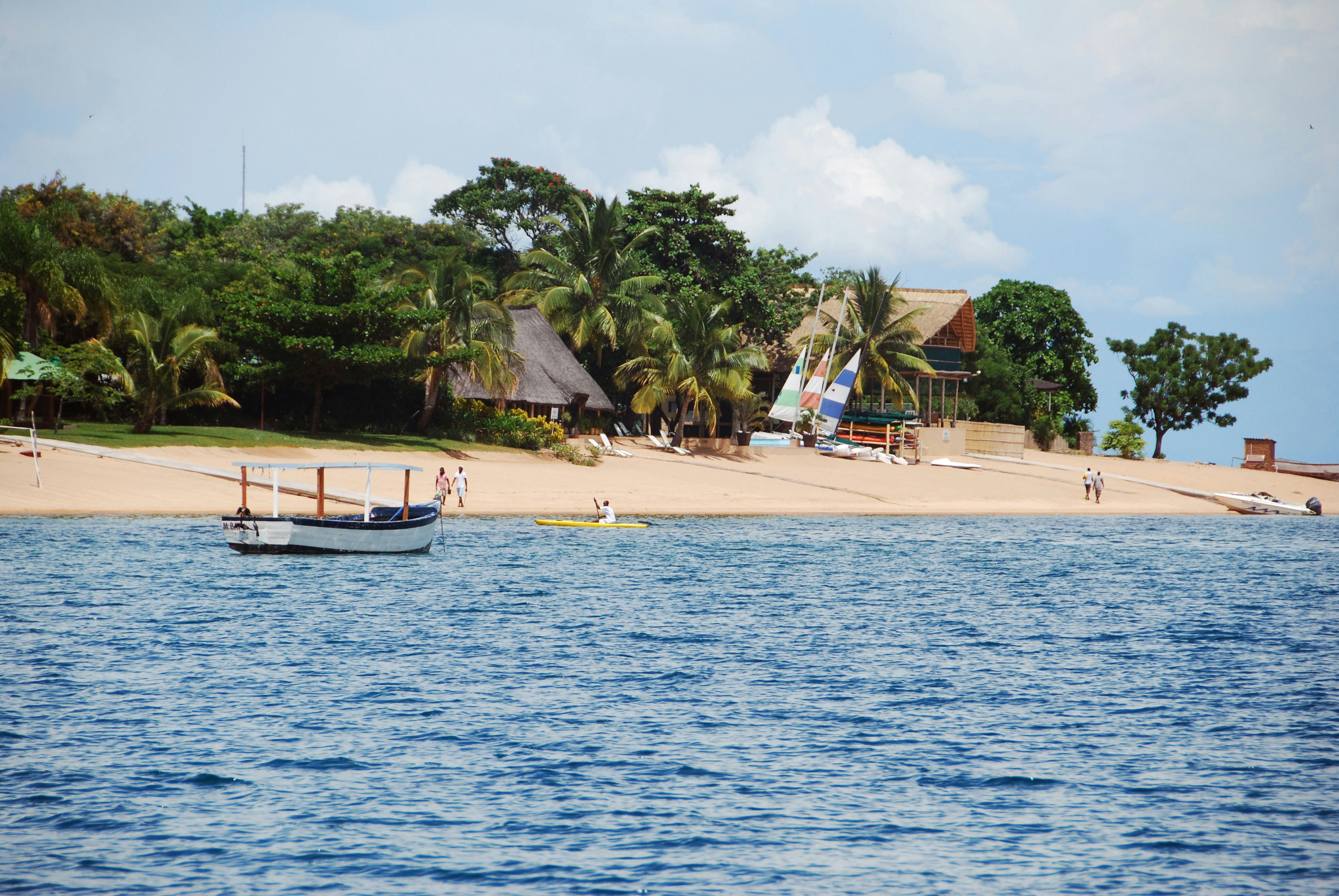
Spending three days at Cape Maclear on Lake Malawi gives you the classic Malawi itinerary mix of beach time, water activities, and relaxed village life in one of the country’s most beloved destinations.
Getting to Cape Maclear (Day 3)
Morning: Depart Lilongwe around 8:00. Shared taxis and minibuses via Salima / Monkey Bay take 4–5 hours and cost roughly $10–15 in 2026, as echoed by multiple traveller reports. Private transfers booked through lodges are $80–120 per car. Aim to arrive by early afternoon.
Afternoon: Check into lakeside accommodation in Cape Maclear. Budget beach lodges start around $20–30 per night, mid-range guesthouses around $50–80, and boutique waterfront lodges from $140+.
Evening: Walk the beach, then eat fresh grilled fish with rice or chips for $6–10 at a local restaurant. Use Hello’s expense splitting feature if you’re sharing a lakefront bungalow with friends.
Day 4 – Snorkelling & Kayaking
Morning: Rent a kayak ($10–15 for half-day) or join a boat trip to Otter Point for snorkelling among Lake Malawi’s famous cichlid fish; Cape Maclear is part of the Lake Malawi National Park, a UNESCO World Heritage Site highlighted by Go2Africa and other Africa specialists.
Afternoon: Relax on the beach or take a village walk. A cold drink is $1–2; basic lunch is around $5–7.
Evening: Sunset cruise on a local boat with snacks runs $15–25 per person. Dinner back at your lodge.
Day 5 – Optional Island Trip or Chill Day
Morning: Consider a day trip to nearby islands such as Domwe or Mumbo, which many Malawi itineraries recommend for snorkelling and hiking. Expect $40–70 including boat transfer and park fees.
Afternoon/Evening: Free time to swim, read, or enjoy a lakeside massage (around $15–20).
Approximate daily budget (Lake Malawi days)
- Budget: $45–65 (simple chalet, street food, shared activities)
- Mid-range: $90–140 (comfortable lodge, paid activities daily)
- Luxury: $220–350 (upscale lake lodge, private boat trips, sundowners).
Days 6–7: Liwonde National Park – Safari on the Shire River
Two days in Liwonde National Park give you a compact but memorable safari experience with river cruises, game drives, and excellent chances of seeing elephants, hippos, and birdlife along the Shire River.
Liwonde is widely described by regional safari operators as Malawi’s best game-viewing park, thanks to its riverine setting and conservation efforts that have reintroduced species like lions, cheetahs, and black rhino. Go2Africa and other Africa specialists routinely list Liwonde in their top three Malawi destinations.
Getting to Liwonde (Day 6)
Morning: Travel from Cape Maclear/Monkey Bay towards Liwonde town; the journey by road takes around 3–4 hours, typically via Balaka. Public transport using minibuses and shared taxis will cost about $10–15, while lodge-arranged transfers are often $60–100 per vehicle.
Afternoon: Check into your safari lodge or camp inside or just outside the park. Budget options (outside gates) start near $40–60 per night, mid-range tented camps from $120–200, and high-end lodges from $350+ including activities and meals.
Evening: Join your first sunset river cruise on the Shire River. Many travellers highlight this as the top Liwonde experience, with large pods of hippos and sizeable elephant herds. Park fees and an activity often come bundled with lodging, but budget around $60–120 per person per day for activities and conservation fees in 2026.
Day 7 – Game Drives & Boat Safaris
Morning: Pre-dawn game drive, returning for breakfast. Expect to see antelope, elephants, and possibly predators, depending on season.
Afternoon: Relax at the lodge pool, then take another river cruise or walking safari if available.
Evening: Dinner at camp, with most lodges running on a full-board basis.
Approximate daily budget (Liwonde days including park fees)
- Budget (outside park, limited activities): $90–130
- Mid-range (inside/near park with shared activities): $200–350
- Luxury (high-end lodge, fully inclusive): $450–700+.
Days 8–9: Zomba Plateau – Cool Highlands, Forest Walks & Views
Zomba Plateau adds cooler air, green forests, and mellow hikes to your Malawi 10 day itinerary, creating a welcome contrast to the lake and the heat of Liwonde’s lowlands.
Zomba and its plateau are frequently recommended in southern Malawi route guides as a highlight for walking, viewpoints, and historic colonial-era architecture, especially in blogs focused on the highlands region. The plateau reaches over 1,800 metres, meaning temperatures are often 5–10°C cooler than the plains.
Getting to Zomba (Day 8)
Morning: Drive from Liwonde to Zomba, a journey of about 1–1.5 hours on a mostly paved road, per regional lodge transfer estimates. A shared taxi or minibus should cost $5–8, while private transfers run $40–60.
Afternoon: Check into a guesthouse in Zomba town or on the lower slopes of the plateau. Budget rooms run $20–30, mid-range hotels $50–80, and charming heritage or eco-lodges $100–150.
Evening: Stroll around Zomba town, visit the market, and try a local restaurant meal for $5–8. Log your spending with Hello’s voice expense entry if you’re too tired to type.
Day 9 – Exploring Zomba Plateau
Morning: Hire a taxi (around $15–25 return) or 4x4 if needed to take you up onto the Zomba Plateau. Many travellers arrange a local guide for $10–20 to visit viewpoints like Queen’s View and Emperor’s View, plus waterfalls and forest trails.
Afternoon: Simple lunch at a plateau rest house or picnic provisions from town ($5–10). Walk a loop trail or visit one of the dams.
Evening: Return to town, enjoy a casual dinner and early night.
Approximate daily budget (Zomba days)
- Budget: $45–60
- Mid-range: $90–130
- Luxury (heritage lodge with private guiding): $180–260.
Day 10: Return to Lilongwe, Last-Minute Shopping & Departure
Your final day in Malawi is best spent travelling back to Lilongwe with enough buffer for traffic, picking up last souvenirs, and using the Hello app to reconcile and download all your trip expenses before you fly home.
Morning: Depart Zomba early for Lilongwe. The drive via Balaka and Dedza typically takes 4.5–5.5 hours in normal conditions according to regional route guides, whether you’re in a minibus or a private transfer. Public transport will cost roughly $12–18, while a private car is around $100–140 per vehicle.
Afternoon: Back in Lilongwe, use any remaining time for last-minute shopping at the craft markets or supermarkets for Malawian tea and groundnuts. A light lunch in town runs $8–12.
Late Afternoon/Evening: Aim to be at Kamuzu International Airport about 2–3 hours before an international departure. This is a good moment to open Hello, check your total Malawi trip spend in multi-currency view, and export a PDF or CSV summary if you like to track travel costs.
If your flight is an overnight departure, you may have time for an early dinner in town ($10–15) before heading to the airport by taxi ($20–25). Keep a small emergency stash of kwacha or a payment card handy for airport snacks or departure taxes if applicable.
Approximate daily budget (departure day)
- Budget: $45–60 (transport, meals, basic day room if needed)
- Mid-range: $80–130 (private transfer, nicer meals, short day-room stay)
- Luxury: $180–260 (private transfer, hotel day-use, restaurant dining).
Common Questions About a 10-Day Malawi Itinerary (Costs, Seasons, Connectivity)
Most travellers can comfortably see Lilongwe, Lake Malawi, Liwonde, and Zomba in 10 days with a daily budget of $45–70 (budget), $90–160 (mid-range), or $220+ (luxury), staying connected throughout via a Hello eSIM and managing costs with the Hello app’s budget tracking and expense splitting tools.
Is 10 days enough for Malawi?
Yes. Many travellers on forums and blogs recommend 7–10 days as a good first visit, and this itinerary fits the central highlights without rushing.
How much does a 10-day Malawi trip cost in 2026?
- Budget travellers: around $500–700 excluding flights (dorms/guesthouses, minibuses, basic activities).
- Mid-range: $1,000–1,600 (comfortable lodges, some private transfers, safari days).
- Luxury: $2,500+, especially if staying at upscale safari lodges.
What’s the best time of year to follow this Malawi travel plan?
Dry season from May to October is generally best for wildlife viewing and easier road travel, according to regional safari operators and Malawi tourism sources. Shoulder months (May–June, September–October) balance good wildlife with warmer lake temperatures.
How do I stay connected in Malawi?
Most travellers now use Hello eSIM for Malawi for data instead of dealing with local SIM queues. You can buy and activate a Hello eSIM for Malawi before you fly, land with data working, and then use WhatsApp or VoIP for calls.
Can I track and split trip costs easily?
Yes. The Hello app lets you scan receipts in any currency, auto-convert kwacha to your home currency with live rates, and split costs with friends even if everyone pays in different currencies.
Is Malawi safe for solo travellers?
Malawi is often nicknamed the “Warm Heart of Africa” because of its friendly people, and many solo travellers report feeling safe with standard precautions: avoid walking alone late at night, use trusted taxis, and keep valuables secure.
Budget Comparison, Daily Costs & How Hello Helps You Track It All
Most travellers spending 10 days in Malawi can expect to spend $500–700 on a strict budget, $1,000–1,600 on a mid-range trip, and $2,500+ on a more luxurious Malawi 10 day itinerary, with safari lodge choices being the biggest cost variable.
To put the numbers in context, regional tourism data indicates Malawi remains one of southern Africa’s more affordable safari-and-beach destinations compared with neighbours that focus heavily on high-end tourism. Safari-focused itineraries in Zambia or Botswana, for instance, often start above $500 per person per night, while Malawi offers more mid-range-friendly options according to several African tour operators.
Here’s a simple comparison table of typical daily costs in 2026 for this Malawi travel plan:
| Tier | Accommodation (night) | Food & Drinks (day) | Transport & Activities (avg/day) | Total Daily Estimate |
|---|---|---|---|---|
| Budget | $20–30 | $15–20 | $10–20 | $45–70 |
| Mid-range | $50–120 | $25–35 | $20–40 | $90–160 |
| Luxury | $150–400+ | $40–70 | $30–80+ | $220–550+ |
On safari days in Liwonde, even budget travellers will see a spike in daily costs because of park fees and activities. On lake and city days, you can easily bring your daily spend down with local eateries and public transport.
Using Hello across your trip makes it much easier to stay within your target budget:
- Use AI receipt scanning in kwacha, plus automatic exchange rates, to keep a real-time view of your spend.
- Plan each destination’s budget in the app before you go (e.g., set Liwonde to a higher daily cap).
- Split lake lodge and transfer costs with friends directly inside the app.
If you’re also visiting nearby countries later, like Tanzania or Zambia, you can continue using Hello’s multi-country eSIM coverage where available and keep one continuous trip budget.
Explore These Destinations
Stay Connected
Book this trip
Compare options on trusted travel sites
Plan stays for this trip
Continue to a reviewed booking partner to check current property details and terms.

Make the most of Malawi
From eSIM connectivity to expense tracking, Hello is the all-in-one companion that keeps your trip stress-free.
Related Articles
Malawi Currency & Money Guide: Exchange, Cards, and Tips
Currency exchange, credit card acceptance, ATM tips, tipping culture, and money-saving advice for Malawi.
28 July 2026
Malawi Safety Guide: Tips for a Safe Trip
Safety tips, health advisories, emergency contacts, common scams, and travel insurance advice for Malawi.
19 July 2026
Malawi Visa & Entry Requirements for Singapore Passport Holders
Visa requirements, passport validity, customs allowances, and entry tips for Singapore citizens travelling to Malawi.
10 July 2026