3 Days in Guinea-Bissau: A Day-by-Day Itinerary
A detailed 3-day itinerary for Guinea-Bissau with daily activities, costs, neighborhoods, and transport tips.
By Hello Travel Team
This article contains affiliate links. If you book through them, Hello may earn a commission at no additional cost to you. Our editorial recommendations are independent. Learn more.
- 1
Arrival & First Explorations in Bissau-Velho
- MorningAirport transfer to Bissau-Velho hotel~$10
- Late MorningCoffee and pastry in Bissau-Velho~$4
- AfternoonWalking tour of Bissau-Velho and Plateau
- EveningSunset stroll near port
- EveningDinner at portside restaurant~$15
- All dayLocal taxi rides around city~$6
Bissau-VelhoPlateau/Central DistrictPort AreaTake a yellow taxi from Osvaldo Vieira Airport to Bissau-Velho (~$6–10 in 2026). Agree the fare before departure and carry small CFA notes.
Budget$60Mid-range$120Luxury$250 - 2
Markets, Museums, and Food in Central Bissau
- MorningTaxi to Bandim Market~$2
- MorningVisit Bandim Market~$3
- MiddayEthnographic Museum visit~$5
- AfternoonLunch at local restaurant near Bandim~$8
- AfternoonCoffee or cold drink in Plateau café~$3
- EveningDinner at mid-range restaurant~$18
- All dayLocal taxi rides~$6
BandimPlateau/Central DistrictBissau-VelhoUse city taxis (typically $1–3 per ride) or chapas (shared minibuses under $1) to move between Bandim, the museum area, and Plateau.
Budget$70Mid-range$140Luxury$280 - 3
Bijagós Islands Day Trip or Extra Time in Bissau
- MorningTaxi to Bissau port~$2
- MorningShared boat transfer to Bijagós island (e.g., Bubaque)~$35
- AfternoonIsland walk and beach time
- AfternoonLunch on island~$10
- Late AfternoonReturn boat to Bissau~$35
- EveningFarewell dinner in Bissau~$20
- Evening or NightAirport taxi for departure~$10
Port AreaBissau-VelhoBijagós IslandsConfirm boat schedules to Bijagós at the port a day in advance; shared boats are usually $25–40 per person. Keep some flexibility in case of weather or schedule changes.
Budget$90Mid-range$160Luxury$320
Trip Summary
Trip starter
Turn this 3-day itinerary into a Hello trip
Start with a prefilled trip for Guinea-Bissau, then add dates, invite friends, track expenses, and pick an eSIM before you land.
Name and destination carried into the app.
Split costs and settle up during the trip.
Choose data for the destination before departure.
TL;DR: Your 3-Day Guinea-Bissau Itinerary at a Glance
A 3-day Guinea-Bissau itinerary is best spent in and around Bissau, mixing colonial history, markets, and a quick taste of the Bijagós Islands, with daily budgets from about $60–90 (budget) to $250+ (luxury) in 2026.
In practical terms, you’ll spend Day 1 settling into Bissau-Velho (old town), Day 2 exploring markets and museums with a sunset by the port, and Day 3 on a Bijagós boat day trip if sea conditions and schedules allow. Typical 2026 estimates drawn from regional budget guides and Travel With Hello’s longer Guinea-Bissau itineraries suggest $10–15 per casual meal, $1–3 for city taxis, and $25–40 per person for shared boat transfers to nearby islands. Most travelers can follow this Guinea-Bissau 3 day itinerary on roughly $180–240 total on a budget, $350–500 mid-range, or $700+ for a more comfort-focused trip, excluding international flights.
Use the Hello app to track these costs in real time, split expenses with friends, and keep an eye on your budget in multiple currencies while an eSIM from Hello keeps you connected from the moment you land.
Day 1: Bissau-Velho, First Walks, and Portside Dinner
Day 1 in Bissau is about settling in: land at Osvaldo Vieira Airport, check into your hotel, walk Bissau-Velho’s faded colonial streets, then finish with dinner by the port for a relaxed first impression of Guinea-Bissau.
Morning (arrival and transfer)
Most flights arrive late night or early morning, so plan a simple transfer: taxis from the airport to central Bissau or Bissau-Velho typically cost $6–15 in 2026 depending on time of day and negotiation. Travel With Hello’s longer Guinea-Bissau itineraries note that a taxi into the Plateau/old town area is around 3,000–4,000 XOF ($5–7) in 2026, so $10 gives you a comfortable margin. Aim for accommodation in Bissau-Velho or Plateau, where you can walk to cafés and the port.
Afternoon (old town and coffee)
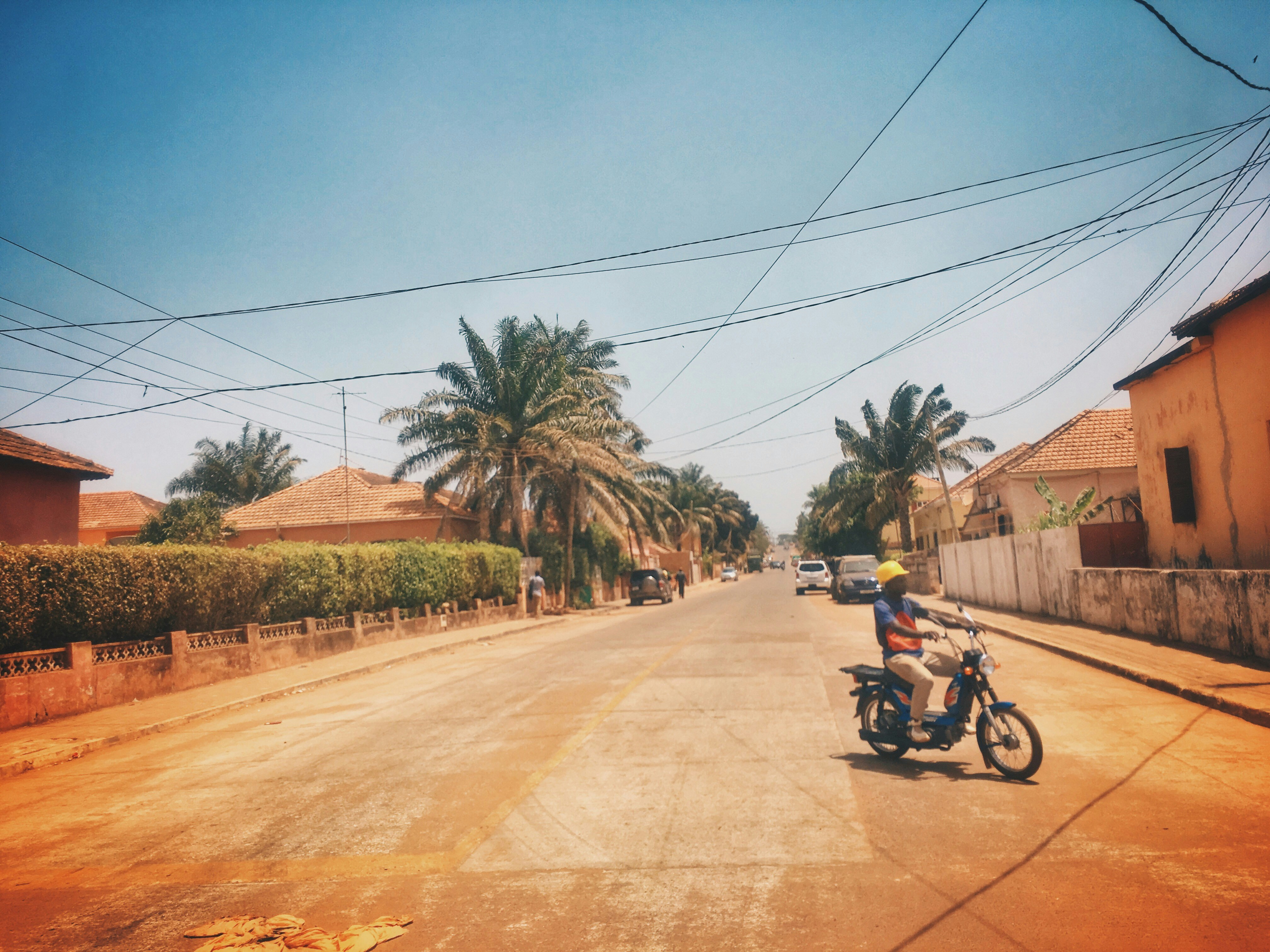
After a rest, stroll Bissau-Velho: pastel facades, Portuguese-era architecture, and quiet streets that feel more village than capital. A coffee and pastry at a local bakery or café will run about $3–5. Wander toward Fortaleza d’Amura’s exterior (access can be restricted but the area offers river views) and familiarize yourself with key landmarks.
Evening (portside dinner and first taxi rides)
Head to the port area for sunset and dinner at a restaurant serving fish, grilled chicken, and local dishes like caldo de mancarra (peanut stew). Expect $10–15 per person for a casual dinner with a drink in 2026. City taxis within Bissau typically cost $1–3 per ride, but agree prices upfront and carry small bills. Use the Hello app’s budget tracking to log your first-day costs and see how your spending compares to your planned Guinea-Bissau travel plan.
Day 2: Markets, Museums, and a Guinea-Bissau City Food Walk
Day 2 is your deep dive: tour Bandim Market, visit the Ethnographic Museum if open, and sample simple restaurants that show you the everyday flavors of Bissau.
Morning (Bandim Market and city orientation)
Start early to avoid the strongest heat. Take a taxi (around $1–3) or walk to Bandim Market, Bissau’s main market, where stalls sell fruit, dried fish, textiles, and household items. Set aside $2–5 for small purchases and snacks. This is a good place to observe daily life but keep valuables close and ask before taking photos.
Midday (museum and lunch)
From Bandim, head toward the Ethnographic Museum or similar small cultural institutions; entrance is usually in the $3–5 range based on broader regional museum pricing and specific budget guides that cite about $5 for museum visits in Guinea-Bissau. For lunch, look for simple eateries serving rice dishes, grilled fish, or chicken – a plate costs roughly $5–8 in 2026. If you’re careful with drinks and extras, you can keep midday food spend near $10–12.
Afternoon (siesta and neighborhood walk)
Heat and humidity are strong, so many travelers retreat to their guesthouse or hotel mid-afternoon. Later, walk through the Plateau area again, noticing administrative buildings and local shops. This is a good time to try a fresh juice or local beer ($2–3) and jot down expenses in the Hello app, which can categorize them automatically.
Evening (local restaurant circuit)
For dinner, choose a restaurant popular with locals and expats; mid-range spots often run $10–20 per person for a main and drink in 2026. If you’re following a Guinea-Bissau travel plan on a budget, look for daily specials or shared plates. Whether you pay in West African CFA or euros, Hello’s multi-currency tracking helps keep your Guinea-Bissau 3 day itinerary financially on track.
Day 3: Bijagós Islands Day Trip or Extra Time in Bissau
Day 3 is best used for a Bijagós Islands day trip if schedules allow; otherwise, stay in Bissau for slower walks, cafés, and a final market run before departure.
Morning (boat planning and port transfer)
If conditions and timing are right, arrange a shared boat transfer to Bubaque or another accessible island in the Bijagós archipelago. Travel With Hello’s longer itineraries and regional guides suggest shared boat transfers between Bissau and Bubaque cost around $25–40 per person in 2026, varying by season and boat type. Factor in a taxi to the port ($1–3) and arrive early to confirm departure times – schedules are not always fixed.
Afternoon (island or city time)
On an island day trip, you might walk village paths, swim, and eat a simple lunch for $8–12, then return to Bissau by late afternoon. If boats or weather make island travel impractical, stay in Bissau: revisit Bissau-Velho for photos, browse small shops for souvenirs, or sit in a café with a cold drink ($2–4). This flexible approach keeps your Guinea-Bissau travel plan realistic.
Evening (farewell dinner and departure prep)
Close your Guinea-Bissau 3 day itinerary with a slightly nicer dinner: mid-range restaurants typically cost $15–25 per person with a drink in 2026. Confirm your airport taxi – guides for Bissau note airport transfers usually run $6–15 depending on distance and negotiation. Use the Hello app’s expense splitting if you’re traveling with friends, and an eSIM from Hello for Guinea-Bissau to check flight updates and weather without hunting for Wi‑Fi.
Budgets, Costs, and a Guinea-Bissau Trip Planner Comparison Table
Most travelers can plan a Guinea-Bissau 3 day itinerary with total on-the-ground costs of roughly $180–240 (budget), $350–500 (mid-range), and $700+ (luxury) in 2026, depending on accommodation choice and whether a Bijagós island excursion is included.
Drawing on regional cost guides and Travel With Hello’s longer Guinea-Bissau itineraries, typical 2026 daily costs in Bissau look like this: casual meals often run $10–15 per day for budget travelers, rising to $25–40 for mid-range dining and $50–80 for more upscale choices. Local transport by taxis and minibuses usually sits around $4–8 per day for budget travel and $8–15 for mid-range, with luxury travelers spending $20–40 or more on private drivers and pre-arranged transfers. Boat excursions to the Bijagós add $25–40 per person for shared transfers, while private boats can be significantly more.
Here’s a simple comparison table you can use as a Guinea-Bissau trip planner:
| Category | Budget (per day) | Mid-range (per day) | Luxury (per day) |
|---|---|---|---|
| Accommodation | $20–30 guesthouse | $45–80 hotel | $120–220+ top hotels/guesthouses |
| Food & drinks | $10–15 | $25–40 | $50–80 |
| Local transport | $4–8 | $8–15 | $20–40 |
| Activities & tours | $10–25 | $30–80 | $80–150 |
For three days, that translates roughly to $150–250 (budget), $300–500 (mid-range), and $700–900+ (luxury) before flights. The Hello app’s multi-currency tracking and AI receipt scanning make it easier to stay within whichever band you choose.
Practical Tips: Neighborhoods, Transport, Safety, and Connectivity
The most efficient Guinea-Bissau travel plan keeps you based in Bissau’s Bissau-Velho/Plateau area, uses taxis sparingly, and relies on an eSIM from Hello for reliable data and maps instead of chasing café Wi‑Fi.
Best areas to stay
Staying in or near Bissau-Velho gives you easy access to the old town, port, and cafés, while the Plateau/central district offers straightforward taxi connections and slightly more modern infrastructure. Regional guides note that budget travelers manage on roughly 15,000–25,000 CFA (about $25–40) per day with guesthouse rooms and local restaurants, while hotels with more reliable generator power and air conditioning push daily spending to 40,000–70,000 CFA ($65–115).
Getting around Bissau
Within the city, expect $1–3 for most taxi rides in 2026, with airport runs at $6–15 depending on distance and negotiation. Shared minibuses (chapas) can drop costs below $1, but taxis are generally more straightforward for short stays. Always agree fares before boarding and carry small cash.
Staying safe and connected
Guinea-Bissau sees modest tourism flows compared with nearby countries; UN tourism statistics list tens of thousands of international arrivals annually rather than millions, so expect limited infrastructure and few English signs. Basic precautions apply: avoid walking alone at night in quiet areas, keep valuables out of sight, and ask your guesthouse or hotel about current local advice. For connectivity, an eSIM from Hello gives you mobile data as soon as you land, and the Hello app’s bank statement import (CSV/PDF) and AI expense categorization help you understand where your money is going in real time.
Common Questions About a 3-Day Guinea-Bissau Itinerary
A Guinea-Bissau 3 day itinerary is enough to explore Bissau, visit markets and museums, and squeeze in a Bijagós day trip if boat schedules and weather cooperate, but not enough to see the whole country.
Is Guinea-Bissau safe for a short trip?
Guinea-Bissau is generally calm for visitors, but infrastructure is basic and information may be limited. Most travelers stick to Bissau and the more accessible Bijagós islands, follow local advice from their guesthouse or hotel, and avoid carrying valuables openly.
How much does 3 days in Guinea-Bissau cost in 2026?
Using regional budget data and Travel With Hello’s longer itineraries as a benchmark, most travelers should plan around $60–90 per day on a budget, $120–170 per day mid-range, and $250+ per day for a more luxurious stay, excluding flights. That puts a Guinea-Bissau 3 day itinerary roughly in the $180–240, $350–500, or $700+ total range.
Is three days enough time?
Three days is ideal if your goal is to experience Bissau itself and perhaps one island. One full day covers Bissau’s old town, Fortaleza area views, and Bandim Market; another day and a half gives room for markets, museums, and a boat excursion.
Do I need cash, or will cards work?
Cash in West African CFA franc (XOF) is essential, as card acceptance is patchy outside nicer hotels. You can log cash withdrawals in the Hello app and use its multi-currency tracking to see how much of your Guinea-Bissau travel plan budget remains.
How do I stay connected?
Get Hello’s eSIM plans for Guinea-Bissau before you fly so you arrive with data, maps, and messaging ready to go. Plans start from 5GB with instant activation and work through the Hello app on iOS and Android.
Explore These Destinations
Book this trip
Compare options on trusted travel sites
Plan stays for this trip
Continue to a reviewed booking partner to check current property details and terms.

Make the most of Guinea-Bissau
From eSIM connectivity to expense tracking, Hello is the all-in-one companion that keeps your trip stress-free.
Related Articles
Guinea-Bissau Currency & Money Guide: Exchange, Cards, and Tips
Currency exchange, credit card acceptance, ATM tips, tipping culture, and money-saving advice for Guinea-Bissau.
26 July 2026
Guinea-Bissau Safety Guide: Tips for a Safe Trip
Safety tips, health advisories, emergency contacts, common scams, and travel insurance advice for Guinea-Bissau.
18 July 2026
Guinea-Bissau Visa & Entry Requirements for Singapore Passport Holders
Visa requirements, passport validity, customs allowances, and entry tips for Singapore citizens travelling to Guinea-Bissau.
9 July 2026