3 Days in Bhutan: A Day-by-Day Itinerary
A detailed 3-day itinerary for Bhutan with daily activities, costs, neighborhoods, and transport tips.
By Hello Travel Team
This article contains affiliate links. If you book through them, Hello may earn a commission at no additional cost to you. Our editorial recommendations are independent. Learn more.
- 1
Arrival & First Explorations in Thimphu
- MorningParo Airport to Thimphu taxi transfer~$30
- Late MorningHotel check-in and local lunch~$15
- AfternoonVisit Buddha Dordenma viewpoint~$5
- Early EveningExplore Tashichho Dzong~$5
- EveningDinner in central Thimphu~$20
Central ThimphuTashichho Dzong areaBuddha Dordenma hillFrom Paro Airport, take a shared taxi or private car to Thimphu (1–1.5 hours, ~$25-40). Within Thimphu, use local taxis (~$2-5 per ride) or walk between central sights.
Budget$50Mid-range$120Luxury$300 - 2
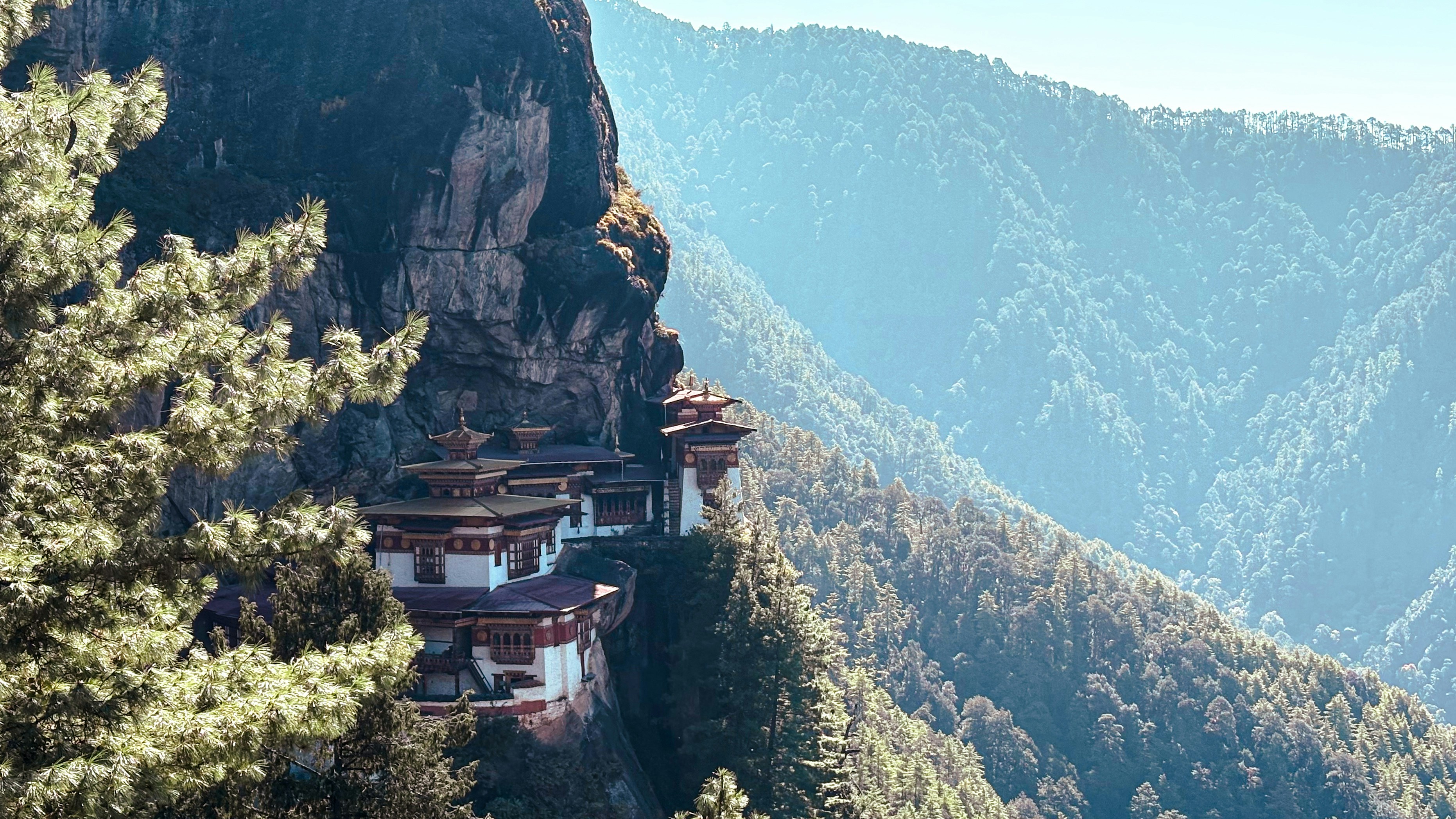
Paro Town and Tiger’s Nest Day Trip
- Early MorningTaxi from Thimphu to Paro~$30
- MorningBreakfast in Paro~$8
- Late Morning to AfternoonHike to Tiger’s Nest (Paro Taktsang)~$20
- AfternoonLunch at viewpoint café or in Paro town~$15
- Late AfternoonVisit Paro Dzong and main street~$5
- Early EveningTaxi back to Thimphu~$30
- EveningDinner in Thimphu~$22
Paro townTiger’s Nest trail areaCentral ThimphuArrange a day-trip taxi or driver between Thimphu and Paro (~$60-80 return). The Tiger’s Nest trailhead is reached by local road; drivers usually wait at the base during your hike.
Budget$60Mid-range$140Luxury$320 - 3
Thimphu Culture, Museums, and Markets
- MorningBreakfast in Thimphu~$8
- Late MorningVisit Folk Heritage Museum~$5
- MiddayNational Library and nearby sights~$3
- AfternoonLunch at mid-range café~$15
- AfternoonThimphu Craft Bazaar shopping~$25
- Late AfternoonStroll around Clock Tower Square
- EveningFarewell dinner~$22
Central ThimphuFolk Heritage Museum areaClock Tower SquareCraft Bazaar streetMost day 3 sights are within or near central Thimphu; walk where possible and use short taxi rides (~$2-3) when needed, keeping transport costs low.
Budget$40Mid-range$90Luxury$180
Trip Summary
Trip starter
Turn this 3-day itinerary into a Hello trip
Start with a prefilled trip for Bhutan, then add dates, invite friends, track expenses, and pick an eSIM before you land.
Name and destination carried into the app.
Split costs and settle up during the trip.
Choose data for the destination before departure.
TL;DR: A Perfect 3-Day Bhutan Itinerary in and around Thimphu
A 3-day Bhutan itinerary is best spent in and around Thimphu, combining culture, short hikes, and nearby day trips with a mix of local buses and taxis, plus meals from $5-25 in 2026. With smart planning and the Hello app, you can track every expense and stay connected easily.
If you only have three days in Bhutan, basing yourself in Thimphu gives you the most efficient blend of monasteries, city life, and countryside without changing hotels every night. You’ll explore the capital on day 1, visit nearby Paro and the iconic Tiger’s Nest on day 2, then dive deeper into Thimphu’s culture and markets on day 3.
According to Bhutan’s Department of Tourism, the country welcomed around 315,000 visitors in 2019 before the pandemic and has been gradually reopening with a renewed focus on sustainable, high-value tourism. That means well-maintained sites, clean public spaces, and a calm atmosphere compared with more crowded Himalayan destinations.
Expect typical meal costs from $5-10 for local budget eateries in 2026, $15-25 for mid-range restaurant dining, and $30+ in higher-end hotel restaurants. Taxis between Thimphu and Paro are usually $25-40 one way, with shared options cheaper but less flexible. Use Hello’s trip planning and budget tracking to log your transport, meals, and entrance fees in real time.
Below you’ll find a practical Bhutan 3 day itinerary with morning–afternoon–evening breakdowns, approximate prices, neighborhood suggestions, and transport tips, plus a handy comparison table of budget, mid-range, and luxury options.
Day 1 Bhutan Itinerary: First Taste of Thimphu’s Monasteries and City Life
Day 1 in Thimphu balances gentle sightseeing and light walking, with visits to key landmarks like Tashichho Dzong, Buddha Dordenma, and the central market, plus taxis within the city typically costing $2-5 per ride in 2026. This first day keeps things easy while you acclimatize.
Morning: Arrival and settling in
Most international visitors land at Paro Airport, about 1–1.5 hours from Thimphu. A private taxi from Paro to Thimphu usually costs $25-40 in 2026 depending on negotiation and vehicle type, while shared taxis or buses can be closer to $10-15. Check into your hotel or guesthouse in central Thimphu to stay near restaurants and shops. Use Hello to log that first taxi ride with AI receipt scanning so you start tracking your budget from day one.
Afternoon: Buddha Dordenma and viewpoints
Grab a simple Bhutanese lunch of ema datshi (chili and cheese) and red rice for about $5-10 at a local eatery. Then hire a taxi ($3-5 one way) up to Buddha Dordenma, the giant seated Buddha overlooking Thimphu Valley. Spend 1–2 hours walking around the statue, enjoying panoramic views and getting your first feel for Bhutan’s blend of spirituality and modern life.
Evening: Tashichho Dzong & city stroll
In the early evening, head to Tashichho Dzong, the impressive fortress-monastery that serves as the seat of government and monastic body. Many travelers spend at least an hour exploring the outer courtyards and watching local life. A taxi from central Thimphu to the dzong is usually under $3. Dinner at a mid-range restaurant costs about $15-25 in 2026; try momos, curries, and local tea. Track meals and taxi rides automatically using Hello’s multi-currency expense tracking so you can see your day 1 total at a glance.
Day 2 Bhutan 3 Day Itinerary: Paro Town and Tiger’s Nest Monastery
Day 2 of a Bhutan 3 day itinerary focuses on Paro and Tiger’s Nest, with an early start, a scenic hike, and round-trip transport that typically costs $30-60, plus entrance fees and meals that bring the day’s mid-range total to around $120-150 in 2026.
Morning: Transfer to Paro and start the hike
Leave Thimphu around 7:00–7:30 am. A taxi to Paro usually costs $25-40 one way in 2026, or you can pre-arrange a day trip with a driver for about $60-80 including waiting time. In Paro, have a light breakfast (tea and pastries for $3-6) before heading to the Tiger’s Nest (Paro Taktsang) trailhead. Most travelers begin the hike by 9:00 am to avoid midday heat.
The hike typically takes 2-3 hours up and 1.5-2 hours down, depending on fitness. It’s a steady climb but well-marked, with pony rentals available for part of the way from about $15-25. Many visitors report total time on the trail of 4-6 hours, including photo stops and monastery visits.
Afternoon: Lunch and Paro town
Enjoy a simple set lunch at the halfway viewpoint café (often $10-15) or eat back in Paro town for similar prices. After returning, explore Paro Dzong and the wooden cantilever bridge, then stroll along Paro’s main street for handicrafts and local snacks.
Evening: Back to Thimphu
Return to Thimphu in the late afternoon or early evening. Dinner in Thimphu can again range from $5-10 at simpler places to $15-25 at more atmospheric restaurants. Log shared costs with friends using Hello’s expense splitting, which automatically handles different currencies, and keep your Bhutan travel plan on track by checking your day 2 budget in the app.
Day 3 Bhutan Trip Planner: Culture, Museums, and Markets in Thimphu
Day 3 in Thimphu is your culture-and-shopping day, with visits to museums, craft shops, and local markets, along with short taxi hops of $2-3 and meals from $5-25, making this one of the more relaxed and customizable days of your Bhutan travel plan.
Morning: Folk Heritage Museum and National Library
Start around 9:00 am with a traditional breakfast (sweet tea, bread, and eggs for $4-8), then head to the Folk Heritage Museum to see a preserved traditional Bhutanese house and rural artifacts. Tickets are commonly in the $3-5 range. Continue on to the National Library, which holds ancient Buddhist texts and offers a peaceful glimpse into Bhutan’s literary past.
Afternoon: Craft Bazaar and city roaming
After lunch at a mid-range café ($10-18), spend your afternoon at the Thimphu Craft Bazaar and nearby shops. This is ideal for souvenirs like hand-woven textiles, wooden masks, and local incense. Budget at least $20-40 if you plan to bring home gifts. Walk between most central sights or use short taxi rides, usually $2-3 each.
Evening: Last views and farewell dinner
For your final evening, wander through Clock Tower Square and nearby streets, then enjoy a farewell dinner — budget options at $5-10, mid-range at $15-25, and hotel restaurants from $30+. According to Bhutan’s government, tourism is managed with a focus on cultural preservation, and you’ll see this reflected in dress codes, language, and architecture throughout Thimphu. Use Hello’s voice expense entry to quickly log your last-day spending and keep a clean record of your full 3-day Bhutan itinerary.
How Much Does 3 Days in Bhutan Cost? Budget vs Mid-Range vs Luxury
A 3-day Bhutan trip typically ranges from about $150 for strict budget travelers to $800+ for luxury stays in 2026, once you factor in accommodation, meals, local transport, and entrance fees, with the Hello app helping you track and optimize spending in real time.
Bhutan is known for prioritizing high-value, low-volume tourism; before COVID-19, the country welcomed around 315,000 visitors in 2019 according to Bhutan’s Department of Tourism, far fewer than regional neighbors, which contributes to higher per-day costs than mass-tourism destinations. That said, a short Bhutan travel plan can still be managed on different budgets.
Here is a simple comparison to guide your Bhutan trip planner:
| Tier | Daily estimate (USD, 2026) | Accommodation | Meals per day | Notes |
|---|---|---|---|---|
| Budget | $50 | Guesthouse / homestay | $15-20 (local eateries) | Simple rooms, local buses, shared taxis |
| Mid-range | $120 | Comfortable hotel | $25-35 (mix of places) | Private taxis, some guided day trips |
| Luxury | $300 | Boutique / high-end | $50+ (hotel dining) | Private car and driver, premium experiences |
By logging expenses with Hello’s AI receipt scanning and multi-currency tracking, you can compare your planned daily budgets with actual spending and adjust as you go — for example, choosing a local eatery instead of a hotel restaurant if you overspend on transport. Expense splitting also keeps group costs clear when sharing taxis or guides.
Remember that Bhutan occasionally updates tourism-related fees and policies, so check the latest information from official Bhutan tourism channels during trip planning to confirm current costs and any mandatory charges before you finalize your Bhutan 3 day itinerary.
Transport and Connectivity Tips for Your Bhutan 3 Day Itinerary
For a 3-day Bhutan itinerary, most travelers rely on taxis and pre-arranged drivers between Paro and Thimphu, plus short city rides costing $2-5, while an eSIM from Hello keeps you connected for maps, messaging, and expense tracking without hunting for local SIM cards.
Getting around: Paro–Thimphu and local taxis
The main transport corridor for this Bhutan travel plan is the road between Paro (international airport) and Thimphu (capital city). A typical one-way taxi fare in 2026 is $25-40, with return day-trip arrangements around $60-80 depending on negotiation and vehicle type. Local taxis inside Thimphu and Paro commonly cost $2-5 per ride. Buses between Paro and Thimphu are cheaper, often under $5, but less flexible for a tight 3-day schedule.
Connectivity: staying online in the Himalayas
Bhutan’s urban areas and main tourist routes have reasonable mobile coverage, but data speeds can vary. Buying and activating a Hello eSIM for Bhutan before you fly means you arrive connected and ready to use navigation, translation, and Hello’s budget tracking features from the moment you land. Hello’s eSIM plans start from 5GB with live pricing, so you can choose a data bundle that matches your short stay.
Because Hello handles multi-currency tracking and automatic exchange rates, you can log taxi fares quoted in Bhutanese ngultrum, see the USD equivalent, and keep your Bhutan trip planner aligned with your original budget. Voice expense entry also helps if you’re logging costs on the go after a long hike or late-night dinner.
Combine taxis, occasional walking, and a pre-arranged driver for Tiger’s Nest to make your Bhutan 3 day itinerary efficient without feeling rushed.
Common Questions About Planning a 3-Day Trip to Bhutan
A 3-day trip to Bhutan is enough for Thimphu and Paro highlights, including Tiger’s Nest, with typical daily costs ranging from $50 for budget travelers to $300+ for luxury, and the Hello app simplifying both connectivity and expense tracking for short stays.
Is 3 days enough for Bhutan?
Three days is short but workable if you focus on Thimphu and Paro. You can explore Thimphu city on day 1, hike Tiger’s Nest and see Paro on day 2, then visit museums and markets in Thimphu on day 3. A longer trip allows for additional valleys and rural experiences.
How much should I budget for a Bhutan 3 day itinerary?
In 2026, many travelers plan roughly $150 for strict budget (guesthouses, local buses, simple meals), $350 for mid-range (comfortable hotels, taxis, varied dining), and $800+ for luxury (premium hotels and private drivers). These figures help shape your Bhutan trip planner and can be refined by tracking real-time expenses in Hello.
Do I need to pre-book everything?
Because Bhutan focuses on managed tourism and has fewer visitors than nearby destinations, it’s wise to pre-book accommodation and transport for a short stay, especially your Paro–Thimphu transfers and Tiger’s Nest plans. This keeps your 3-day schedule on track and reduces time spent negotiating logistics.
How should I stay connected?
For a short Bhutan itinerary, buying and activating a Hello eSIM for Bhutan before departure lets you arrive with mobile data ready for maps, messaging, and checking reservations. Combined with Hello’s trip planning and budget tools, it turns your phone into a practical Bhutan trip planner.
Where can I learn more about Bhutan?
For broader destination info beyond this 3-day plan, check the main Bhutan page on travelwithhello.com while you refine dates, budgets, and activities.
Explore These Destinations
Stay Connected
Book this trip
Compare options on trusted travel sites
Plan stays for this trip
Continue to a reviewed booking partner to check current property details and terms.

Make the most of Bhutan
From eSIM connectivity to expense tracking, Hello is the all-in-one companion that keeps your trip stress-free.
Related Articles
Bhutan Currency & Money Guide: Exchange, Cards, and Tips
Currency exchange, credit card acceptance, ATM tips, tipping culture, and money-saving advice for Bhutan.
24 July 2026
Bhutan Safety Guide: Tips for a Safe Trip
Safety tips, health advisories, emergency contacts, common scams, and travel insurance advice for Bhutan.
16 July 2026
Bhutan Visa & Entry Requirements for Singapore Passport Holders
Visa requirements, passport validity, customs allowances, and entry tips for Singapore citizens travelling to Bhutan.
7 July 2026