Key Takeaways
- ✓Tunisia in 2026 offers a compact mix of Mediterranean coast, Roman heritage, and Sahara landscapes at excellent value compared with many other destinations.
- ✓Aim for March–May or late September–November for the most comfortable weather, especially if you plan to combine city sightseeing with desert excursions.
- ✓Daily budgets of roughly US$30–50 (budget), US$60–100 (mid-range), and US$120+ (higher-end) are realistic starting points for Tunisia travel planning.
- ✓Visa and entry rules vary by nationality, so always confirm your specific passport requirements; Singapore citizens can follow a dedicated Tunisia visa guide.
- ✓Hello eSIM is the simplest way to stay connected in Tunisia in 2026, supporting navigation, translation, and real-time budgeting through the Hello app.
- ✓Tunisia’s transport mix includes trains, buses, shared taxis (louages), and private transfers, making it feasible to explore cities, coast, and desert in 3–10 days.
- ✓Cash remains essential for everyday expenses, with cards more common in larger hotels and some restaurants, so plan to carry and manage Tunisian dinar safely.
- ✓Reading up on safety and cultural etiquette before you go greatly improves your experience; use dedicated Tunisia safety and cultural guides alongside this pillar.
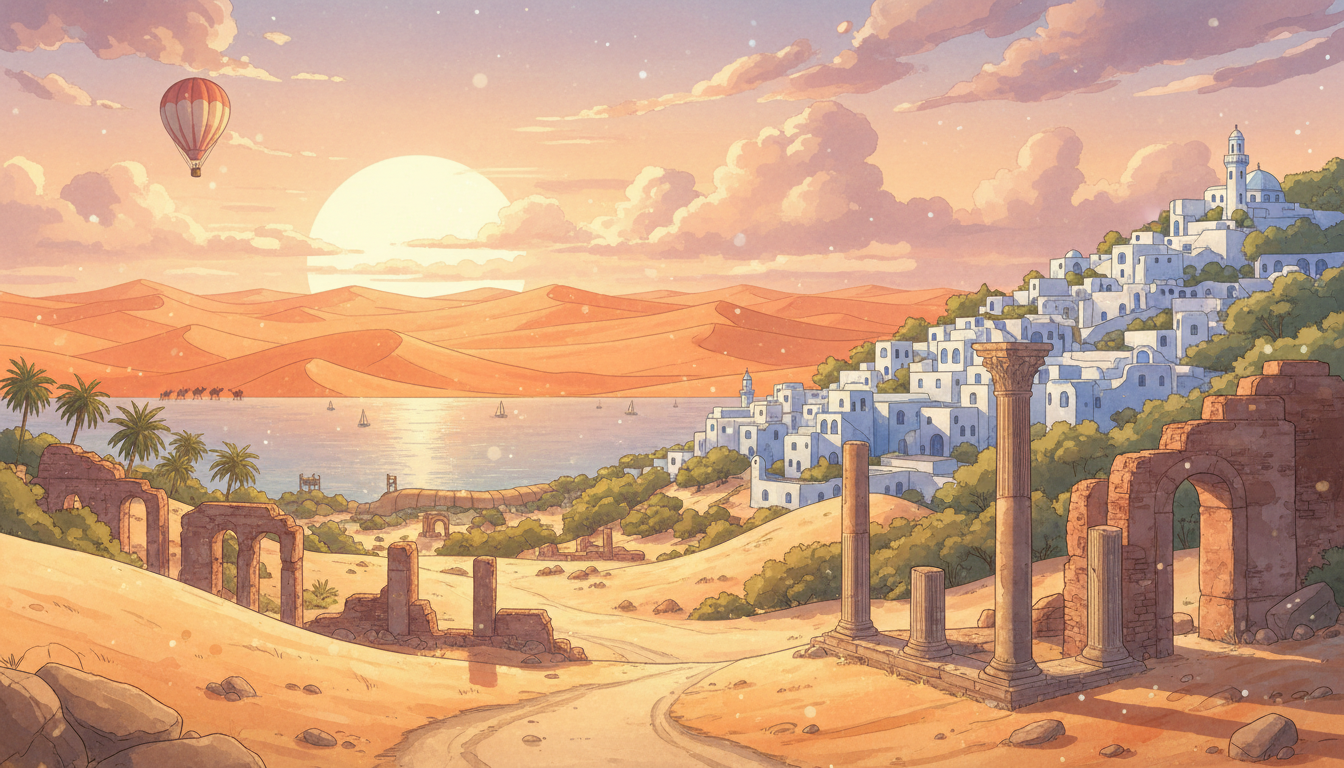
Tunisia is where the Sahara meets the Mediterranean, Roman ruins rise beside blue-and-white seaside towns, and café terraces buzz late into the night. As of 2026, it remains one of North Africa’s most rewarding – and underrated – destinations, with excellent value, rich culture, and diverse landscapes packed into a relatively small country.
This complete Tunisia travel guide is your hub for planning a trip: from when to go and how much to budget, to visas, transport, food, connectivity, and safety. Think of it as your high-level trip planner, with links out to deep dives when you’re ready to get specific.
You’ll find practical frameworks to choose the best season, budget level, and itinerary length for your style of travel. We’ll walk through everyday logistics – cash, cards, public transport, and Hello eSIM data – plus cultural etiquette so you feel confident on the ground.
Whether you’re planning a quick 3-day city break, a 5–10 day cultural and desert adventure, or fitting Tunisia into a bigger North Africa trip, this guide ties everything together. Use it alongside the Hello app for budgeting, expense splitting, and seamless eSIM connectivity, and you’ll be ready to visit Tunisia with clarity – not guesswork.
Why Visit Tunisia in 2026
Tunisia in 2026 offers a rare mix of Mediterranean beaches, ancient ruins, and Saharan adventure at prices far lower than many European or Asian hotspots, making it ideal for culture lovers, budget-conscious travellers, and first-time visitors to North Africa.
Tunisia is compact, well-connected, and surprisingly varied. In a single trip you can wander the UNESCO-listed medina of Tunis, explore the Roman amphitheatre of El Jem, sleep under Saharan stars near Douz, and relax in coastal towns like Hammamet or Sidi Bou Said. Compared with destinations like Japan or Thailand, Tunisia’s strengths are shorter travel distances, deep Roman and Arab heritage, and off-the-beaten-path feel.
As of 2026, Tunisia remains excellent value: daily costs are generally lower than in Southern Europe, and you’ll find good mid-range hotels, traditional guesthouses, and local restaurants at friendly prices. For a detailed breakdown of what you’ll spend on accommodation, food, transport, and activities, see the Tunisia Travel Budget Guide: Daily Costs and Money Tips.
Safety is a common question. Tunisia has areas that are very tourist-friendly and others that require more caution; understanding this nuance matters more than headlines. The Tunisia Safety Guide: Tips for a Safe Trip explains current safety considerations, common scams, and health tips as of 2026.
If you’re wondering whether Tunisia works for a short stopover or a longer adventure, use the itinerary cluster: start with 3 Days in Tunisia: A Day-by-Day Itinerary for a taste, then scale up to Tunisia in 5 Days: The Perfect Extended Itinerary or Tunisia in 10 Days: The Ultimate Travel Itinerary depending on your time and interests.
Best Time to Visit Tunisia: Seasons & Weather
The best time to visit Tunisia is generally March–May and late September–November, when temperatures are comfortable, crowds are moderate, and you can combine coastal, city, and desert experiences without extreme heat.
Tunisia has a Mediterranean climate in the north and coastal areas, and a semi-arid to desert climate in the interior and south. Summers (June–August) can be very hot, especially around the Sahara, while winters (December–February) are mild on the coast but cooler and wetter in the north. When planning, consider both region and activity: beach-focused trips can work in summer, but desert-heavy itineraries are best in shoulder seasons.
Here’s an at-a-glance seasonal comparison to help you decide:
| Season (2026) | Typical Temps (North/Coast) | Sahara & South | Pros | Cons |
|---|---|---|---|---|
| Mar–May | ~18–25°C | Warm, not extreme | Best overall weather, flowers, fewer crowds | Some rain in north |
| Jun–Aug | ~28–35°C | Very hot, often >40°C | Great for beach resorts | Desert heat, hotter city sightseeing |
| Sep–Nov | ~20–28°C | Cooling, still warm | Ideal for mixed itineraries | Occasional storms |
| Dec–Feb | ~12–18°C | Cool nights | Cheaper, quieter, city focus | Too cool for beach, shorter days |
If you’re combining the coast with the desert (e.g., Tunis–Sidi Bou Said–Douz–Tozeur), aim for April–May or October–early November. For a short cultural city break, you can visit year-round with appropriate clothing.
For concrete examples of seasonal routes and what you can realistically see in 3, 5, or 10 days, use the itinerary clusters: 3 Days in Tunisia: A Day-by-Day Itinerary, Tunisia in 5 Days: The Perfect Extended Itinerary, and Tunisia in 10 Days: The Ultimate Travel Itinerary.
Budget Overview: How Much Does Tunisia Cost?
Tunisia is one of the most budget-friendly countries you can visit in 2026, with typical daily costs ranging roughly from budget US$30–50, mid-range US$60–100, and higher-end US$120+ per person depending on your travel style.
Costs vary by season, city, and how often you move around. Tunis and popular coastal resorts can be pricier than inland towns, but overall you’ll find good value in accommodation, food, and public transport. The Tunisia Travel Budget Guide: Daily Costs and Money Tips breaks down real-world daily budgets, but use the table below as a quick planning reference:
| Travel Style (2026) | Approx. Daily Budget (per person) | What This Typically Includes |
|---|---|---|
| Budget | US$30–50 | Simple hotel/guesthouse, local eateries, public transport, occasional paid sites |
| Mid-range | US$60–100 | Comfortable hotel/riad, mix of local & sit-down restaurants, taxis/trains, guided day trips |
| Higher-end | US$120–200+ | Boutique or resort stays, frequent taxis/private cars, regular guided tours, nicer dining |
Hello is especially useful for keeping on top of your spending. Use the app’s budget tracking and expense splitting features to log hotel nights, restaurant bills, and transport, then match them against the ranges above.
You’ll need to factor in cash versus card usage. As of 2026, Tunisia is still quite cash-reliant, particularly in markets, small cafés, and rural areas. The Tunisia Currency & Money Guide: Exchange, Cards, and Tips explains how to handle Tunisian dinar, where to exchange money, and how widely cards are accepted.
For example budgets tied to specific itineraries, look at the cost notes in Tunisia in 5 Days: The Perfect Extended Itinerary and Tunisia in 10 Days: The Ultimate Travel Itinerary.
Visa & Entry Requirements: Who Can Visit and How
As of 2026, Tunisia offers visa-free or visa-on-arrival access to many nationalities, but rules vary; always check your passport-specific requirements before you book flights, including passport validity and any onward ticket or accommodation proof.
Entry policies depend primarily on your nationality and trip purpose. Many European passport holders and some other nationalities can enter visa-free for short stays, while others need to arrange a visa in advance or may be eligible for visas on arrival. Requirements can evolve, so it’s best to verify with official government or consular sources shortly before traveling.
If you’re traveling on a Singapore passport, the Tunisia Visa & Entry Requirements for Singapore Passport Holders provides a detailed, up-to-date walkthrough: whether you need a visa, how long you can stay, minimum passport validity (often at least six months beyond entry), and any proof of funds or return ticket that immigration officers may request.
Beyond visas, you should be aware of customs allowances and what you can bring into or out of the country, especially when it comes to cash, electronics, and certain food products. The same Singapore-focused guide also covers customs rules, which are broadly similar for other nationalities but may have specific thresholds or forms.
To keep your travel documents organized, store digital copies of your passport, visa (if applicable), hotel confirmations, and onward flight details in the Hello app or a secure cloud folder.
Because visa policies are dynamic, treat this pillar guide as an orientation rather than a legal source, and always cross-check with your nearest Tunisian embassy, consulate, or government portal within a few weeks of your trip.
Getting Around Tunisia: Cities, Sahara, and Coast
Getting around Tunisia in 2026 is relatively straightforward, with affordable trains, shared taxis, buses, and domestic flights linking major cities, plus local transport and taxis within towns; Hello eSIM makes navigating and ride-hailing smoother.
Tunisia’s transport network is a mix of modern and traditional. For inter-city routes such as Tunis–Sousse–Sfax–Gabès, trains and long-distance buses are common, while shared taxis (louages) offer flexible, frequent departures between towns. Within cities, you’ll use a combination of taxis, local buses or trams, and walking in compact historic centers.
The Getting Around Tunisia: Transport Guide for Travellers explains airport transfers, public transport options, louages, inter-city trains, and driving tips in detail. Use it alongside Hello: with Hello eSIM you can access live maps, check transport schedules, and message your accommodation if you’re running late.
Here’s a simple decision guide for inter-city travel:
- For major routes (Tunis–Sousse–Sfax): trains if available; buses as backup.
- For smaller towns: louages (shared taxis) are often fastest.
- For remote desert areas (Douz, Ksar Ghilane): organized tours or private transfers are most practical.
Driving is possible and gives flexibility, but you should be comfortable with local road conditions and traffic norms. The transport guide covers key driving considerations, from speed checks to parking.
When planning your route, cross-check with the itineraries: 3 Days in Tunisia: A Day-by-Day Itinerary, Tunisia in 5 Days: The Perfect Extended Itinerary, and Tunisia in 10 Days: The Ultimate Travel Itinerary, all of which include practical transport tips for each day.
Food & Dining: What and Where to Eat in Tunisia
Tunisian food in 2026 is flavorful, often spicy, and surprisingly varied, with couscous, brik, grilled seafood, and slow-cooked stews at the core, plus a mix of street food, casual cafés, and sit-down restaurants that suit most budgets and diets.
Expect generous use of harissa (chili paste), olive oil, and spices, with influences from Berber, Arab, Mediterranean, and French cuisines. Typical daily eating might include a café breakfast with pastries or local flatbread, a simple lunch from a snack bar or street stall, and a hearty dinner of couscous or grilled meat or fish.
The Tunisia Food Guide: Must-Try Dishes, Prices, and Tips walks through specific must-try dishes, average meal prices, and how to navigate menus and portion sizes. As of 2026, a local restaurant meal is generally much cheaper than in many European capitals, and street food remains excellent value.
Dietary needs are manageable with some planning. Vegetarians will find meat-free couscous and vegetable dishes, though options can be limited in smaller towns. Those avoiding gluten or dairy should focus on grilled meats, salads, and clearly labeled items. The food guide also covers food safety tips, such as choosing busy stalls, drinking safe water, and handling raw produce.
Hello can help you discover and share food experiences with your travel companions: log restaurant expenses, note favorite spots in your trip plan, and rely on Hello eSIM data to use maps and translation apps for menus.
For concrete examples of where food fits into your day, compare the dining suggestions in 3 Days in Tunisia: A Day-by-Day Itinerary, Tunisia in 5 Days: The Perfect Extended Itinerary, and Tunisia in 10 Days: The Ultimate Travel Itinerary.
Top Experiences & Itinerary Planning
The best Tunisia trips in 2026 combine Tunis’s medina and museums, coastal charm in Sidi Bou Said or Hammamet, Roman ruins like El Jem, and at least one Sahara experience around Douz or Tozeur, tailored to how many days you have.
Because Tunisia is compact, you can see a lot without rushing if you plan your route carefully. A short 3-day visit might focus on Tunis, Carthage, and Sidi Bou Said, while 5 days add a coastal or inland stop, and 10 days allow a full loop including the desert, southern oases, and more ruins.
Use this simple framework:
- 3 days: Urban culture + nearby coastal views (Tunis, Carthage, Sidi Bou Said).
- 5 days: Add either a Roman sites focus (El Jem, Kairouan) or a short desert taste (Douz).
- 10 days: Combine cities, ruins, and Sahara with at least one night near the desert dunes.
For detailed routes, daily plans, and example budgets, follow:
- 3 Days in Tunisia: A Day-by-Day Itinerary for a short city-and-coast introduction.
- Tunisia in 5 Days: The Perfect Extended Itinerary for a balanced cultural and scenic trip.
- Tunisia in 10 Days: The Ultimate Travel Itinerary for an in-depth loop with hidden gems.
Hello helps bring these itineraries to life: add your chosen route to the app, track costs against the Tunisia Travel Budget Guide, and keep everyone’s plans in one place.
For cultural context and etiquette at key sites, read the Tunisia Cultural Guide: Etiquette, Customs, and Tips before you go so you know how to dress, greet locals, and behave respectfully in mosques, markets, and cafés.
3 Days in Tunisia: A Day-by-Day Itinerary
ItinerariesTunisia in 5 Days: The Perfect Extended Itinerary
ItinerariesTunisia in 10 Days: The Ultimate Travel Itinerary
Budget PlanningTunisia Travel Budget Guide: Daily Costs and Money Tips
Cultural GuideTunisia Cultural Guide: Etiquette, Customs, and Tips
eSIM Connectivity in Tunisia: Staying Online with Hello
In 2026, the easiest way to stay connected in Tunisia is to use Hello eSIM, which gives instant mobile data access on arrival, supports 200+ countries, and works seamlessly with the Hello app’s trip planning and budgeting tools.
Having reliable data changes how you experience Tunisia: it helps you navigate medinas, check louage timings, translate menus, and share costs with friends. Hello eSIM is designed to be set up before you land or as soon as you have Wi‑Fi, so you don’t need to hunt for local SIM kiosks after a long flight.
The eSIM for Tunisia: Best Plans, Coverage, and Setup Tips article dives into everything connectivity-related: how to install Hello eSIM on iOS or Android, which data packages make sense for short versus long stays, and what coverage to expect in cities, coastal areas, and the desert as of 2026.
A few practical tips:
- Activate Hello eSIM before you leave or at your hotel using Wi‑Fi.
- Choose a data allowance that matches your itinerary’s length and whether you’ll stream or mostly use maps and messaging.
- Keep your physical SIM for calls/SMS if needed, and set Hello eSIM as the data line.
Because Tunisia’s more remote southern areas can have patchier coverage, especially deep in the Sahara, plan offline maps for those segments. The eSIM guide explains which regions have stronger signals so you can anticipate gaps.
Once set up, pair Hello eSIM with the Hello app to track expenses live, share plans with companions, and avoid bill shocks from roaming.
Safety, Culture & Practical Etiquette
Tunisia in 2026 is generally welcoming to visitors, but you’ll have a smoother and safer trip if you understand local etiquette, common scams, and basic health and security practices before you arrive.
Safety varies by region and time of day, like in many countries. Tourist areas around Tunis, Sidi Bou Said, and major coastal resorts see regular international visitors, while more remote areas demand extra awareness. The Tunisia Safety Guide: Tips for a Safe Trip covers current safety considerations, emergency contacts, and how to choose travel insurance.
On the cultural side, Tunisia blends Arab, Berber, and Mediterranean influences. Dress codes are generally relaxed in tourist areas, but modest clothing is advisable in mosques, traditional neighborhoods, and rural towns. Greetings often involve a handshake, and it’s polite to accept tea or coffee when offered in social settings.
The Tunisia Cultural Guide: Etiquette, Customs, and Tips explains do’s and don’ts, how to behave in markets, gender norms, and useful phrases. Reading it before you go helps you avoid unintentional faux pas and deepens your understanding of daily life.
Practical safety tips you can combine with Hello:
- Use Hello eSIM and maps to avoid looking lost with a paper map in busy areas.
- Log passport and insurance details in a secure app, and keep digital copies.
- Stick to registered taxis or clearly marked transport, especially at night.
Knowing how money works also reduces stress. The Tunisia Currency & Money Guide: Exchange, Cards, and Tips outlines tipping norms, cash handling, and ATMs so you can move confidently from day one.
Money, Currency & Paying for Your Trip
Tunisia in 2026 still runs largely on cash, with the Tunisian dinar as the official currency; cards and contactless payments are growing but remain less common than in many European or East Asian destinations.
You’ll likely withdraw dinar from ATMs, exchange foreign currency at banks or authorized bureaus, and pay in cash at markets, small cafés, and local shops. Larger hotels and some restaurants accept cards, but you shouldn’t rely on plastic alone, especially outside big cities.
The Tunisia Currency & Money Guide: Exchange, Cards, and Tips explains how to handle cash, which cards tend to work best, typical ATM fees, and how to avoid poor exchange rates. It also covers tipping culture, so you know when a service charge is already included and when a small cash tip is appreciated.
Hello complements this by helping you track spending in real time. Split group costs instantly – whether it’s a dinner bill paid in cash or a hotel charged to one person’s card – and monitor your daily average against the ranges in the Tunisia Travel Budget Guide: Daily Costs and Money Tips.
For a smoother trip:
- Arrive with at least some euros or dollars to exchange if ATMs are busy.
- Keep small notes for taxis, markets, and tips.
- Store card details safely and have a backup card if possible.
When planning your budget, also cross-check how money plays out across different itinerary lengths using 3 Days in Tunisia: A Day-by-Day Itinerary, Tunisia in 5 Days: The Perfect Extended Itinerary, and Tunisia in 10 Days: The Ultimate Travel Itinerary.
Tunisia Currency & Money Guide: Exchange, Cards, and Tips
Budget PlanningTunisia Travel Budget Guide: Daily Costs and Money Tips
Itineraries3 Days in Tunisia: A Day-by-Day Itinerary
ItinerariesTunisia in 5 Days: The Perfect Extended Itinerary
ItinerariesTunisia in 10 Days: The Ultimate Travel Itinerary
Before You Go: Tunisia Trip Checklist
A smart Tunisia packing and prep checklist for 2026 includes visa and entry checks, travel insurance, Hello eSIM setup, cash planning, itinerary drafting, and a quick cultural and safety read-through so you arrive prepared, not overwhelmed.
Use this high-level checklist as you plan:
- Documents & visas: Confirm entry rules for your nationality; Singapore passport holders can follow the Tunisia Visa & Entry Requirements for Singapore Passport Holders.
- Insurance & safety: Buy travel insurance and read the Tunisia Safety Guide: Tips for a Safe Trip.
- Connectivity: Install and configure Hello eSIM using eSIM for Tunisia: Best Plans, Coverage, and Setup Tips.
- Budget & money: Set a daily budget in the Hello app and review the Tunisia Travel Budget Guide: Daily Costs and Money Tips plus Tunisia Currency & Money Guide: Exchange, Cards, and Tips.
- Itinerary: Choose a route length using 3 Days in Tunisia: A Day-by-Day Itinerary, Tunisia in 5 Days: The Perfect Extended Itinerary, or Tunisia in 10 Days: The Ultimate Travel Itinerary.
- Culture & packing: Read the Tunisia Cultural Guide: Etiquette, Customs, and Tips and pack modest clothing layers suitable for your season.
Beyond these essentials, note emergency contacts from the safety guide inside the Hello app, store digital copies of key documents, and share your itinerary with a trusted contact.
If you’re used to hyper-connected destinations like Japan and Thailand, remember Tunisia feels more traditional in some areas – that’s part of the charm. With this checklist and the linked deep dives, you’ll be well set for a relaxed, well-organized Tunisia trip in 2026.
Tunisia Visa & Entry Requirements for Singapore Passport Holders
Safety & HealthTunisia Safety Guide: Tips for a Safe Trip
eSIM & ConnectivityeSIM for Tunisia: Best Plans, Coverage, and Setup Tips
Budget PlanningTunisia Travel Budget Guide: Daily Costs and Money Tips
Currency & MoneyTunisia Currency & Money Guide: Exchange, Cards, and Tips
Itineraries3 Days in Tunisia: A Day-by-Day Itinerary
ItinerariesTunisia in 5 Days: The Perfect Extended Itinerary
ItinerariesTunisia in 10 Days: The Ultimate Travel Itinerary
Cultural GuideTunisia Cultural Guide: Etiquette, Customs, and Tips
Frequently Asked Questions
Is Tunisia safe to visit in 2026 for solo travellers?
Yes, many solo travellers visit Tunisia safely in 2026, especially in established tourist areas like Tunis, Sidi Bou Said, and coastal resorts. As with any destination, it’s important to stay updated on regional advisories, avoid isolated areas at night, and follow local guidance. The Tunisia Safety Guide: Tips for a Safe Trip offers region-by-region context, emergency contacts, and practical precautions. Pair this with common-sense habits – safeguarding valuables, using registered taxis, and keeping digital copies of documents – and use Hello eSIM for navigation and quick access to information on the go.
How many days do I need for a good Tunisia trip?
For a first visit, 5–10 days is ideal, though you can get a strong introduction in just 3 days. Use 3 Days in Tunisia: A Day-by-Day Itinerary if you mainly want Tunis, Carthage, and Sidi Bou Said; Tunisia in 5 Days: The Perfect Extended Itinerary balances cities and either ruins or desert; and Tunisia in 10 Days: The Ultimate Travel Itinerary covers a full loop with coast, Sahara, and multiple heritage sites. Plan within those frameworks, then adapt with the Hello app to match your interests and pace.
What is a realistic daily budget for Tunisia in 2026?
As of 2026, many travellers are comfortable with roughly US$30–50 per day on a budget, US$60–100 for mid-range, and US$120+ for higher-end stays. The Tunisia Travel Budget Guide: Daily Costs and Money Tips provides detailed breakdowns for accommodation, food, transport, and activities. Use Hello’s budget tracking to set your target, then adjust on the ground as you see local prices. Combine this with the Tunisia Currency & Money Guide: Exchange, Cards, and Tips so you know how much cash to carry and where cards work.
Do I need an eSIM or local SIM card in Tunisia?
You don’t strictly need mobile data, but having it via Hello eSIM makes Tunisia significantly easier and more enjoyable in 2026. With Hello eSIM you can navigate medinas, check transport routes, translate menus, and coordinate with travel companions without relying on hotel Wi‑Fi. The eSIM for Tunisia: Best Plans, Coverage, and Setup Tips explains how to install and configure Hello eSIM on iOS and Android, choose the right data package for your trip length, and understand coverage in cities, coastal areas, and the Sahara.
What should I wear in Tunisia, and are there cultural dress codes?
Tunisia is relatively relaxed, but modest, respectful dress is appreciated, especially in mosques, traditional neighborhoods, and rural areas. For both men and women, covering shoulders and knees is advisable in conservative settings. Beachwear is fine on resorts and beaches, but less appropriate away from coastal leisure areas. The Tunisia Cultural Guide: Etiquette, Customs, and Tips details typical dress expectations, seasonal considerations, and how to balance comfort with local norms so you feel at ease and respectful.
Is Tunisia good for food lovers with dietary restrictions?
Yes, Tunisia offers rich cuisine for food lovers, and many dietary needs can be managed with some planning. Expect couscous, brik, grilled meats, seafood, and vegetable stews, with harissa and spices playing a big role. Vegetarians can find options, especially in larger cities, though choices narrow in smaller towns; gluten-free or dairy-free travellers should rely more on grilled items and salads. The Tunisia Food Guide: Must-Try Dishes, Prices, and Tips covers typical menus, prices, and food safety, plus practical advice for communicating your needs – which is easier when you have Hello eSIM and translation apps.
How do I handle cash, cards, and tipping in Tunisia?
Tunisia in 2026 remains cash-centric, particularly in markets, local cafés, and smaller businesses. Larger hotels and some restaurants accept cards, but you shouldn’t depend on them exclusively. The Tunisia Currency & Money Guide: Exchange, Cards, and Tips explains where to exchange money, typical ATM usage, card reliability, and tipping norms across services. Combine this with the Tunisia Travel Budget Guide: Daily Costs and Money Tips and Hello’s expense tracking to keep your cash flow organized and avoid surprises.
eSIM Plans for Tunisia
Detailed Articles
Dive deeper into specific topics covered in this guide.
Tunisia Travel Budget Guide: Daily Costs and Money Tips
How much does it cost to travel in Tunisia? Daily budget breakdowns for budget, mid-range, and luxury travellers.
10 May 2026
Tunisia Safety Guide: Tips for a Safe Trip
Safety tips, health advisories, emergency contacts, common scams, and travel insurance advice for Tunisia.
23 July 2026
3 Days in Tunisia: A Day-by-Day Itinerary
A detailed 3-day itinerary for Tunisia with daily activities, costs, neighborhoods, and transport tips.
16 June 2026
Tunisia in 5 Days: The Perfect Extended Itinerary
A detailed 5-day itinerary for Tunisia with daily activities, costs, neighborhoods, and transport tips for an extended stay.
11 May 2026
Tunisia in 10 Days: The Ultimate Travel Itinerary
A comprehensive 10-day itinerary for Tunisia covering top attractions, hidden gems, daily costs, and transport between cities.
24 June 2026
Tunisia Currency & Money Guide: Exchange, Cards, and Tips
Currency exchange, credit card acceptance, ATM tips, tipping culture, and money-saving advice for Tunisia.
2 May 2026
Tunisia Visa & Entry Requirements for Singapore Passport Holders
Visa requirements, passport validity, customs allowances, and entry tips for Singapore citizens travelling to Tunisia.
13 July 2026
Getting Around Tunisia: Transport Guide for Travellers
Airport transfers, public transport, ride-hailing apps, inter-city travel, and driving tips for Tunisia.
29 May 2026
More Travel Guides
Destination Guide
Complete Bosnia and Herzegovina Travel Guide 2026
Everything you need to know about travelling to Bosnia and Herzegovina — budget, visa, food, transport, eSIM connectivity, and itineraries.
Destination Guide
Complete Bahamas Travel Guide 2026
Everything you need to know about travelling to Bahamas — budget, visa, food, transport, eSIM connectivity, and itineraries.
Destination Guide
Complete Bahrain Travel Guide 2026
Everything you need to know about travelling to Bahrain — budget, visa, food, transport, eSIM connectivity, and itineraries.
Destination Guide
Complete Sint Eustatius Travel Guide 2026
Everything you need to know about travelling to Sint Eustatius — budget, visa, food, transport, eSIM connectivity, and itineraries.