Key Takeaways
- ✓Panama is a highly varied destination, combining city, canal, beach, island, and mountain experiences in one trip.
- ✓The dry season is usually the easiest time to visit, especially for island and outdoor itineraries.
- ✓Budget planning matters because transport and island logistics can raise costs faster than expected.
- ✓Entry requirements vary by nationality, so check visa rules and passport validity before booking.
- ✓A mix of transport modes is usually the smartest way to move around Panama.
- ✓Hello eSIM is the simplest way to stay connected from the moment you land.
- ✓Food is approachable and value-friendly, but dining costs rise in tourist-heavy areas.
- ✓The best Panama itineraries balance iconic sights with enough time for slow travel and buffer time.
Panama is one of those rare destinations that feels both easy to visit and endlessly rewarding to explore. In a single trip, you can pair a modern capital with colonial streets, rainforest lodges, Caribbean islands, Pacific beaches, coffee highlands, and world-famous engineering at the Panama Canal. That variety is a big reason travellers use Panama as a gateway to Central America — but it is also why smart planning matters.
This complete Panama travel guide 2026 brings together the essentials you need to plan a smooth trip: when to go, how much to budget, what entry rules to check, how to move between regions, what to eat, and how to stay connected with Hello eSIM. It also helps you decide what kind of Panama trip suits your style, whether that means a short city break, a beach-and-island escape, or a longer route that combines Panama City with Bocas del Toro, Boquete, or San Blas.
You’ll find high-level summaries, practical comparison tables, and decision frameworks that go beyond any single itinerary or topic article. For deeper planning, each section links to detailed cluster guides on itineraries, budget, transport, food, currency, culture, safety, visa entry, and connectivity. If you are building a Panama trip planner for 2026, start here: this is the hub that helps you choose the right season, understand your daily costs, avoid common mistakes, and make the most of your time in one of the region’s most diverse travel destinations.
Why Visit Panama in 2026
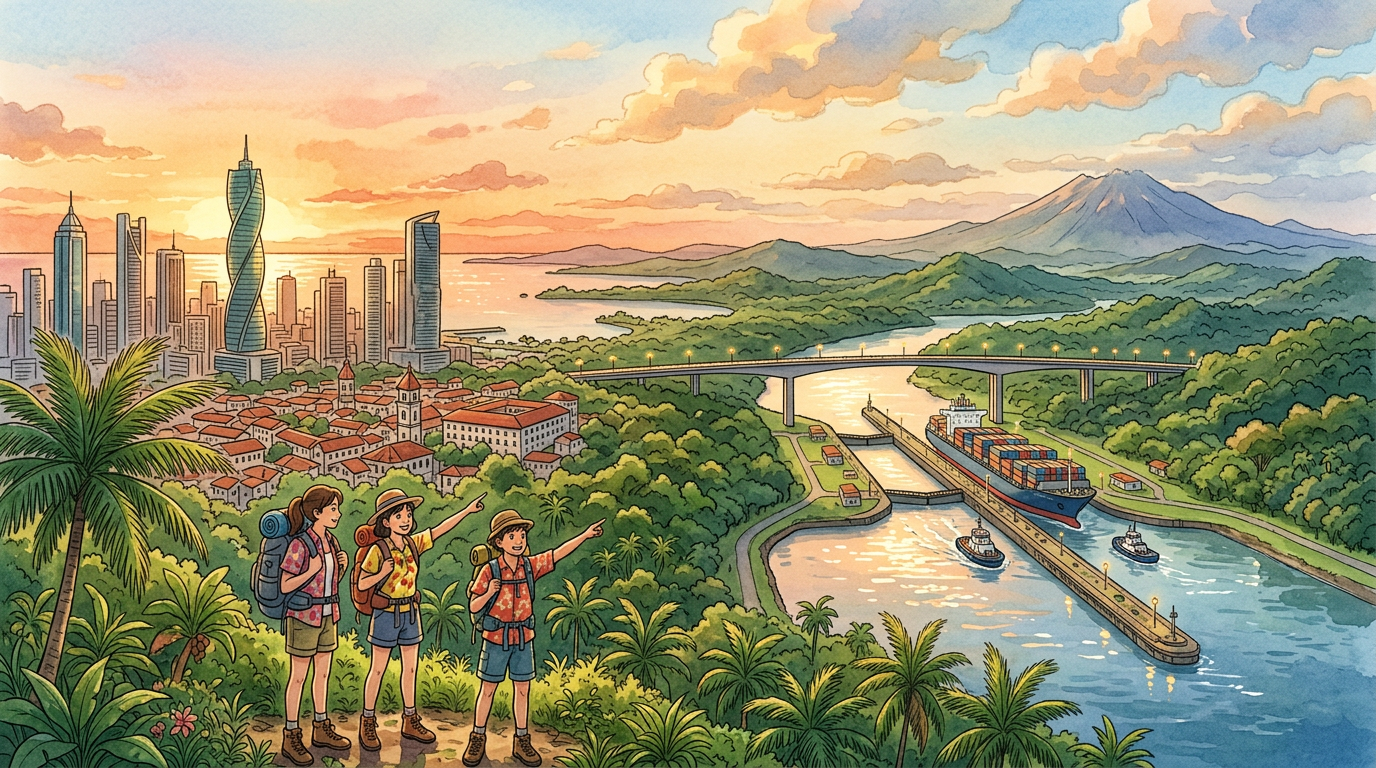
Panama is best known for the canal, but the real appeal is its range: you can base yourself in Panama City for skyline views and museums, then branch out to islands, cloud forest, surf towns, or indigenous communities without needing a complicated multi-country route. It is one of the most flexible destinations in Central America for travellers who want both convenience and variety.
As of 2026, Panama works well for first-time visitors because many of its headline experiences are accessible from the capital, while still offering more adventurous options for repeat travellers. The country is compact enough to combine several landscapes in one itinerary, yet diverse enough to justify a longer stay. If you’re building your route, start with Panama in 5 Days: The Perfect Extended Itinerary or Panama in 10 Days: The Ultimate Travel Itinerary for trip structure ideas.
A useful way to think about Panama is by travel style. If you want culture and convenience, focus on Panama City and the Canal. If you want nature, add Boquete or the rainforest. If you want island time, look at Bocas del Toro or San Blas. This flexibility makes Panama especially attractive for travellers who want to avoid overpacking a trip with too many long transfers.
For broader trip planning, Panama also pairs well with practical tools: Panama Travel Budget Guide: Daily Costs and Money Tips for cost planning and Getting Around Panama: Transport Guide for Travellers for logistics. The best trips usually balance a city base, one nature stop, and one beach or island experience.
Best Time to Visit Panama
The best time to visit Panama depends on whether you prioritise drier weather, lower prices, or fewer crowds. Panama has a tropical climate with a dry season and a rainy season, but conditions vary by region, especially between the Caribbean and Pacific sides. The most comfortable all-around window is usually the dry season, when travel is easier and outdoor activities are more predictable.
For a simple planning framework, think in three buckets: dry season for ease, shoulder months for balance, and rainy season for lower costs and lush scenery. In many parts of the country, the dry season typically runs from about December to April, while the wetter months bring heavier afternoon rain but not necessarily constant washouts. This matters less for city breaks and more for island hopping, hiking, and road-based itineraries.
Here is a quick at-a-glance comparison:
| Season | Typical Conditions | Best For | Trade-offs |
|---|---|---|---|
| Dry season | Sunnier, more reliable travel weather | Islands, hiking, first-time trips | Higher prices, more visitors |
| Shoulder season | Mixed weather, fewer crowds | Balanced itineraries, better value | Some rain delays possible |
| Rainy season | Frequent showers, greener landscapes | Budget trips, flexible travellers | Less predictable transport and tours |
If you want specific timing guidance for your route, compare Panama in 3 Days: A Day-by-Day Itinerary, Panama in 5 Days: The Perfect Extended Itinerary, and Panama in 10 Days: The Ultimate Travel Itinerary. Short trips benefit most from dry-season timing, while longer trips can absorb weather swings more easily.
The most practical rule is this: if your trip centers on beaches, boats, or multi-stop travel, choose the driest months available. If you are focused on Panama City, culture, or food, you have more flexibility year-round.
Panama Budget Overview
Panama can be affordable, mid-range, or surprisingly premium depending on your route and accommodation choices. Panama City tends to be more expensive than smaller towns, and island logistics can raise costs quickly because transport, tours, and boat transfers add up. As of 2026, travellers should budget more for island-heavy itineraries than for city-and-land-based trips.
A useful planning range is below:
| Traveller Style | Daily Budget Range | What It Usually Covers |
|---|---|---|
| Budget | Low-cost hostels, local meals, public transport | Basic room, simple food, limited tours |
| Mid-range | Comfortable hotel, mixed dining, some guided activities | Private room, decent meals, transfers |
| Luxury | Upscale stays, private transport, premium tours | Resort-style comfort, curated experiences |
For more detailed planning, use Panama Travel Budget Guide: Daily Costs and Money Tips and Panama Currency & Money Guide: Exchange, Cards, and Tips. Those guides go deeper on card use, ATM strategy, tipping, and where cash matters most.
The biggest budget levers are accommodation, intercity transport, and island excursions. A city-only trip can be managed quite efficiently, while a route that includes Bocas del Toro or San Blas generally requires extra spending for flights, boats, or packaged transfers. Food also varies: casual local meals are usually good value, but imported goods and sit-down restaurants can push costs up in tourist areas.
A practical decision rule: if your Panama trip is under five days, spend more on location and transport convenience. If you have a week or more, you can control costs better by mixing a city base with one nature region rather than moving every night.
Visa & Entry Requirements
Entry rules for Panama depend on your nationality, passport validity, and trip purpose, so this is one of the first things to check before booking flights. Many travellers can enter for tourism without a complicated process, but documentation standards still matter, especially for return or onward travel. As of 2026, it is wise to verify requirements close to departure because entry rules can change.
If you hold a Singapore passport, use Panama Visa & Entry Requirements for Singapore Passport Holders as your detailed reference. Even when a visa is not required, border officers may still ask for proof of onward travel, accommodation details, and sufficient funds. Passport validity is also important, so make sure your document is valid for the full period required by your carrier and destination rules.
A practical pre-departure checklist for entry is simple: confirm whether you need a visa, check passport expiry, save digital and printed copies of your hotel and flight details, and review customs allowances if you are carrying gifts, electronics, or commercial quantities of goods. For travellers combining Panama with other countries, allow extra time for document checks on connecting routes.
The easiest way to avoid stress is to treat entry prep as part of trip planning rather than a last-minute task. Use the visa guide above for country-specific details, then cross-check with your airline and official government sources before you fly.
Getting Around Panama
Getting around Panama is straightforward once you understand that the country is small in some places and slow in others. Panama City has the best transport infrastructure, but once you move beyond the capital, travel times depend heavily on road conditions, flight schedules, and boat connections. For many itineraries, the smartest approach is to combine airport transfers, domestic flights, shared shuttles, and occasional taxis or ride-hailing rather than relying on one transport mode.
For a full breakdown, see Getting Around Panama: Transport Guide for Travellers. That guide covers airport transfers, public transport, inter-city travel, and driving. The high-level planning takeaway is that Panama rewards itinerary design: grouping destinations by region saves both money and time.
Here is a simple decision framework:
| Transport Option | Best For | Pros | Cons |
|---|---|---|---|
| Airport transfer/taxi | First arrival, late-night trips | Simple, direct | Higher cost |
| Metro/bus in Panama City | City sightseeing | Cheap, practical | Less convenient with luggage |
| Shared shuttle | Inter-city routes | Good value, easy booking | Fixed schedules |
| Domestic flight | Long distances, island access | Fastest option | More expensive |
| Rental car | Flexible countryside itineraries | Independence | Driving stress, parking, insurance |
The biggest mistake travellers make is underestimating transfer time between regions. A “short” distance on the map can involve a ferry, an early-morning departure, or a multi-leg journey. If you are planning a multi-stop itinerary, align your transport choice with the geography: city stays are easiest with taxis and transit, while island and mountain routes often work best with pre-booked shuttles or flights.
For most visitors, the ideal Panama trip mixes at least two transport modes rather than trying to do everything by car or by bus.
Food & Dining in Panama
Panamanian food is one of the easiest ways to understand the country: it is comforting, regional, and practical, with flavors shaped by Caribbean, Indigenous, Spanish, and wider Latin American influences. Travellers usually find the food approachable even if they are not seeking a gourmet trip. Expect rice, plantains, seafood, stews, grilled meats, tropical fruit, and simple breakfast dishes that are filling enough for active days.
For the best overview, read Panama Food Guide: Must-Try Dishes, Prices, and Tips. That guide covers specific dishes and restaurant pricing, but the big-picture advice is that food experiences vary by setting. Casual local eateries usually offer the best value, while tourist-zone restaurants may be pricier but more English-friendly and better for special occasions.
A useful planning lens is to separate meals into three categories: everyday local meals, destination dining, and “treat” meals. Everyday meals keep the budget manageable. Destination dining makes sense in areas known for seafood, coffee-country ingredients, or city restaurants. Treat meals are worth saving for a night when you want to slow down and enjoy the atmosphere.
If you have dietary restrictions, Panama is manageable but not always effortless. Larger cities offer the widest variety, while smaller destinations may require a little flexibility. Hygiene is generally straightforward to manage if you choose busy restaurants, drink safe water where appropriate, and use common-sense food safety practices. For deeper practical advice, the food guide is the best place to start before building your own eating plan for the trip.
Top Experiences and Sample Route Ideas
The best Panama itineraries usually combine one urban base, one nature stop, and one relaxed escape. That formula gives you variety without spending the whole trip in transit. Panama City, the Canal, and Casco Viejo are the anchor experiences for many first-time visitors, while Boquete, Bocas del Toro, and San Blas add the landscapes and slower pace that make the country memorable.
If you want a shorter trip, use 3 Days in Panama: A Day-by-Day Itinerary as a compact blueprint. For a balanced first visit, Panama in 5 Days: The Perfect Extended Itinerary is often the sweet spot. For travellers with more time, Panama in 10 Days: The Ultimate Travel Itinerary allows more regional movement without rushing.
At a glance, here is how the main experience types compare:
| Experience Type | Best For | Why It’s Worth It |
|---|---|---|
| Canal and Panama City | First-time visitors, culture lovers | Easy access, iconic landmarks |
| Beach and islands | Relaxation, snorkeling, downtime | Clear water, slower pace |
| Mountain and coffee country | Hiking, cool air, scenic stays | Strong contrast to the coast |
| Indigenous and cultural visits | Deeper travel, respectful learning | Distinct perspective on Panama |
A good rule is to avoid overloading a short trip with too many regions. The country looks small, but the logistics can be more demanding than expected. Instead, choose one “headline” region and one supporting region, then leave space for restaurants, viewpoints, and downtime. Panama is at its best when your itinerary has rhythm rather than constant movement.
Hello eSIM Connectivity in Panama
Staying connected in Panama is easiest when you set up your data plan before arrival, especially if you want airport transfers, maps, messaging, and booking confirmations to work immediately. Hello eSIM is a convenient option for travellers who want instant activation, flexible data use, and coverage across Panama without visiting a shop after landing.
For setup details, coverage notes, and plan selection, read eSIM for Panama: Best Plans, Coverage, and Setup Tips. The main advantage of Hello eSIM is simplicity: you can install it before you travel, activate it when you arrive, and avoid the hassle of finding local SIM retail counters after a long flight. That matters most if your first stop is Panama City, where you may want ride-hailing, navigation, and translation tools working from the moment you land.
A practical way to choose a plan is by trip style. Light users who mainly message and navigate can choose a smaller data package. Travellers who stream, hotspot, or work remotely should plan for higher usage, especially on island or multi-city trips where connectivity becomes part of your logistics. If you are travelling in a group, you can also pair connectivity with Hello’s trip planning and expense-splitting tools to keep your travel admin in one place.
The best travel habit is to install and test your Hello eSIM before departure, then keep your primary SIM available if you need it for banking or two-factor authentication. That gives you a smoother start and reduces the chance of airport friction when you arrive in Panama.
Practical Tips, Culture, Safety, and Money
Panama is generally manageable for independent travellers, but the trip goes more smoothly when you understand a few local basics before arrival. Money habits, transit timing, dress codes, and common safety awareness all make a difference. As of 2026, the most useful approach is still to plan ahead for cash/card balance, stay aware in busy urban areas, and be respectful in communities where tourism is newer or more culturally sensitive.
Start with Panama Cultural Guide: Etiquette, Customs, and Tips for greeting customs, clothing norms, and useful local behavior advice. Then use Panama Safety Guide: Tips for a Safe Trip for practical risk management, health considerations, and emergency planning. For money, Panama Currency & Money Guide: Exchange, Cards, and Tips explains how to use cash and cards efficiently, while Panama Travel Budget Guide: Daily Costs and Money Tips helps you avoid overspending.
A simple practical framework is this: carry multiple payment methods, keep digital copies of important documents, avoid making your full day’s plans too rigid, and build some buffer time into transfers. Panama’s best travel days often happen when you leave room for traffic, weather, and spontaneous stops.
If you are traveling with friends, Hello’s expense-splitting tools can make shared taxis, meals, and excursions easier to manage. That is especially helpful on itineraries that mix city dining with group activities.
The biggest value of practical prep is not just safety or savings; it is peace of mind. When the basics are covered, Panama becomes much easier to enjoy at the pace it deserves.
Before You Go Checklist
Panama is easiest to enjoy when your basics are ready before departure. A strong checklist reduces arrival stress, saves time, and helps you make better decisions once you’re on the ground. Use this final pre-trip pass a few days before flying.
| Item | Why It Matters |
|---|---|
| Confirm entry rules | Avoid passport or document problems at the border |
| Check passport validity | Prevent airline or immigration issues |
| Book first-night accommodation | Simplifies arrival and airport transfers |
| Install Hello eSIM | Ensures immediate connectivity on landing |
| Save offline maps | Useful for patchy signal or moving between regions |
| Review transport plan | Reduces transfer confusion and delays |
| Set a daily budget | Helps you stay in control of spending |
| Carry backup payment method | Protects against card issues or ATM problems |
| Read safety and culture guides | Improves confidence and local awareness |
For deeper planning, keep these cluster guides open while you prepare: Panama Visa & Entry Requirements for Singapore Passport Holders, Getting Around Panama: Transport Guide for Travellers, Panama Safety Guide: Tips for a Safe Trip, and Panama Currency & Money Guide: Exchange, Cards, and Tips.
If your trip includes multiple regions, add one extra layer of preparation: double-check transfer times, know which days are best for boats or flights, and keep your itinerary flexible enough to absorb weather or schedule changes. A little preparation goes a long way in Panama, where the difference between a good trip and a great one is often how smoothly you move between places.
Panama Visa & Entry Requirements for Singapore Passport Holders
Getting AroundGetting Around Panama: Transport Guide for Travellers
Safety & HealthPanama Safety Guide: Tips for a Safe Trip
Currency & MoneyPanama Currency & Money Guide: Exchange, Cards, and Tips
eSIM & ConnectivityeSIM for Panama: Best Plans, Coverage, and Setup Tips
Frequently Asked Questions
How many days do I need for Panama?
Three days is enough for a focused Panama City trip, five days works well for a balanced first visit, and ten days gives you time to combine the capital with islands or mountain regions. The best choice depends on how much intercity travel you want to do.
What is the best month to visit Panama?
The driest and most predictable travel conditions are usually during the dry season, often from December to April. That said, the best month for you depends on whether you value sunny weather, lower prices, or fewer crowds.
Is Panama expensive to travel in 2026?
Panama can be moderate or expensive depending on your itinerary. Panama City, islands, and private transfers raise costs, while local food and public transport can keep things reasonable. A city-focused trip is usually cheaper than one that includes several island excursions.
Do I need a visa to visit Panama?
Visa requirements depend on your nationality. Some travellers can enter visa-free for tourism, but you still need to check passport validity, onward travel rules, and any documentation requested by the airline or immigration officers.
Is Hello eSIM a good option for Panama?
Yes. Hello eSIM is a practical choice if you want instant data access on arrival, easy setup, and reliable connectivity for maps, rides, messaging, and trip planning without needing to buy a physical SIM card.
What should I not miss on a first trip to Panama?
Most first-time travellers should prioritize Panama City, the Panama Canal, Casco Viejo, and at least one nature or beach region such as Boquete, Bocas del Toro, or San Blas, depending on trip length.
Is it easy to get around Panama without a car?
Yes, if you plan carefully. Panama City is easy to navigate with taxis, metro, and ride-hailing, while intercity travel often works best with shuttles, domestic flights, or pre-booked transfers rather than relying on a car for everything.
eSIM Plans for Panama
Detailed Articles
Dive deeper into specific topics covered in this guide.
Panama in 5 Days: The Perfect Extended Itinerary
A detailed 5-day itinerary for Panama with daily activities, costs, neighborhoods, and transport tips for an extended stay.
8 May 2026
Panama in 10 Days: The Ultimate Travel Itinerary
A comprehensive 10-day itinerary for Panama covering top attractions, hidden gems, daily costs, and transport between cities.
22 June 2026
Panama Travel Budget Guide: Daily Costs and Money Tips
How much does it cost to travel in Panama? Daily budget breakdowns for budget, mid-range, and luxury travellers.
27 February 2026
Getting Around Panama: Transport Guide for Travellers
Airport transfers, public transport, ride-hailing apps, inter-city travel, and driving tips for Panama.
27 May 2026
3 Days in Panama: A Day-by-Day Itinerary
A detailed 3-day itinerary for Panama with daily activities, costs, neighborhoods, and transport tips.
14 June 2026
Panama Currency & Money Guide: Exchange, Cards, and Tips
Currency exchange, credit card acceptance, ATM tips, tipping culture, and money-saving advice for Panama.
30 April 2026
Panama Visa & Entry Requirements for Singapore Passport Holders
Visa requirements, passport validity, customs allowances, and entry tips for Singapore citizens travelling to Panama.
12 July 2026
Panama Food Guide: Must-Try Dishes, Prices, and Tips
Best local dishes, street food, restaurant prices, dietary options, and food safety tips for Panama.
18 May 2026
More Travel Guides
Destination Guide
Complete Bosnia and Herzegovina Travel Guide 2026
Everything you need to know about travelling to Bosnia and Herzegovina — budget, visa, food, transport, eSIM connectivity, and itineraries.
Destination Guide
Complete Bahamas Travel Guide 2026
Everything you need to know about travelling to Bahamas — budget, visa, food, transport, eSIM connectivity, and itineraries.
Destination Guide
Complete Bahrain Travel Guide 2026
Everything you need to know about travelling to Bahrain — budget, visa, food, transport, eSIM connectivity, and itineraries.
Destination Guide
Complete Sint Eustatius Travel Guide 2026
Everything you need to know about travelling to Sint Eustatius — budget, visa, food, transport, eSIM connectivity, and itineraries.