Key Takeaways
- ✓Namibia in 2026 offers big landscapes, good safety, and growing tourism infrastructure, best explored via road trip with realistic driving days.
- ✓Plan travel between May and October for cooler, drier conditions and excellent wildlife viewing, or November to March for greener scenery and fewer crowds.
- ✓Your main costs are accommodation, transport, and park fees—use the Namibia budget and money guides plus Hello’s tracking to keep spending under control.
- ✓Visa rules vary by nationality, so confirm current entry requirements and passport validity well before departure; Singapore citizens have a dedicated guide.
- ✓Self-driving is popular but demands careful road safety and daylight travel; combine transport and safety guides with Hello eSIM for navigation.
- ✓Food in Namibia blends African, German, and South African influences, with increasing options for vegetarians and some vegans in 2026.
- ✓Hello eSIM is the simplest way to stay connected in Namibia, supporting maps, messaging, and real-time expense management from the moment you land.
- ✓Use our 3-, 5-, and 10-day itineraries plus the Before You Go checklist to build a realistic, well-paced Namibia trip that matches your time and budget.
Namibia is one of Africa’s most unforgettable destinations: a land of soaring sand dunes, vast deserts, wildlife-rich national parks, and star-filled night skies. This guide brings everything together so you can plan a smooth, exciting, and safe Namibia trip in 2026, whether it’s your first time in Africa or you’re a seasoned traveller.
We’ll walk through when to visit, how much to budget, visa and entry basics, getting around by bus, car, and domestic flights, and what to eat. You’ll find clear tables that compare seasons, budget ranges, and itinerary options, plus decision tips to help you choose between a short 3-day escape, a 5-day adventure, or a deeper 10-day journey.
We’ll also cover eSIM connectivity with Hello, so you can stay online for maps, bookings, and expense tracking from the moment you land. You’ll get practical safety, money, and cultural advice tailored to Namibia as of 2026, with links to detailed guides like Namibia Travel Budget Guide, Namibia Safety Guide: Tips for a Safe Trip, and more.
Think of this pillar guide as your Namibia trip planner: an at-a-glance hub that answers big-picture questions and points you to focused articles when you’re ready to dive deeper.
Why Visit Namibia in 2026
Namibia in 2026 is perfect for travellers who love big landscapes, wildlife, and quiet roads; expect world-class desert scenery, good safety standards, and growing infrastructure, while still feeling far from the crowds you’ll find in Japan or Thailand.
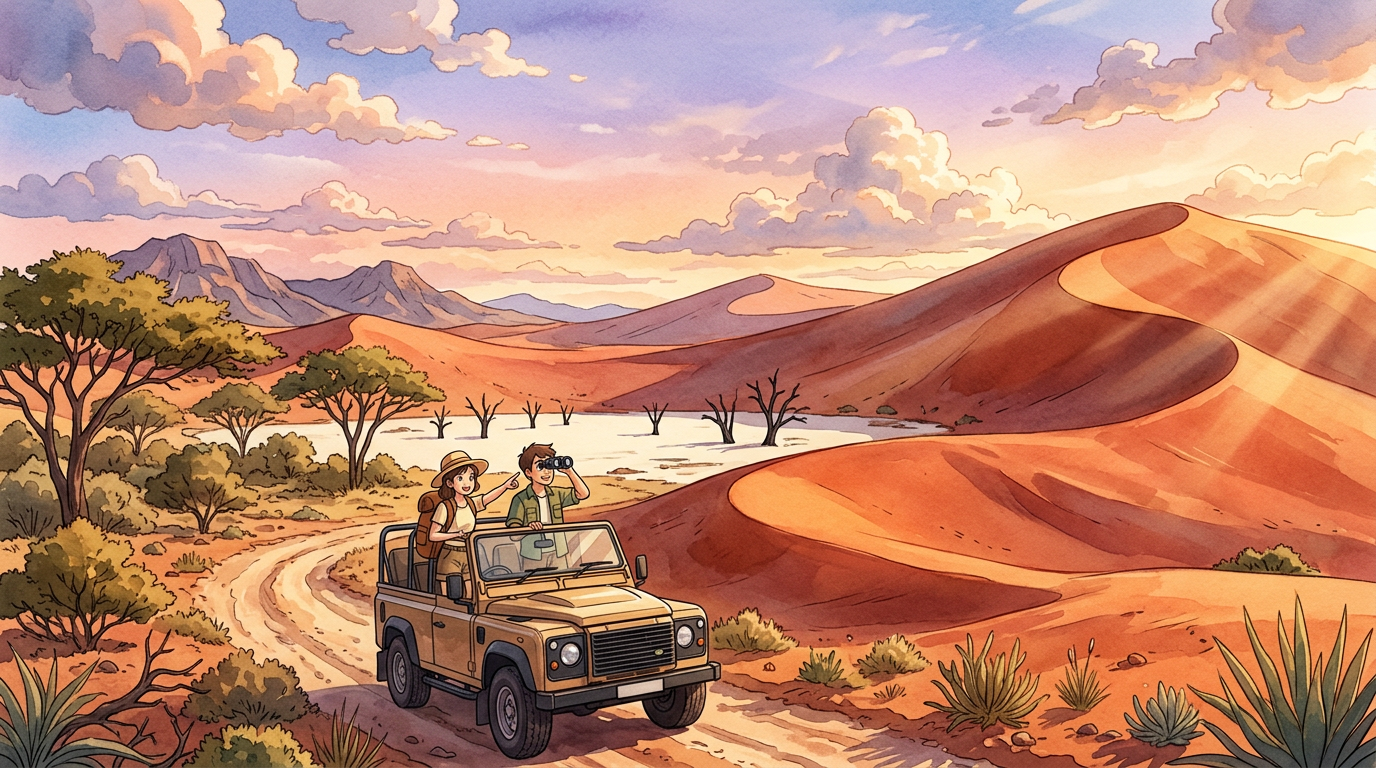
Namibia stands out for its contrast: red dunes in Sossusvlei, foggy Skeleton Coast, wildlife-packed Etosha National Park, and German-influenced coastal towns like Swakopmund. It’s ideal if you want an Africa trip that feels adventurous yet manageable, with decent roads, English widely spoken, and a clear tourism rhythm.
Compared with busier hubs like Thailand, Namibia offers more space and fewer people. Days often involve long drives across a cinematic desert, stopping at viewpoints and small lodges rather than big resort strips. Nights bring some of the world’s best stargazing, especially in dark-sky areas of the Namib Desert.
As of 2026, tourism services are continuing to grow, but it’s still smart to plan ahead: book rental cars early, confirm park accommodations, and understand your budget. Our Namibia Travel Budget Guide breaks down daily costs for budget, mid-range, and luxury travellers, while Namibia Safety Guide: Tips for a Safe Trip explains how to stay safe on the road and in cities.
Use this pillar guide as your Namibia trip planner: start with when to go and how long to stay, then explore our itineraries (3 Days in Namibia, Namibia in 5 Days, and Namibia in 10 Days) to match your time and travel style.
Best Time to Visit Namibia
The best time to visit Namibia is generally the dry season from May to October, when wildlife viewing is excellent and daytime temperatures are comfortable; however, the warmer months from November to March offer greener landscapes and fewer crowds if you can handle the heat.
Namibia is mostly desert, so it’s dry and sunny for much of the year. As of 2026, key planning revolves around temperature, wildlife, and road conditions rather than heavy rainfall. Winter (June–August) brings cooler days and cold nights, ideal for hiking dunes and game drives. Summer (December–February) is hotter, with localized rains and dramatic skies.
Here’s a quick season comparison:
| Season (approx.) | Weather & Comfort | Wildlife & Scenery | Travel Vibe |
|---|---|---|---|
| May–Aug (Dry winter) | Cool days, cold nights; very low rain | Excellent wildlife at waterholes, clear skies | Peak season; book early |
| Sep–Oct (Late dry) | Warm to hot days; still mostly dry | Strong wildlife, some dust haze | Busy but great overall |
| Nov–Mar (Warm & wetter) | Hot days; occasional showers | Greener landscapes, baby animals | Fewer crowds; some heat stress |
| Apr (Shoulder) | Mild temperatures | Transition scenery | Good balance of price and comfort |
If you’re following our itineraries, 3 Days in Namibia and Namibia in 5 Days are easiest in the dry season when driving is simpler. The longer Namibia in 10 Days works year-round but may require more heat management in summer.
For budget timing, see the seasonal price notes in Namibia Travel Budget Guide, as peak months around July–September can raise accommodation and car rental rates significantly.
Namibia Trip Budget Overview (2026)
As of 2026, most travellers can expect daily costs in Namibia to range roughly from budget-friendly guesthouses and self-catering at the low end to premium lodges and guided safaris at the high end; your biggest expenses are usually accommodation, car rental, and park fees.
Namibia can be surprisingly affordable if you plan carefully, but it’s not a classic backpacker destination like Thailand. Distances are long and many top experiences—like staying inside Etosha or near Sossusvlei—come with higher lodge or campsite prices. Our Namibia Travel Budget Guide gives detailed 2026 breakdowns for budget, mid-range, and luxury trips.
Use this simple decision table to frame your budget:
| Style (per person per day, 2026) | Accommodation | Transport | Food & Activities |
|---|---|---|---|
| Budget | Basic guesthouse / camping | Shared shuttles or small car | Local eateries; limited paid tours |
| Mid-range | Comfortable lodge or hotel | Rental car; occasional guided tours | Mix of lodge dinners and cafes |
| Luxury | High-end lodges & private camps | Private driver or 4x4 rental | Guided safaris, scenic flights |
Namibia uses the Namibian dollar (NAD), pegged 1:1 with the South African rand, and your money strategy matters. The Namibia Currency & Money Guide explains cash vs card use, ATM tips, and how to handle tipping. Combine it with the Hello app’s expense splitting and budget tracking features to keep group trips transparent and on-budget.
For specific day-by-day cost examples, each itinerary—3 Days in Namibia, Namibia in 5 Days, and Namibia in 10 Days—includes approximate spending by day so you can match real numbers to your budget range.
Namibia Travel Budget Guide: Daily Costs and Money Tips
Currency & MoneyNamibia Currency & Money Guide: Exchange, Cards, and Tips
Itineraries3 Days in Namibia: A Day-by-Day Itinerary
ItinerariesNamibia in 5 Days: The Perfect Extended Itinerary
ItinerariesNamibia in 10 Days: The Ultimate Travel Itinerary
Visa & Entry: What You Need Before You Land
As of 2026, many nationalities enjoy visa-free or visa-on-arrival access to Namibia for short tourism stays, but rules differ by passport, so always confirm the latest requirements and ensure your passport has at least six months’ validity and enough blank pages.
Entry rules are regularly updated, and specific guidance depends on where you’re from. If you’re travelling on a Singapore passport, our dedicated Namibia Visa & Entry Requirements for Singapore Passport Holders covers current visa policy, passport validity rules, customs allowances, and tips for smooth immigration.
For other nationalities, use this checklist-style framework:
- Check if you’re visa-exempt, visa-on-arrival, or need an e-visa/consular visa.
- Confirm passport validity of at least six months beyond your stay.
- Verify minimum blank pages (often two) for stamps.
- Review yellow fever vaccination requirements if you’re coming from or transiting through certain countries.
- Keep proof of onward travel and accommodation handy, plus basic trip details.
At customs, expect standard checks on items like drones, large camera gear, and high-value electronics. Our Namibia Safety Guide: Tips for a Safe Trip and Namibia Currency & Money Guide help you understand money declaration rules and what’s sensible to carry in cash.
For trip planning, consider building all key documents—flight confirmations, booking vouchers, and insurance certificates—into your Hello trip in the app. That way, everything is accessible offline and online, and easy to show at border control even if airport Wi-Fi is slow.
Getting Around Namibia: Transport & Driving
In Namibia, most travellers get around by rental car or guided tour, with inter-city buses and domestic flights as backups; as of 2026, road quality is generally good on main routes, but long distances and gravel roads mean you should plan conservative driving days.
Namibia is built for road trips. The Getting Around Namibia: Transport Guide for Travellers explains airport transfers, bus services, taxi options, and detailed driving tips, including what to expect on gravel, how fast to drive safely, and when a 4x4 is necessary.
Think of transport in three tiers:
- Self-drive: Maximum flexibility, good if you’re comfortable with long distances and rural roads. Best for itineraries like Namibia in 10 Days.
- Mixed transport: Combine shuttles, occasional car rental, and local tours—ideal for shorter stays like 3 Days in Namibia and Namibia in 5 Days.
- Fully guided: Join multi-day tours where transport and logistics are included.
Key 2026 tips include:
- Keep fuel topped up and know distances between gas stations.
- Plan no more than one major drive per day; the scenery is beautiful but tiring.
- Avoid driving at night due to wildlife and unlit roads.
The Hello app is especially useful here: pair Hello eSIM for always-on data with saved offline maps and pinned fuel stops and viewpoints. Our Namibia Safety Guide: Tips for a Safe Trip adds guidance on roadside safety, emergency contacts, and what to do in case of breakdown.
Before finalizing your route, skim the transport sections in each itinerary guide so you know how realistic each day’s driving is for your group’s experience level.
Food & Dining in Namibia
Namibia’s food scene mixes African, German, and South African influences, with plenty of meat, fresh seafood on the coast, and lodge-style buffets; as of 2026, vegetarian and some vegan options are increasingly available, especially in larger towns and tourist-focused lodges.
The Namibia Food Guide: Must-Try Dishes, Prices, and Tips walks through local classics like game meat (eland, kudu), braai (barbecue), biltong, and coastal fish dishes. German roots appear in schnitzel, sausages, and baked goods, especially in Windhoek and Swakopmund.
To help you plan meals and budgets, here’s a quick overview:
| Type of meal (2026) | Typical setting | Price range (approx.) |
|---|---|---|
| Simple local lunch | Cafes, roadside stops | Lower budget; great value |
| Lodge dinner buffet | Safari lodges, desert camps | Mid-range to high, often fixed price |
| Upscale restaurant | City or coastal fine dining | Higher-end, reservation recommended |
Dietary needs: lodges are generally good at accommodating vegetarians and gluten-free travellers, but it’s best to notify them in advance. Vegans may find it easier in Windhoek and coastal towns than in very remote camps.
For safety, stick to reputable eateries, take care with tap water in more rural areas, and follow storage guidelines for leftovers in the heat. The Namibia Safety Guide: Tips for a Safe Trip touches on food and water hygiene, while the Hello app’s expense tracking makes it easy to split restaurant bills and lodge packages among friends.
Browse our food guide before you go so you know what to try and what a reasonable price looks like, reducing both surprises and over-spending.
Top Experiences & Suggested Itineraries
Namibia’s must-see experiences include the dunes of Sossusvlei, wildlife safaris in Etosha, coastal adventures around Swakopmund, and stargazing in desert lodges; in 2026, these highlights combine beautifully into 3-, 5-, or 10-day itineraries depending on your time and budget.
Our itineraries provide ready-made structures:
- 3 Days in Namibia: Great if you’re adding Namibia onto a wider Africa trip and want a focused taste of desert or safari.
- Namibia in 5 Days: The Perfect Extended Itinerary: Balances desert, coast, and wildlife.
- Namibia in 10 Days: The Ultimate Travel Itinerary: Deeper dive with more remote stops and slower pacing.
Use this simple decision guide:
| Your situation | Recommended itinerary | Why |
|---|---|---|
| Short holiday or add-on to South Africa | 3 days | Focus on one region with minimal transit |
| First-time visitor wanting variety | 5 days | See desert, coast, and some wildlife |
| Photography or nature-focused trip | 10 days | More sunrise/sunset opportunities and remote areas |
Beyond the big sights, consider cultural and city experiences too. The Namibia Cultural Guide: Etiquette, Customs, and Tips helps you navigate greetings, local phrases, and respectful behavior, especially when visiting community-based tourism projects.
Pair these itineraries with the Hello app’s trip planning features: map out daily drives, add activities and bookings, and track your group’s budget day-by-day. You can easily adapt our suggested schedules to your pace while keeping all logistics in one place.
Staying Connected: Hello eSIM in Namibia
In 2026, the easiest way to stay online in Namibia is to use Hello eSIM for data, pairing it with Wi‑Fi at lodges and hotels; this gives you instant connectivity for maps, messaging, and expense tracking without hunting for local SIM cards on arrival.
Our dedicated eSIM for Namibia: Best Plans, Coverage, and Setup Tips explains which Hello eSIM options work best for typical trip lengths, current coverage quality across major routes, and step-by-step setup instructions. You can activate your Hello eSIM before flying, then have data as soon as you land in Windhoek.
Why use Hello eSIM instead of a physical SIM?
- Instant activation: No queues or paperwork at the airport.
- Flexible plans: Choose data amounts that match short or long stays.
- Dual-SIM convenience: Keep your home number active for SMS and calls.
In Namibia, mobile coverage is generally good around cities and main roads but can drop in very remote desert or park areas. Download offline maps, confirm lodge directions in advance, and don’t rely on data for emergency navigation.
Combine Hello eSIM with the Hello app’s budget tracking and expense splitting features, so you can keep accommodation, fuel, and activity costs transparent among friends in real time. For safety, the Namibia Safety Guide: Tips for a Safe Trip includes emergency contact advice—save these numbers and key locations in your phone for quick access even if you’re stressed.
Culture, Safety & Practical Tips
Namibia is generally safe and welcoming in 2026, with low population density and a strong tourism culture, but you still need to take normal precautions with road safety, valuables, and respectful behavior in local communities.
The Namibia Cultural Guide: Etiquette, Customs, and Tips is your main resource for greetings, dress norms, and local phrases. Expect a mix of cultures and languages, with English widely used but local languages present too. Modest dress is appreciated in rural areas and when visiting communities.
Safety-wise, the Namibia Safety Guide: Tips for a Safe Trip covers everything from city awareness and common scams to health considerations and emergency contacts. Key principles include:
- Keep valuables discreet and avoid leaving items visible in parked cars.
- Focus heavily on road safety: avoid night driving, keep speeds moderate on gravel, and watch for animals.
- Carry a basic first-aid kit and any prescription medications.
On the money side, the Namibia Currency & Money Guide provides practical advice on ATMs, card acceptance, and tipping norms. In many lodges, tipping for guides and staff is customary; know the expected ranges so you can budget ahead.
Hello can support your practical planning: log emergency contacts, healthcare facilities, and key addresses in your trip plan, then use Hello eSIM to navigate and call for help if needed. Combine this with our itineraries and transport guide to avoid over-ambitious driving days and risky time-of-day travel.
Before You Go: Namibia 2026 Checklist
Before flying to Namibia in 2026, make sure you’ve confirmed visa status, booked key lodges and car rental, set up Hello eSIM for data, and organized your budget and safety essentials; a little preparation goes a long way in such a vast, sparsely populated country.
Use this pre-trip checklist as a planning framework:
Documents & admin
- Confirm visa requirements for your nationality and passport validity. Start with Namibia Visa & Entry Requirements for Singapore Passport Holders if relevant.
- Purchase travel insurance with good medical and evacuation cover.
- Save digital and printed copies of bookings and policy numbers.
Money & budget
- Read the Namibia Travel Budget Guide and set a daily budget.
- Understand cash vs card use from the Namibia Currency & Money Guide.
- Set up a shared trip in Hello to track expenses and split costs.
Connectivity & logistics
- Choose and activate your Hello eSIM using the eSIM for Namibia guide.
- Plan your main route with the Getting Around Namibia: Transport Guide for Travellers.
Health, safety & culture
- Review the Namibia Safety Guide: Tips for a Safe Trip and pack any recommended health items.
- Read the Namibia Cultural Guide: Etiquette, Customs, and Tips to avoid faux pas.
Finally, choose your itinerary length using our 3-, 5-, or 10-day guides, then add each day’s plan into Hello so you arrive with a clear, realistic schedule.
Namibia Visa & Entry Requirements for Singapore Passport Holders
Budget PlanningNamibia Travel Budget Guide: Daily Costs and Money Tips
Currency & MoneyNamibia Currency & Money Guide: Exchange, Cards, and Tips
eSIM & ConnectivityeSIM for Namibia: Best Plans, Coverage, and Setup Tips
Getting AroundGetting Around Namibia: Transport Guide for Travellers
Safety & HealthNamibia Safety Guide: Tips for a Safe Trip
Cultural GuideNamibia Cultural Guide: Etiquette, Customs, and Tips
Itineraries3 Days in Namibia: A Day-by-Day Itinerary
ItinerariesNamibia in 5 Days: The Perfect Extended Itinerary
ItinerariesNamibia in 10 Days: The Ultimate Travel Itinerary
Frequently Asked Questions
Is Namibia safe to visit in 2026?
Yes, Namibia is generally considered safe for travellers in 2026, especially compared with many busier destinations. Most incidents involve petty crime in cities or road-related risks. The Namibia Safety Guide: Tips for a Safe Trip outlines how to handle valuables, choose safe driving times, and prepare for emergencies so you can minimize risk while enjoying the country.
How many days do I need in Namibia?
For a first trip, 5–10 days is ideal. Use 3 Days in Namibia if you’re short on time and want a focused desert or safari experience, Namibia in 5 Days for a balanced highlights trip, and Namibia in 10 Days for a deeper, slower exploration with more remote areas.
Do I need a visa for Namibia?
Visa requirements depend on your nationality. Many visitors receive visa-free or visa-on-arrival access for short tourism stays, but you must confirm current rules before travelling. Singapore citizens can follow the specific guidance in Namibia Visa & Entry Requirements for Singapore Passport Holders. Always check passport validity, blank pages, and any health-related entry conditions.
How much does a trip to Namibia cost in 2026?
Costs vary by style, but your biggest expenses will be lodges, car rental, fuel, and park fees. The Namibia Travel Budget Guide provides per-day estimates for budget, mid-range, and luxury travel in 2026, while the Namibia Currency & Money Guide helps you manage cash, cards, and tipping. Use Hello’s budget tracking to keep your real spend aligned with your plan.
Is self-driving in Namibia safe for tourists?
Self-driving is common and rewarding if you’re prepared. Main roads are generally in good condition, but distances are long and some routes are gravel. The Getting Around Namibia: Transport Guide for Travellers and Namibia Safety Guide: Tips for a Safe Trip explain speed, fuel planning, and why you should avoid night driving. Hello eSIM supports navigation and communication on the road.
Will I have mobile data and Wi‑Fi in Namibia?
You’ll find mobile coverage around cities and main roads, plus Wi‑Fi in many lodges and hotels. The simplest solution in 2026 is to use Hello eSIM, which provides instant data on arrival. Our eSIM for Namibia: Best Plans, Coverage, and Setup Tips article describes the best Hello eSIM plans and the areas where you should expect weaker signal and rely on offline maps.
What should I wear and how can I respect local culture?
Pack layers for changing temperatures, including warmer clothing for desert nights and more modest outfits for rural communities. The Namibia Cultural Guide: Etiquette, Customs, and Tips covers greetings, body language, photo etiquette, and dress norms. Learning a few local phrases and asking permission before taking photos goes a long way in being a respectful guest.
Detailed Articles
Dive deeper into specific topics covered in this guide.
Namibia Travel Budget Guide: Daily Costs and Money Tips
How much does it cost to travel in Namibia? Daily budget breakdowns for budget, mid-range, and luxury travellers.
27 February 2026
Namibia Safety Guide: Tips for a Safe Trip
Safety tips, health advisories, emergency contacts, common scams, and travel insurance advice for Namibia.
20 July 2026
3 Days in Namibia: A Day-by-Day Itinerary
A detailed 3-day itinerary for Namibia with daily activities, costs, neighborhoods, and transport tips.
13 June 2026
Namibia in 5 Days: The Perfect Extended Itinerary
A detailed 5-day itinerary for Namibia with daily activities, costs, neighborhoods, and transport tips for an extended stay.
8 May 2026
Namibia in 10 Days: The Ultimate Travel Itinerary
A comprehensive 10-day itinerary for Namibia covering top attractions, hidden gems, daily costs, and transport between cities.
22 June 2026
Namibia Currency & Money Guide: Exchange, Cards, and Tips
Currency exchange, credit card acceptance, ATM tips, tipping culture, and money-saving advice for Namibia.
26 March 2026
Namibia Visa & Entry Requirements for Singapore Passport Holders
Visa requirements, passport validity, customs allowances, and entry tips for Singapore citizens travelling to Namibia.
11 July 2026
Getting Around Namibia: Transport Guide for Travellers
Airport transfers, public transport, ride-hailing apps, inter-city travel, and driving tips for Namibia.
26 May 2026
More Travel Guides
Destination Guide
Complete Réunion Travel Guide 2026
Everything you need to know about travelling to Réunion — budget, visa, food, transport, eSIM connectivity, and itineraries.
Destination Guide
Complete Qatar Travel Guide 2026
Everything you need to know about travelling to Qatar — budget, visa, food, transport, eSIM connectivity, and itineraries.
Destination Guide
Complete Paraguay Travel Guide 2026
Everything you need to know about travelling to Paraguay — budget, visa, food, transport, eSIM connectivity, and itineraries.
Destination Guide
Complete Mayotte Travel Guide 2026
Everything you need to know about travelling to Mayotte — budget, visa, food, transport, eSIM connectivity, and itineraries.