Sudan Cultural Guide: Etiquette, Customs, and Tips
Essential do's and don'ts, greeting customs, dress codes, local phrases, and cultural tips for Sudan.
By Hello Travel Team
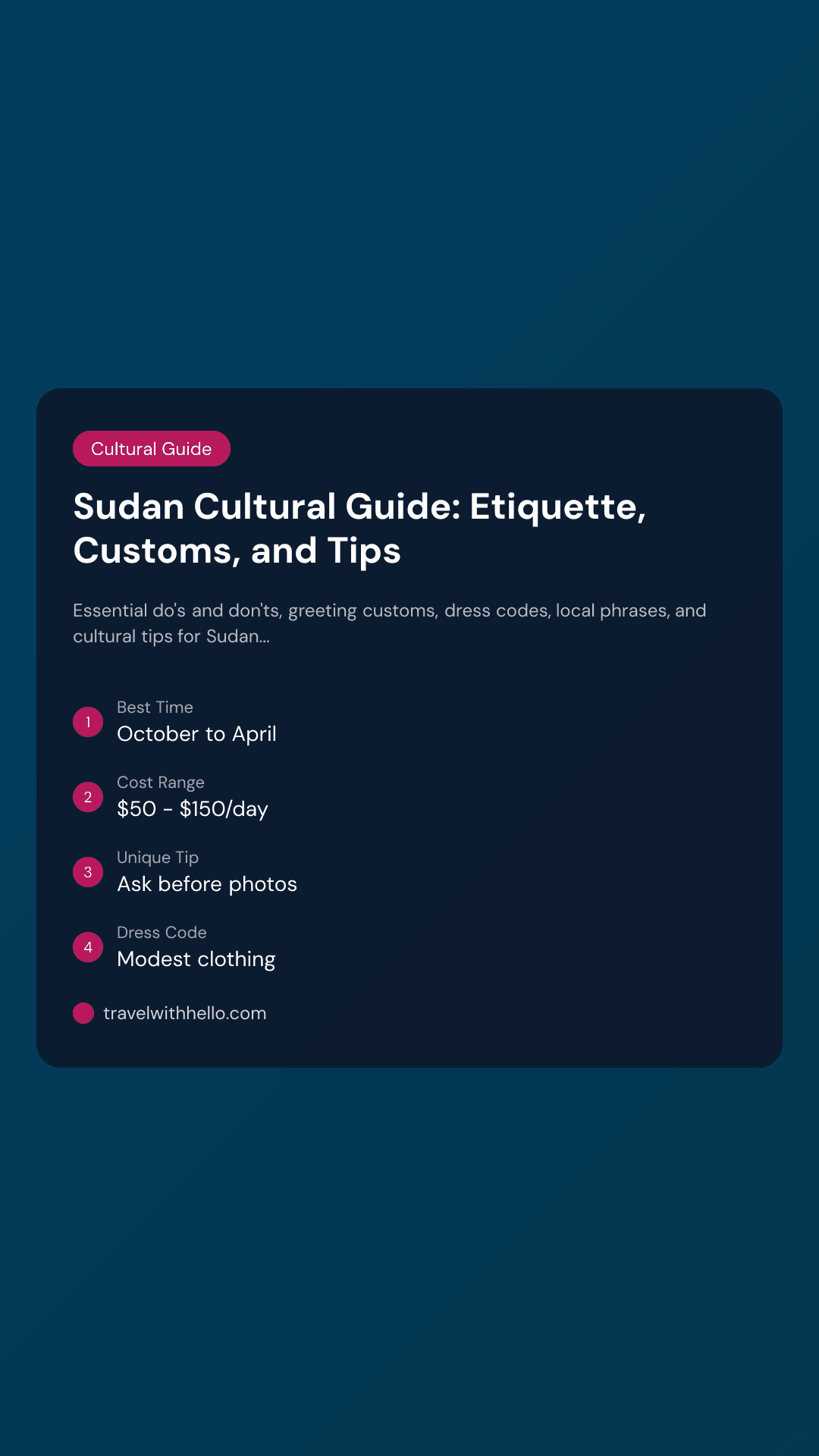
Sudan Culture Guide: TL;DR of Essential Etiquette
Sudan culture is deeply shaped by Islam, hospitality, family, and community, so visitors should dress modestly, ask permission before photographing people or places, and follow local guidance carefully. Sudan currently carries serious security risks: the U.S. Department of State and Australia’s Smartraveller advise against all travel because of armed conflict, unrest, terrorism, kidnapping, and rapidly changing conditions. If travel is essential and officially permitted, treat this guide as cultural preparation rather than a substitute for current government advice. Greetings are generally warm and unhurried; use the right hand for eating and giving, avoid public displays of affection, and never assume photography is allowed. Women and men should avoid shorts and revealing clothing, while religious sites require especially conservative dress. During Ramadan, do not eat, drink, or smoke publicly during daylight hours. Sudan’s 2026 calendar includes Ramadan beginning provisionally on February 18, Eid al-Fitr from March 20, and Eid al-Adha on May 26, although Islamic dates can shift with moon sightings.
Sudan Etiquette and Customs: Greetings, Hospitality, and Everyday Respect
The best everyday approach to Sudan etiquette is to slow down, greet people respectfully, accept hospitality graciously, and ask before entering sensitive social or religious spaces. A common Arabic greeting is “as-salāmu ʿalaykum,” meaning “peace be upon you”; the customary reply is “wa ʿalaykum as-salām.” “Shukran” means thank you, “min faḍlik” means please, and “naʿam” and “lā” mean yes and no. Handshakes are common between people of the same gender, but some Muslim women may prefer not to shake hands with men; wait for the other person to initiate. A polite nod and hand over the heart is a respectful alternative. Use the right hand when shaking hands, eating, or passing objects. Sudanese hospitality may involve tea, coffee, or food, and refusing too quickly can seem abrupt. If you cannot accept, explain warmly and thank your host. Ask before discussing politics, conflict, religion, or family matters. Avoid touching someone’s head, pointing the soles of your feet toward people, or interrupting prayer. In homes, remove shoes if your host does so. A small gift such as quality tea, dates, sweets, or a practical item from home is appropriate when visiting, but lavish gifts can create discomfort.
Sudan Dress Code: What to Wear in Khartoum, Religious Sites, and Rural Areas
The safest Sudan dress code is loose, opaque clothing that covers the shoulders, chest, knees, and upper arms; women should carry a lightweight scarf and men should avoid shorts. Local expectations vary by community and region, but modesty is a reliable sign of respect. For women, loose trousers or ankle-length skirts, long-sleeved tops, and a scarf are practical choices; a head covering may be expected at some religious sites or in particularly conservative settings. Non-Muslim women are not universally required to veil, but covering the hair is a considerate choice when entering mosques. Men should wear long trousers and shirts that cover the shoulders, avoiding sleeveless tops and military-style clothing. At a mosque, remove shoes where requested, keep voices low, and never enter restricted prayer areas. During Ramadan, conservative clothing and discreet daytime behavior matter even more. Pack breathable cotton or linen, a light overshirt, a scarf, and sturdy closed shoes. Sandals can be useful, but avoid beachwear outside private accommodation. Clothing should also be practical for dust, heat, and long vehicle journeys. Do not wear camouflage or anything resembling a uniform, because it can attract unwanted attention in a conflict-affected environment.
Sudan Dos and Don’ts: Photography, Security, and Public Behavior
The most important Sudan dos and don’ts concern photography and security: ask permission every time, assume sensitive locations are off-limits, and follow the controlling authority’s instructions immediately. Official travel advice says photography may require a permit, while even permitted photography can be illegal around military installations, airports, bridges, public utilities, broadcast facilities, border areas, displacement camps, slums, and government buildings. Never photograph police, soldiers, checkpoints, demonstrations, security vehicles, or infrastructure. Do not photograph people without clear consent, including children, beggars, and market vendors. Put your phone or camera away when asked; arguing can escalate a minor misunderstanding. Avoid public displays of affection, loud confrontations, political arguments, and religious proselytizing. Do not accept informal requests to transport packages or cross restricted areas. Keep identification and any required permissions accessible, but do not display cash or expensive equipment. Ask a trusted local guide or accommodation staff before visiting markets, historic sites, Sufi gatherings, or river viewpoints. The White Nile Bridge and other strategic infrastructure may be particularly sensitive. Because conditions can change quickly, avoid demonstrations and crowded political gatherings entirely. Cultural respect cannot override a security restriction, and a beautiful photograph is never worth detention, confiscation, or personal danger.
Sudan Business Etiquette, Local Holidays, and Travel Planning
Sudan business etiquette rewards patience, relationship-building, and flexibility: begin with greetings and conversation, allow time for tea, and confirm arrangements in writing because schedules may change. Use professional titles and surnames until invited to be less formal. Meetings can begin with several minutes of personal conversation rather than an immediate agenda. During Ramadan, working hours, meal schedules, and transport availability may change; avoid scheduling lunch meetings and never expect Muslim colleagues to eat or drink during daylight fasting. Sudan’s 2026 observances include Independence Day on January 1, Ramadan beginning provisionally February 18, Eid al-Fitr beginning March 20, and Eid al-Adha on May 26. Eid dates are based on the Islamic lunar calendar and may vary by local announcement. Banks, offices, shops, and transport services can operate reduced hours or close around major holidays, so confirm bookings and carry contingency funds. When visiting a company or home, modest smart-casual clothing is safer than formal Western businesswear that feels impractical in the heat. Bring a simple gift for an established host—dates, sweets, tea, or a locally appropriate souvenir—and present it with the right hand. Avoid alcohol as a gift unless you know the recipient’s preferences and local rules. Use a written Arabic-English address or have a trusted contact confirm the meeting location.
Common Questions About Sudan Culture and Customs
Visitors usually need only a few clear rules: dress modestly, greet patiently, ask permission before photography, and follow local religious and security guidance without debate.
Can tourists wear shorts in Sudan? Shorts are generally inappropriate in public, especially in conservative neighborhoods, religious sites, and rural areas. Long, loose trousers are the safer choice for everyone.
Do women need to wear a hijab in Sudan? Requirements vary by location and community. A non-Muslim woman may not be universally required to cover her head, but carrying a scarf and covering the hair in mosques or conservative settings is respectful.
Can visitors take photos in Sudan? Do not assume so. Photography may require permission or a permit, and authorities prohibit images of many strategic sites, including bridges, airports, military facilities, public utilities, demonstrations, and government buildings. Always ask people before photographing them.
What should visitors say when greeting someone? “As-salāmu ʿalaykum” is a respectful Arabic greeting; reply “wa ʿalaykum as-salām.” “Shukran” means thank you, and “min faḍlik” means please.
What happens during Ramadan? Many Muslims fast from dawn to sunset. Avoid eating, drinking, smoking, or chewing gum publicly during daylight, and expect altered business and transport hours.
How can travellers stay connected? Before any officially permitted trip, arrange Hello eSIM for Sudan so an eSIM from Hello can provide mobile data on arrival where service is available. The Hello app also supports trip planning, budget tracking, and expense splitting.
Practical Sudan Travel Tips: Money, Connectivity, and Respectful Preparation
Responsible preparation matters more than sightseeing plans in Sudan: verify authorization, monitor official advisories, arrange trusted transport, and keep communication and finances resilient. Carry small amounts of local cash for ordinary purchases, but avoid displaying money and confirm prices before accepting services. Currency availability, exchange rates, and payment systems can change, so maintain a written emergency budget. The Hello app can help track spending across currencies, scan receipts in different languages, import bank statements, categorize expenses, and split shared costs automatically with travel companions. An eSIM from Hello can also be arranged before departure through Hello eSIM for Sudan, allowing travellers to arrive with a connectivity plan where local network coverage and activation are available. Download essential maps, booking details, translation tools, and emergency contacts before leaving reliable Wi-Fi. Keep digital and paper copies of your passport, visas, permits, insurance, and relevant approvals, stored separately from the originals. Learn a few Arabic phrases, dress conservatively from the airport onward, and ask local contacts about current expectations rather than relying on assumptions. Sudanese communities are diverse, so avoid treating one city, ethnic group, or religious setting as representative of the entire country. The most respectful traveller is observant, discreet, flexible, and willing to change plans when local advice or official restrictions require it.
Explore These Destinations
Stay Connected
Make the most of Sudan
From eSIM connectivity to expense tracking, Hello is the all-in-one companion that keeps your trip stress-free.
Related Articles
Getting Around Sudan: Transport Guide for Travellers
Airport transfers, public transport, ride-hailing apps, inter-city travel, and driving tips for Sudan.
4 November 2026
Sudan Food Guide: Must-Try Dishes, Prices, and Tips
Best local dishes, street food, restaurant prices, dietary options, and food safety tips for Sudan.
4 November 2026
Sudan in 5 Days: The Perfect Extended Itinerary
A detailed 5-day itinerary for Sudan with daily activities, costs, neighborhoods, and transport tips for an extended stay.
3 November 2026