Lantern Festival Guide: Where to See Lanterns Across Asia
Experience lantern festivals in Taiwan, Thailand, Vietnam, and Japan — dates, locations, and travel tips.
By Hello Travel Team
TL;DR: Best Lantern Festivals in Asia and When to Go
Asia’s most magical lantern festivals in 2026–2027 are centered in Taiwan, Thailand, Vietnam, and Japan, with most major events happening between February (Lunar New Year) and November (Yi Peng in Chiang Mai). Book flights, hotels, and local tours at least 3–6 months ahead for the best dates and prices.
If you’re dreaming of a lantern festival in Asia, focus on four big highlights: the Pingxi Sky Lantern Festival in Taiwan (around Lunar Lantern Festival, usually February or early March), the Yi Peng Lantern Festival in Chiang Mai, Thailand (November), Hội An’s monthly lantern nights in Vietnam (year‑round), and winter illuminations and Toro Nagashi events in Japan.
Because these festivals overlap with peak travel seasons, plan like you would for New Year’s Eve: secure accommodation early, pre-book key experiences, and have a solid connectivity plan. Local networks often slow to a crawl when thousands of people are posting videos at once, so having your own data connection via a Hello eSIM keeps maps, translations, and ride-hailing apps usable even when public Wi‑Fi is overloaded.
Use the Hello app not just for eSIM connectivity in 200+ countries but also to track shared trip costs and split lantern boat rides, taxis, and street food in multiple currencies. That way you can focus on photographing glowing lanterns instead of doing mental exchange-rate math in the dark.
Key Lantern Festival Dates in Asia (2026–2027)
Most major lantern festivals in Asia cluster around the Lunar Lantern Festival (February–March) and the cool dry season in Southeast Asia (November), so checking specific 2026–2027 dates is essential before booking flights. Aim to arrive at least 2–3 days early to adjust and secure local tickets.
According to the traditional lunisolar calendar, the Lantern Festival falls on the 15th day of the first month; in 2026 it is on 3 March, and in 2027 it is on 20 February, per historical calendrical data. That timing is crucial for planning trips to lantern events linked to Lunar New Year in Taiwan, Vietnam, and Japan, which typically schedule their sky or river lantern releases around that date.
For Thailand’s Yi Peng lantern festival in Chiang Mai, the event follows the Lanna lunar calendar rather than the Chinese one. Tourism operators and official festival organizers note that Yi Peng falls on the full moon of the second month of the Lanna calendar, usually in November, and that 2026 dates are set for 24–25 November for the major Chiang Mai mass-release events at venues like the CAD Cultural Center Lanna, with over 10,000 lanterns in the sky each night according to official event information.
Smaller lantern and illumination festivals in Asia (such as monthly lantern nights in Hội An and winter illuminations in Japan) run on their own local schedules. Always double-check exact 2026 or 2027 dates with local tourism boards a few months before departure, as city events can shift by a day or two based on the lunar calendar or local logistics.
Lantern Festival Taiwan: Pingxi Sky Lanterns and Taipei City Lights
Taiwan’s Pingxi Sky Lantern Festival is one of Asia’s most iconic lantern festivals, with thousands of glowing wishes launched into the night sky around Lunar Lantern Festival (February–March), making it a bucket-list choice for first-time lantern travellers. Expect heavy crowds, limited trains, and a very atmospheric village setting.
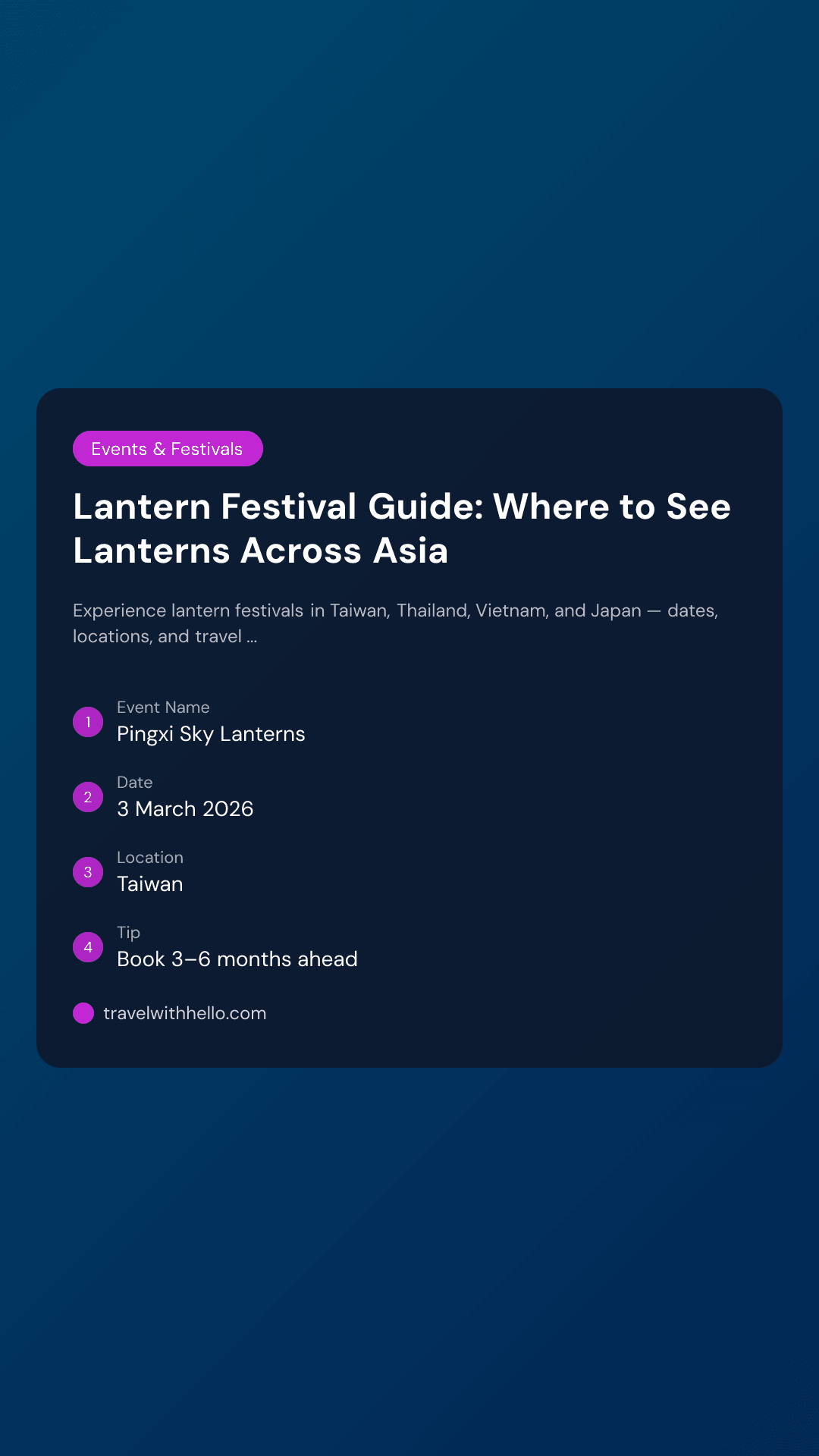
The core lantern festival Taiwan experience happens in Pingxi and Shifen, small mountain towns east of Taipei. The main festival night coincides with the Lantern Festival on the 15th day of the first lunar month, which falls on 3 March 2026 and 20 February 2027. On the main release evenings, official stages, countdown ceremonies, and timed mass launches happen several times through the night, usually starting just after sunset.
From Taipei, take a local train to Ruifang (about NT$60–80 in 2026) then transfer to the Pingxi Line (about NT$20–25). Expect packed trains, standing room only, and queues of 30–60 minutes at peak times. Private transfers from central Taipei run around NT$2,000–3,000 per car in 2026, but split between four friends this can be similar to train plus taxi costs.
On non-festival days, you can still write wishes and launch a lantern (around NT$150–200 per lantern in 2026) from Shifen Old Street without the crush of mass events. In Taipei itself, you’ll find elaborate artistic lantern displays in city parks and riverside areas around Lantern Festival, often free to enter and ideal if you prefer not to travel far.
Tip: mobile coverage in the Pingxi mountains can be patchy when crowds surge. Having an eSIM from Hello preloaded before you leave Taipei helps you keep train times, translations, and ride-hailing apps working, even if station Wi‑Fi is overloaded.
Yi Peng Lantern Festival Thailand: Chiang Mai’s Sky of 10,000 Lights
The Yi Peng Lantern Festival in Chiang Mai, Thailand, is the most famous sky lantern festival in Asia, with over 10,000 lanterns rising at once during the main 2026 events on 24–25 November, according to official event organizers. Book tickets and hotels at least six months ahead.
Yi Peng coincides with Loy Krathong, when Thais float candlelit baskets on rivers as offerings. In Chiang Mai, this becomes a double spectacle: sky lanterns released during organized ceremonies and river lanterns on the Ping River. Official mass-release events at venues like CAD Cultural Center Lanna typically require tickets purchased through authorized agents; 2026 packages often include transport, buffet dinner, and a lantern, with prices generally starting around US$150–250 per person depending on tier and inclusions.
Within the city, free public celebrations happen around Tha Phae Gate, the Old City moat, and the Nawarat Bridge area. Roads are partially closed, and local authorities temporarily suspend some flights to and from Chiang Mai during key release times for safety, so plan arrival and departure a day away from peak nights where possible.
For 2026, block out 24–25 November as the main Chiang Mai Yi Peng lantern festival dates, and consider arriving by 22 November and staying through 26 November to enjoy parades, temple ceremonies, and side trips. Mid‑range hotels that normally cost US$40–60 per night in November can surge to US$80–120 during Yi Peng, and popular guesthouses in the Old City sell out months in advance.
Customs to respect: do not light lanterns outside designated times, follow safety instructions, and dress modestly (covered shoulders and knees) for temple visits and ceremonies.
Lantern Festivals in Vietnam and Japan: River Lights and Winter Illuminations
Vietnam and Japan offer more frequent, often more relaxed lantern experiences than one-off mega festivals, with monthly lantern nights in Hội An and multi-week winter illuminations across Japan’s cities and onsen towns. These are perfect if you want flexibility on dates or are traveling outside November.
In Vietnam, the highlight is the Hội An Lantern Festival, held on the full moon each month in the Old Town. On festival nights, electric lights are dimmed, streets glow with silk lanterns, and small paper lanterns are floated on the Thu Bồn River. Boat rides with lantern releases typically cost around 100,000–150,000 VND per boat for 2–3 people in 2026, while a single handheld paper lantern might be 10,000–20,000 VND. Because it runs monthly, you can time your visit around your broader itinerary rather than one fixed date.
In Japan, lantern experiences are more diverse: summer Obon festivals with Toro Nagashi (floating lanterns to honor ancestors), castle and temple light‑ups, and elaborate winter illuminations in cities like Tokyo, Osaka, and Kobe. According to the Japan National Tourism Organization, Japan welcomed over 31 million international tourists in 2024, and illumination events are a big driver of winter tourism, especially between November and February. Many of these light festivals run for several weeks, so you can slot them into a broader Japan itinerary.
Expect moderate entry fees: urban illuminations are often free or under ¥1,000 in 2026, while special temple night illuminations might cost ¥600–1,500. Crowds can be thick on weekends and around New Year, but they are generally more spread out than at one-night sky lantern events, making them ideal for families or first-time visitors.
Planning, Prices, and Connectivity: How to Make Lantern Festivals Stress-Free
To make the most of lantern festivals in Asia, arrive early, book key experiences months in advance, and bring your own reliable data connection so you can navigate crowds and coordinate in real time. Treat major festivals like Yi Peng or Pingxi as peak-season events, not casual day trips.
For budgeting, think in three buckets: accommodation, festival access, and transport.
- Accommodation: In Chiang Mai during Yi Peng, mid‑range hotels can jump from US$40–60 per night to US$80–120 in late November 2026.
- Tickets: Organized Yi Peng mass-release events often cost US$150–250 per person including transport and dinner. In Taiwan’s Pingxi, a DIY lantern launch costs roughly NT$150–200 in 2026, but official stage-area access during the main festival night may require advance reservations or event tickets via local operators.
- Transport: Airport taxis in Chiang Mai average around 150–200 THB into the Old City in 2026, while Vietnam’s Hội An boat lantern rides sit around 100,000–150,000 VND per boat.
Connectivity is often the hidden fourth cost. Local Wi‑Fi can become unreliable when tens of thousands of people are uploading videos from the same square, and SIM card kiosks at airports are crowded right before festival dates. Using Hello’s eSIM plans lets you buy and activate data for 200+ countries before departure, arrive connected, and keep using maps and chat apps even when public networks slow down. For example, if you are combining a lantern festival in Japan with city-hopping, a Hello eSIM for Japan means you don’t have to juggle multiple local SIMs.
The Hello app also helps with expense splitting and budget tracking: you can scan receipts in any language, track spending across currencies, and automatically split costs for lantern boats, tours, and taxis with friends—avoiding awkward money chats after a long festival night.
Common Questions About Lantern Festivals in Asia (Q&A)
Most lantern festivals in Asia are safe, family-friendly, and affordable if you plan ahead, but dates shift each year with the lunar calendar, so always confirm 2026–2027 schedules before booking flights. Expect crowds, higher prices around festival dates, and magical photo opportunities if you arrive early and stay patient.
Q: When are the main lantern festival dates in Asia for 2026–2027?
The traditional Lantern Festival tied to Lunar New Year falls on 3 March 2026 and 20 February 2027 based on the lunisolar calendar, which is when many Chinese-influenced lantern events take place. Yi Peng in Chiang Mai is scheduled around 24–25 November 2026 according to official organizers, while Hội An’s lantern nights happen monthly on the full moon.
Q: Do I need tickets for lantern festivals?
It depends. Organized Yi Peng lantern festival events in Chiang Mai, especially mass sky lantern releases with over 10,000 lanterns, are ticketed and often sell out months in advance. In contrast, Hội An’s lantern nights and many urban lantern displays in Taiwan or Japan are free, with optional paid extras like boat rides or special viewing zones.
Q: How far in advance should I book?
For Yi Peng or Pingxi’s main festival nights, book flights and hotels 3–6 months ahead, and secure event tickets as soon as they go on sale. For monthly or multi-week events (Hội An, Japanese illuminations), 1–3 months is usually enough, but book earlier for weekends.
Q: Is connectivity really a problem during festivals?
Yes, local networks can slow significantly when thousands of people gather in a small area. Having a Hello eSIM means your data connection is not tied to a single local Wi‑Fi hotspot or an overloaded airport SIM kiosk, which is especially helpful for navigation and meeting friends in the crowds.
Q: Are there dress codes or customs I should know?
At temple-linked festivals (Yi Peng, some Japanese events), wear modest clothing—covered shoulders and knees—and follow local directions on where and when to release lanterns. Never launch lanterns outside official zones or times, as this can be dangerous and is often illegal.
Where to Go: Comparing Lantern Festivals in Taiwan, Thailand, Vietnam, and Japan
Choosing the right lantern festival in Asia comes down to whether you want a once-a-year mega sky lantern release, a relaxed monthly river lantern night, or atmospheric winter illuminations. Use the comparison below to match your travel dates, budget, and crowd tolerance to the right destination.
| Destination & Festival | Typical 2026–2027 Timing | Style of Lanterns | Crowd Level | Approximate Costs (2026) |
|---|---|---|---|---|
| Pingxi, Taiwan – Sky Lantern Festival | Around Lantern Festival (3 March 2026, 20 Feb 2027) | Sky lanterns in mountain villages | Very high on main night | Lantern NT$150–200; train from Taipei under NT$100 each way |
| Chiang Mai, Thailand – Yi Peng | 24–25 November 2026 (main events) | Mass sky lantern release + river offerings | Extremely high | Ticketed events US$150–250; hotels 80–120 USD/night at peak |
| Hội An, Vietnam – Lantern Festival | Monthly on full moon | Handheld lanterns & river floats | Moderate to high, monthly | Boat 100,000–150,000 VND; lantern 10,000–20,000 VND |
| Japan – Winter Illuminations & Toro Nagashi | Various, mainly Nov–Feb | Illuminations, floating/ground lanterns | Moderate, spread over weeks | Many free; special events ¥600–1,500 |
If your priority is lantern festival Asia bucket-list photos, Yi Peng and Pingxi deliver the most dramatic sky shots, but they also demand the most planning. Travellers who prefer flexibility or are traveling with kids often favor Hội An’s monthly festivals or Japan’s multi-week illuminations, where you can choose a quieter night.
Finally, remember that weather matters: November in Thailand is pleasantly cool and dry, ideal for long nights outside; Taiwan’s Lantern Festival around February–March can be chilly and occasionally rainy, so pack layers and a light rain jacket. Whatever you choose, arriving with your logistics, budget, and data connection sorted lets you focus on the glow of the lanterns instead of the stress of the crowds.
Plan your perfect trip
From eSIM connectivity to expense tracking, Hello is the all-in-one companion that keeps your trip stress-free.
Related Articles

Day of the Dead Mexico Guide: Traditions, Travel, and Tips
Experience Día de los Muertos in Mexico — Oaxaca, Mexico City, traditions, and travel planning.
15 July 2026
Full Moon Party Thailand: The Ultimate Guide to Koh Phangan
Everything about the Full Moon Party — dates, getting there, safety, costs, and what to expect.
15 July 2026

Holi Festival India Guide: The Festival of Colours
Experience Holi in India — best cities, safety tips, what to wear, and cultural etiquette.
15 July 2026