eSIM for Montenegro: Best Plans, Coverage, and Setup Tips
Everything you need to know about using eSIM in Montenegro. Best data plans, network coverage, and setup instructions.
By Hello Travel Team
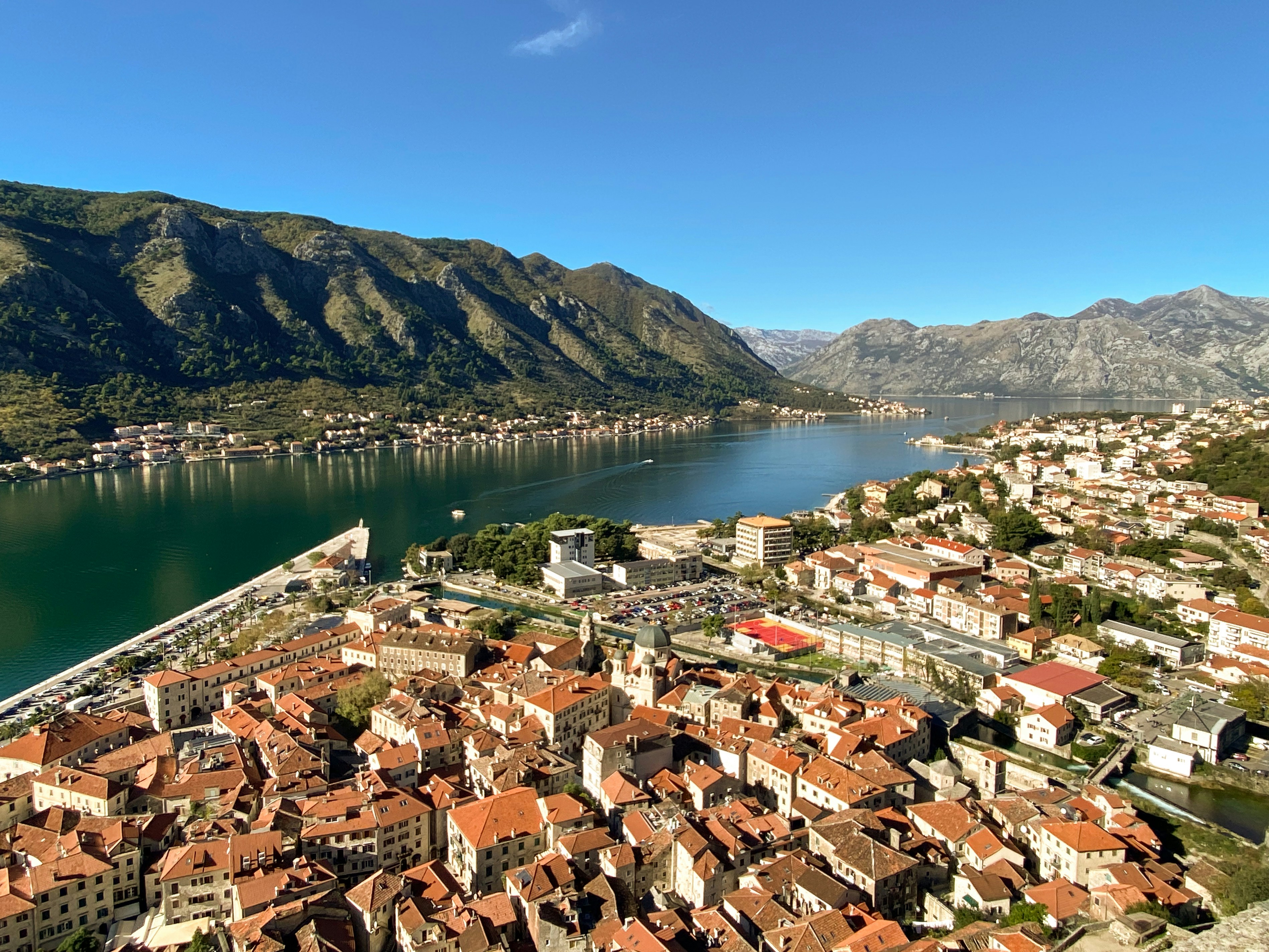
TL;DR: The Best eSIM for Montenegro Travel
Hello’s eSIM plans make Montenegro travel internet simple: buy a Montenegro eSIM plan before departure, activate it on your phone, and arrive ready to use mobile data in Podgorica, Kotor, Budva, and along the Adriatic coast. Hello plans start from 5GB, with prices updated live in the app and coverage provided through local mobile networks.
For most travellers, 5–10GB is enough for a one- to two-week trip when accommodation Wi-Fi is available. Download offline maps before driving through Durmitor, Tara Canyon, or Prokletije, where mountainous terrain can make coverage less consistent. Montenegro recorded 2,728,564 tourist arrivals and 15,367,166 overnight stays in 2025, according to the country’s Statistical Office, so reliable mobile data is especially useful during the busy summer season.
Why Use an eSIM for Montenegro Mobile Data?
The easiest way to get Montenegro mobile data is to install Hello’s eSIM before your flight, because you can keep your regular SIM active for calls while using the eSIM for data without visiting a shop or swapping a physical card.
Montenegro is not part of the European Union, so EU roaming allowances do not automatically apply. Travellers arriving from the EU should check their home operator’s international rates before connecting; background app updates and photo backups can become expensive quickly. With an eSIM from Hello, you can choose a data plan in advance and avoid searching for a kiosk after landing at Podgorica Airport or Tivat Airport.
Hello is available through its iOS and Android app, with eSIM connectivity in more than 200 countries. Plans start from 5GB, and prices are updated live, so the exact cost depends on your travel dates and selected allowance. A 5GB plan can suit light users checking directions, messaging, translating menus, and booking taxis, while 10GB or more is safer if you stream music, upload videos, or use your phone as a hotspot.
Install the plan while connected to Wi-Fi, but wait to enable data roaming on the Hello line until you arrive in Montenegro.
Choosing the Best Montenegro eSIM Plan for Your Trip
The best Montenegro eSIM plan depends mainly on trip length and how often you use maps, social media, video, and hotspot data; most visitors should choose 5GB for light use or 10GB-plus for active road trips and frequent sharing.
Use this practical guide when selecting a Hello eSIM plan. The prices below are planning estimates for 2026; check the Hello app for the live price and available validity before purchase.
| Traveller profile | Suggested data | Typical use | Estimated 2026 budget |
|---|---|---|---|
| Weekend city break | 5GB | Maps, messages, restaurant searches | About $10–$20 |
| One-week coastal holiday | 5–10GB | Navigation, social media, bookings | About $15–$30 |
| Two-week road trip | 10–20GB | GPS, uploads, music, frequent searches | About $25–$45 |
| Remote worker | 20GB-plus | Video calls, laptop hotspot, cloud apps | About $35–$60-plus |
A 5GB allowance usually covers approximately 50 hours of web browsing or many thousands of text messages, but video calls and high-definition streaming use data much faster. Save Netflix downloads, podcasts, and offline Google Maps areas before leaving Wi-Fi. If you are travelling with friends, Hello also includes expense splitting and budget tracking, making it easier to separate accommodation, fuel, and shared meals in euros.
Montenegro eSIM Coverage: Coast, Cities, and Mountains
Hello eSIM coverage is generally strongest in Montenegro’s populated coastal and urban areas, while deep canyons and remote mountain trails can have interruptions caused by terrain rather than by your phone or plan.
Expect dependable 4G and increasingly available 5G around Podgorica, Kotor, Tivat, Budva, Bar, Ulcinj, and Herceg Novi. Coverage is also typically good on major roads and in popular accommodation areas. Independent 2026 coverage reports identify Crnogorski Telekom, One, and m:tel as Montenegro’s principal mobile operators, with all three serving the main tourist centres.
Signal can become less predictable around Durmitor National Park, Žabljak, Tara Canyon, Biogradska Gora, and Prokletije. Before hiking or driving into these areas, download offline maps, save your accommodation address, and screenshot ferry times or reservation details. Do not rely on mobile data alone for navigation in narrow valleys.
On the coast, network congestion may be more noticeable in July and August, especially around Budva’s beaches, Kotor’s Old Town, and popular festival venues. If your phone supports dual SIM, keep your home SIM available for calls but select Hello as the mobile-data line. Disable automatic data switching so the phone cannot unexpectedly fall back to your home operator’s roaming.
How to Set Up a Hello eSIM in Montenegro
Setting up a Hello eSIM usually takes only a few minutes: purchase the plan, install it over Wi-Fi, select Hello for mobile data, and enable data roaming on that line after landing.
Before departure, confirm that your phone is unlocked and eSIM-compatible. In the Hello app, choose Montenegro, select your data allowance and validity, then follow the installation instructions. Keep your phone connected to Wi-Fi during installation, and label the new line “Montenegro” so it is easy to identify.
On arrival, open your phone’s cellular or SIM settings and complete these steps:
- Turn on the Hello line.
- Select Hello as the mobile-data line.
- Enable data roaming for the Hello eSIM if the installation instructions require it.
- Turn off data roaming on your home SIM.
- Disable automatic data switching.
- Restart the phone if data does not connect immediately.
If service is unavailable, check that the Hello line is active, airplane mode is off, and the network-selection setting is automatic. Moving outdoors or away from thick stone walls can help in Kotor’s Old Town. Do not delete the eSIM after your trip if you may need account or installation details later; simply turn the line off.
Practical Montenegro Travel Internet Tips for Road Trips
For a Montenegro road trip, reliable mobile data means preparing offline navigation and reserving extra battery, because mountain roads, tunnels, and canyons can interrupt both signal and charging opportunities.
Download offline maps for the Bay of Kotor, the route between Podgorica and Žabljak, and any border crossings you plan to use. Montenegro’s roads can be slow despite short distances: a journey from Kotor to Žabljak may take much longer than the map distance suggests because of switchbacks, traffic, and scenic stops. Use Hello mobile data to check live directions, weather, ferry updates, and accommodation messages, but save key details before leaving a town.
Carry a power bank, especially when using your phone for navigation in a rental car. Keep a screenshot of your passport details, rental agreement, hotel address, and emergency contacts. In 2026, a casual restaurant meal commonly costs about €8–€15 per person, while a seafood meal in a busy coastal location can cost roughly €15–€30; prices are higher in peak summer and around waterfront restaurants.
Hello’s app can also scan receipts in different languages and currencies, import bank statements, apply exchange rates, and split group expenses. That is useful when one person pays for fuel in euros and friends reimburse them after a shared Bay of Kotor excursion.
Common Questions About eSIM Montenegro Plans
Most travellers can use Hello eSIM in Montenegro without a physical SIM, provided their phone is unlocked, supports eSIM technology, and the selected plan is installed correctly before arrival.
Does Montenegro support eSIM? Yes. Hello offers eSIM connectivity for Montenegro through its travel app, allowing eligible phones to connect to local mobile networks without inserting a physical card.
How much Montenegro mobile data do I need? Choose 5GB for light messaging, maps, and bookings on a one-week trip. Choose 10GB or more for road trips, regular social media uploads, hotspot use, or a two-week stay.
Will an eSIM work in Kotor and Budva? Hello eSIM coverage is generally strong in major coastal destinations, including Kotor and Budva. Signal may weaken inside thick stone buildings, tunnels, remote valleys, and national parks.
Can I keep my usual number? Usually, yes. Keep your physical SIM enabled for calls and texts, but select Hello for mobile data and disable roaming on your home line to avoid unexpected charges.
Should I install the eSIM before flying? Yes. Install it over reliable Wi-Fi before departure, then activate the Hello line and data roaming only when you reach Montenegro.
Can I use Hello for other Balkan countries? Check the app for the current regional options and roaming terms. If your itinerary includes Albania, Croatia, Bosnia and Herzegovina, or Serbia, verify whether your selected plan covers those destinations before crossing a border.
Explore These Destinations
Stay Connected
Stay connected in Montenegro
Get an eSIM before you land. Hello gives you instant data in 200+ countries — no SIM swaps, no roaming fees.
Related Articles
Montenegro Safety Guide: Tips for a Safe Trip
Safety tips, health advisories, emergency contacts, common scams, and travel insurance advice for Montenegro.
20 July 2026
Montenegro Visa & Entry Requirements for Singapore Passport Holders
Visa requirements, passport validity, customs allowances, and entry tips for Singapore citizens travelling to Montenegro.
11 July 2026
Montenegro in 10 Days: The Ultimate Travel Itinerary
A comprehensive 10-day itinerary for Montenegro covering top attractions, hidden gems, daily costs, and transport between cities.
22 June 2026