eSIM for Aruba: Best Plans, Coverage, and Setup Tips
Everything you need to know about using eSIM in Aruba. Best data plans, network coverage, and setup instructions.
By Hello Travel Team
TL;DR: How to Use eSIM for Aruba in 2026
Using an eSIM in Aruba is the easiest way to get fast, affordable mobile data for maps, beach days, and restaurant finds without hunting for a local SIM. Install your eSIM from Hello before you fly, then switch it on when you land to be online in minutes.
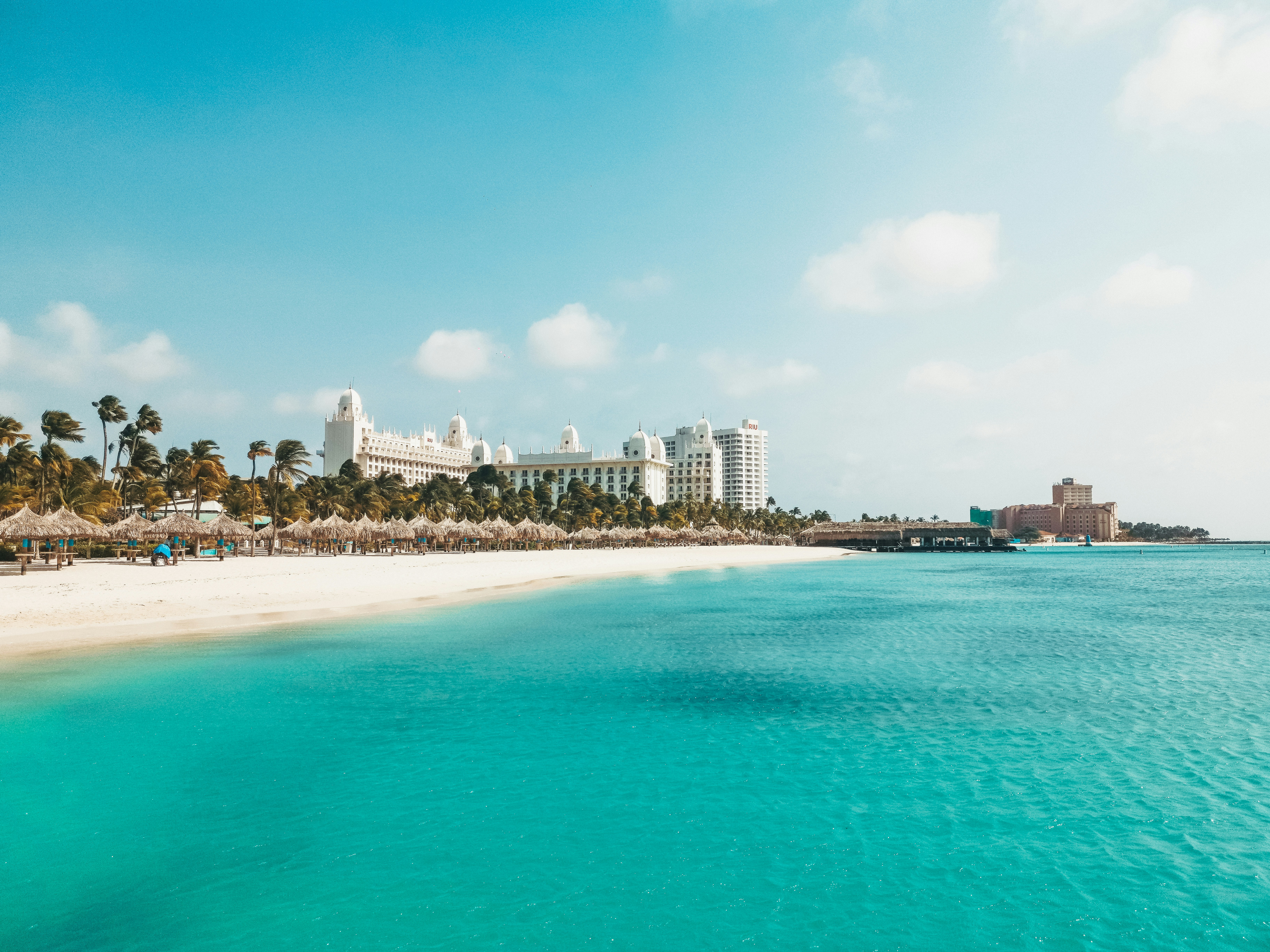
Aruba is one of the Caribbean’s most connected islands, with 4G/LTE coverage across the main resort areas and much of the island’s west coast, where most visitors stay. According to the Aruba Tourism Authority, the island welcomed over 1.2 million stay-over visitors in 2023, many of whom rely on mobile data rather than hotel Wi‑Fi.
Hello’s eSIM plans for Aruba start from 5 GB, with live pricing in the app, and give you instant activation without visiting a phone shop or swapping physical SIM cards. You simply scan the QR code or follow in‑app instructions, and your Aruba eSIM plan is ready to go for the whole trip.
For most travelers doing a 5–7 day stay in 2026, budgeting around 5–10 GB of data is enough for maps, social media, ride-hailing, and occasional video calls, especially if you use hotel or Airbnb Wi‑Fi for heavy downloads and streaming.
If you’re planning island hopping around the Caribbean, you can also combine Aruba with other destinations in the Hello app, managing multiple eSIMs in one place while using the built-in budget tracking and expense splitting tools to keep trip costs under control.
Best Aruba eSIM Plans and How Much Data You Really Need
The best Aruba eSIM plan is the one that matches your trip length and data habits: most visitors are comfortable with 5–10 GB for a week, while long-stay digital nomads should aim for 15–30 GB, especially if they work remotely or hotspot a laptop.
Hello’s Aruba eSIM plans start from 5 GB, with live prices shown in the app based on current network costs in 2026. While third‑party guides list Aruba eSIM bundles like 1 GB for about US$7–9 and 10 GB for around US$30, actual prices fluctuate with demand and local operator rates, so checking the Hello app before booking gives you the most accurate figure.
To choose the right Aruba eSIM plan, think about:
- Trip length: weekend break, 1 week, or multi‑week stay.
- Usage: light (messaging, maps), medium (social media, photos), or heavy (video, hotspot).
- Wi‑Fi access: most resorts and many cafes in Palm Beach and Oranjestad have free Wi‑Fi, which can significantly reduce your mobile data usage.
Here’s a rough guide for a typical 2026 trip:
| Traveler Type | Stay Length | Recommended Data | Notes |
|---|---|---|---|
| City explorer | 3–4 days | 3–5 GB | Maps, restaurant searches, socials on Wi‑Fi at night |
| Beach vacationer | 5–7 days | 5–10 GB | Daily maps, socials, some video calls |
| Remote worker | 2+ weeks | 15–30 GB | Hotspot for emails and calls, use lodging Wi‑Fi for big uploads |
If you’re traveling with friends or family, you can each pick your own Hello eSIM plan and then use Hello’s expense splitting to track shared costs like car rentals and boat trips without arguing over who paid what.
Aruba Mobile Coverage: Where eSIM Data Works Best on the Island
Aruba’s mobile data coverage is strongest along the populated west and southwest coasts—around Oranjestad, Eagle Beach, and Palm Beach—so an Aruba eSIM plan will feel almost as fast and reliable as being at home in most tourist areas.
Local networks focus coverage where visitors spend the most time: the resort strip between Eagle Beach and Palm Beach, the cruise port and downtown in Oranjestad, and key routes to the airport and major supermarkets. In these zones, 4G/LTE is standard, and you’ll often see speeds fast enough for HD video calls and social media uploads.
Once you head into the island’s rugged north and east—think Arikok National Park, the Natural Pool, or the California Lighthouse area—signal can weaken or drop to slower bands. That’s true whether you use a physical SIM or an eSIM; the limiting factor is the cell tower network, not the SIM technology.
To get the most from your Aruba eSIM plan:
- Download offline maps of Aruba in Google Maps or Maps.me before you leave your hotel.
- Save key locations (airport, hotel, favorite beaches, supermarkets, ATMs) for quick access.
- Use Wi‑Fi at your resort or Airbnb for heavy uploads, especially along Palm Beach, where many hotels offer reliable free Wi‑Fi.
According to the Aruba Tourism Authority, hotel occupancy has rebounded strongly post‑pandemic, with more visitors staying in high‑rise beach resorts—great news for travelers, as these properties typically invest in decent Wi‑Fi, allowing you to save mobile data for when you’re out exploring.
Step‑by‑Step: How to Set Up an eSIM for Aruba Before You Fly
The easiest way to stay connected in Aruba is to install your Hello eSIM before you fly, then simply switch it on when you land—no kiosks, no paperwork, and no fumbling with tiny SIM trays at Queen Beatrix International Airport.
Most recent iPhone, Google Pixel, and Samsung Galaxy models support eSIM; you can usually confirm by going to your phone’s Mobile Data / Cellular settings and looking for an option like “Add eSIM” or “Add mobile plan.” This mirrors the compatibility checks recommended in online Aruba eSIM booking guides, which advise checking for the “Add cellular plan” option in settings before purchase.
A typical Hello eSIM setup for Aruba looks like this:
- Buy your Hello eSIM for Aruba in the Hello app or at travelwithhello.com while you still have Wi‑Fi at home.
- Install the eSIM by scanning the QR code or following the in‑app installation flow; name it something like “Aruba Data.”
- In your phone settings, set your Hello eSIM as the data line and keep your physical SIM for calls/SMS if you like.
- Turn Data Roaming ON for the Hello eSIM, but leave it switched off until the plane lands.
- On arrival in Aruba, toggle the Hello eSIM on, wait 1–2 minutes for it to connect to a local network, and you’re online.
If you’re visiting other destinations like Japan later in the year, you can repeat the same process with a Hello eSIM for Japan, managing all your travel connectivity inside the Hello app.
Costs, Budgeting, and Using Hello to Track Your Aruba Travel Internet Spend
A realistic 2026 budget for Aruba mobile data is around US$15–40 per person for a week, depending on how much you rely on your Aruba eSIM plan versus hotel and café Wi‑Fi.
Aruba is one of the more expensive Caribbean islands overall: according to the Aruba Tourism Authority and regional travel cost trackers, visitors can expect average restaurant meals in tourist areas to run about US$20–35 per person in 2025–2026, with beach cocktails often US$10–15. That makes it even more important to keep an eye on your connectivity spend so you don’t get surprise bills.
Hello’s eSIM for Aruba uses prepaid data plans, so you pay upfront and never incur traditional roaming charges. Because the Hello app updates prices live, you see the exact cost for 5 GB, 10 GB, or more before confirming. This also means you can compare the cost of adding a bit more data to your plan versus relying on hotel Wi‑Fi for heavy tasks.
To keep your Aruba travel internet budget on track, you can:
- Use Hello’s budget tracking to set a trip budget that includes eSIM, activities, and food.
- Turn on AI receipt scanning for restaurant and bar bills, so you see quickly if dining costs are creeping up.
- Split the cost of a shared Hello eSIM top‑up or Wi‑Fi‑only villa internet evenly using Hello’s expense splitting, which supports multiple currencies with automatic exchange rates.
For context, many Aruba eSIM guides still list 10 GB regional plans around US$25–35 in 2024–2025; using this as a reference, a mid‑range data budget of roughly US$3–5 per day is a safe planning number for 2026.
Common Questions About eSIM Aruba, Data Usage, and Local Logistics
Most travelers can use an Aruba eSIM without visiting a phone shop: as long as your phone supports eSIM, you install it once and then enjoy local‑rate data from the moment you land until you fly home.
Q: Does Aruba support eSIM for travelers?
Yes. Online travel guides and booking platforms confirm that Aruba supports eSIM, and travelers regularly use eSIM data plans instead of physical SIMs. That means a Hello eSIM will connect to local networks just like a standard local data SIM—only without the need to swap cards.
Q: How much mobile data do I need for one week in Aruba?
If you mainly use your Aruba mobile data for maps, messaging, restaurant research, and social media, 5–8 GB is usually enough for 7 days. Add more (10–15 GB) if you plan to hotspot a laptop, upload lots of videos, or work remotely.
Q: Is hotel Wi‑Fi in Aruba good enough to rely on?
Resorts along Eagle Beach and Palm Beach generally have decent Wi‑Fi, but speeds and stability can drop at peak times. Smaller guesthouses or rentals outside the main strip may have weaker connections. An eSIM gives you a reliable backup so you’re not stuck when Wi‑Fi slows down.
Q: Can I keep my usual phone number?
Yes. With an eSIM, you can leave your physical SIM in the phone for calls and SMS to your usual number and use the Hello eSIM purely for data. Just set the Hello eSIM as the default data line in your phone’s settings.
Q: How do I avoid bill shock?
Because Hello eSIM plans are prepaid, you’ll never exceed your data allowance without explicitly topping up. You can also monitor your remaining data in the app and rely on Wi‑Fi for big downloads to stretch your plan.
Practical Aruba Travel Tips: Staying Connected from Beach to Downtown
Using an Aruba eSIM plan means you can navigate from the airport to your hotel, book dinner, and share beach photos immediately—no hunting for a SIM shop, no airport roaming surprises, and no relying on patchy café Wi‑Fi.
When you land at Queen Beatrix International Airport, most travelers head straight to the resort areas of Eagle Beach or Palm Beach, about 15–25 minutes away by taxi or car. Having your Hello eSIM already installed makes it easy to:
- Use map apps to compare taxi, pre‑booked transfer, or rental car routes.
- Check live opening hours for supermarkets like Super Food Plaza or Ling & Sons to stock up on snacks and drinks.
- Translate Papiamento and Dutch signs or menus, though English is widely spoken and you’ll rarely face a language barrier.
Because Aruba is outside the hurricane belt and enjoys sunshine most of the year, outdoor activities are a big draw. Snorkeling tours, UTV trips through Arikok National Park, and sunset sails are all easier to coordinate when everyone in your group is online. Use Hello’s expense splitting to divide tour costs fairly, even if one person pays in US dollars while another tracks expenses in a home currency.
Aruba’s tap water is safe to drink, tipping is customary (around 15–20% at restaurants), and US dollars are widely accepted alongside the Aruban florin. With a Hello eSIM handling your Aruba mobile data and the Hello app tracking your daily spend, you can focus on beaches and adventures instead of logistics.
Explore These Destinations
Stay Connected
Stay connected in Aruba
Get an eSIM before you land. Hello gives you instant data in 200+ countries — no SIM swaps, no roaming fees.
Related Articles
Aruba Currency & Money Guide: Exchange, Cards, and Tips
Currency exchange, credit card acceptance, ATM tips, tipping culture, and money-saving advice for Aruba.
24 July 2026
Aruba Safety Guide: Tips for a Safe Trip
Safety tips, health advisories, emergency contacts, common scams, and travel insurance advice for Aruba.
15 July 2026
Aruba Visa & Entry Requirements for Singapore Passport Holders
Visa requirements, passport validity, customs allowances, and entry tips for Singapore citizens travelling to Aruba.
6 July 2026