Bhutan in 5 Days: The Perfect Extended Itinerary
A detailed 5-day itinerary for Bhutan with daily activities, costs, neighborhoods, and transport tips for an extended stay.
By Hello Travel Team
- 1
Paro Arrival, Rinpung Dzong, and Thimphu Evening
- MorningArrive at Paro International Airport and meet driver~$20
- Late morningParo Rinpung Dzong and Nemi Zam bridge~$10
- AfternoonTransfer from Paro to Thimphu~$30
- EveningThimphu clock tower and Norzin Lam walk
Paro townRinpungNorzin LamMotithangAirport taxis or hotel transfers cost approximately $15-$30 to Paro and $45-$70 to Thimphu. The drive to Thimphu takes about 1.5-2 hours.
Budget$155Mid-range$260Luxury$690 - 2
Thimphu Sights, Markets, and Culture
- MorningBuddha Dordenma viewpoint~$15
- Late morningNational Memorial Chorten~$5
- AfternoonLunch near Norzin Lam or Centenary Farmers’ Market~$15
- AfternoonFolk Heritage Museum and craft school~$10
- EveningTashichho Dzong and local dinner~$30
KuenselphodrangCentral ThimphuNorzin LamMotithangUse a private car for the hillside Buddha statue and central sights. Allow approximately $45-$80 per day for vehicle and driver when shared.
Budget$155Mid-range$270Luxury$700 - 3
Thimphu to Punakha via Dochula Pass
- MorningDrive from Thimphu to Dochula Pass~$35
- Morning108 chortens and Druk Wangyel Lhakhang~$10
- AfternoonLunch near Lobesa or Khuruthang~$15
- AfternoonChimi Lhakhang and rice-field walk~$15
- EveningPunakha lodge dinner~$25
Dochula PassLobesaKhuruthangPunakha valleyThe drive takes approximately 2.5-4 hours depending on conditions. Budget $70-$120 for a private vehicle allocation, shared among travelers.
Budget$170Mid-range$310Luxury$840 - 4
Punakha Dzong, Long Transfer, and Paro
- MorningPunakha Dzong~$15
- AfternoonLunch in Punakha valley~$15
- AfternoonDrive from Punakha to Paro via Thimphu~$70
- EveningLight dinner and hotel check-in in Paro~$25
Punakha DzongKhuruthangThimphu highwayParo townAllow 5-6 hours for the Punakha-to-Paro transfer, usually via Thimphu. A private vehicle typically costs $100-$160 for the route depending on stops and vehicle class.
Budget$180Mid-range$330Luxury$880 - 5
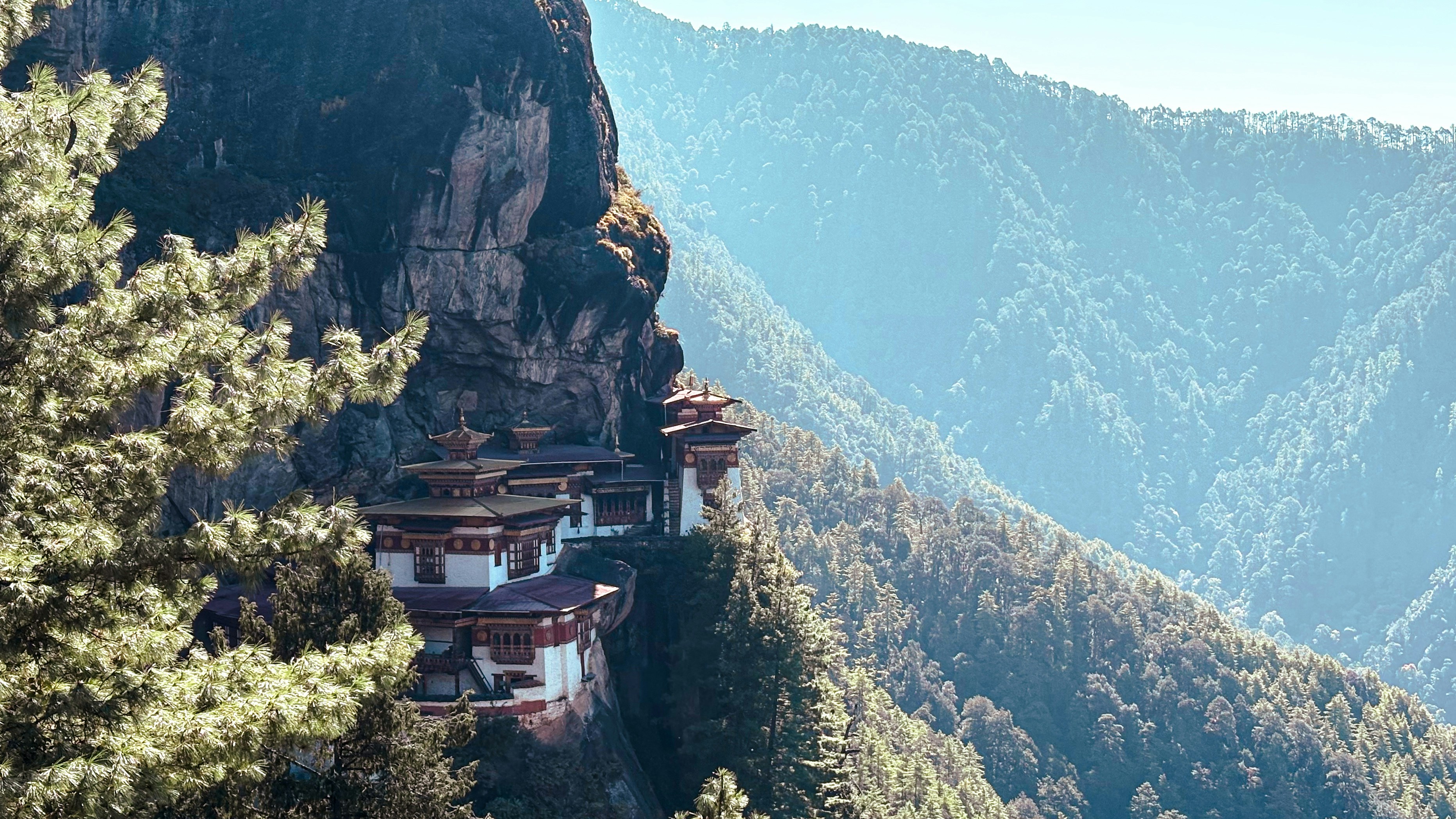
Tiger’s Nest Monastery and Departure
- Early morningTaxi to Tiger’s Nest trailhead~$20
- MorningHike to Taktsang Monastery~$20
- AfternoonLunch in Paro town~$15
- Afternoon or eveningParo shopping and airport transfer~$30
Taktsang trailheadParo townAirport roadThe Tiger’s Nest round trip takes approximately 4-6 hours. Arrange a taxi or private car in advance and allow at least two hours before the flight for airport procedures.
Budget$155Mid-range$270Luxury$680
Trip Summary
Trip starter
Turn this 5-day itinerary into a Hello trip
Start with a prefilled trip for Bhutan, then add dates, invite friends, track expenses, and pick an eSIM before you land.
Name and destination carried into the app.
Split costs and settle up during the trip.
Choose data for the destination before departure.
Bhutan in 5 Days: TL;DR Itinerary and Budget
A well-paced Bhutan 5 day itinerary combines Paro, Thimphu, Punakha, and the Tiger’s Nest without trying to cross the entire country. Plan approximately $740-$1,140 per adult before international flights at the budget-to-mid-range level, or $2,000-$3,000 for a luxury trip, largely because the Sustainable Development Fee is $100 per person per night for most international visitors, plus a one-time $40 visa fee. Bhutan’s official Department of Tourism requires visas for most visitors and says correctly submitted applications can take up to five days, so apply before booking flights. The 2025 tourism year recorded 209,376 arrivals, according to Bhutan’s National Statistics Bureau, making advance planning especially sensible during spring and autumn. This Bhutan travel plan uses overnight bases in Paro, Thimphu, and Punakha, with private vehicle transport and a guide for cultural sites. Use Bhutan for pre-trip planning, and track shared meals, vehicle costs, and multi-currency expenses in the Hello app. Hello can scan receipts, split bills automatically, and keep a running trip budget in ngultrum and dollars.
Day 1 — Paro Arrival, Rinpung Dzong, and Thimphu Evening
The best first day in Bhutan is deliberately gentle: arrive in Paro, absorb the Himalayan scenery, visit one major dzong, then transfer to Thimphu before dinner. Morning flights into Paro often arrive after a dramatic approach through mountain valleys, so allow 60-90 minutes for immigration, luggage, and meeting your guide. A private airport transfer to Paro town costs about $15-$30 per car, while the scenic 50-kilometre journey to Thimphu usually takes 1.5-2 hours and costs approximately $45-$70 in a standard vehicle. Begin with lunch at a Bhutanese restaurant: budget around $8-$15 per person for ema datshi, red rice, momos, and tea; mid-range dining is $18-$30. In the afternoon, explore Paro Rinpung Dzong and cross the traditional Nemi Zam bridge. Dress modestly, remove hats inside temples, and carry socks because shoes must be removed in sacred interiors. Continue to Thimphu, check into the Norzin Lam or Motithang area, and take an evening walk around the clock tower. Dinner costs roughly $10-$18 budget, $25-$45 mid-range, or $60-plus luxury. A useful arrival tip is to buy a local SIM only if necessary; arriving connected with Hello eSIM for Bhutan lets you contact your driver, translate menus, and use maps immediately.
Day 2 — Thimphu Sights, Markets, and Bhutanese Culture
Spend the second day exploring Thimphu’s compact central neighborhoods, where monasteries, museums, markets, and government landmarks can be linked efficiently by car and short walks. Start at 8:00 a.m. with the Buddha Dordenma statue above Kuenselphodrang; the viewpoint is free, but budget $10-$20 for a taxi or include it in the daily vehicle hire. Continue to the National Memorial Chorten, where visitors commonly walk clockwise with local worshippers, then visit the Folk Heritage Museum and the Institute for Zorig Chusum, often called the painting school. Combined entrance fees and small donations are usually $5-$15 per person, though fees vary by site. Have lunch near Norzin Lam or the weekend market for $8-$15 budget or $20-$35 mid-range. In the afternoon, browse the Centenary Farmers’ Market for dried chilies, buckwheat products, cheese, and handicrafts; avoid photographing people closely without permission. At 4:00 p.m., visit Tashichho Dzong from the permitted visitor areas, then enjoy butter tea or a Bhutanese craft beer. A private car and driver typically add $45-$80 per day when shared by two to four travelers. Thimphu hotels range from approximately $35-$70 budget to $120-$250 mid-range per room, while luxury properties can exceed $400.
Day 3 — Thimphu to Punakha via Dochula Pass
The most rewarding road day in this Bhutan itinerary follows the Thimphu-Punakha highway over Dochula Pass, combining Himalayan viewpoints, a monastery, and the fertile Punakha valley. Leave around 7:30 a.m. for the 2.5-4-hour drive, depending on roadworks, weather, and stops. The private vehicle is the practical choice because scheduled public transport is limited for visitors; estimate $70-$120 for the day’s vehicle allocation when divided among travelers. At Dochula, around 3,100 metres above sea level, pause at the 108 Druk Wangyel chortens and the hilltop temple. Clouds can hide the peaks, so do not judge the stop solely by the forecast. Bring layers, water, and motion-sickness tablets. Continue downhill to Punakha and eat lunch near Lobesa or Khuruthang, budgeting $8-$15 for a simple meal or $20-$40 at a comfortable restaurant. In the afternoon, visit Chimi Lhakhang, reached by a 20-30-minute walk through rice fields; respectful clothing is essential, and photography may be restricted inside temples. Overnight around Punakha town or Lobesa. Budget rooms cost approximately $45-$80, mid-range lodges $120-$220, and luxury valley resorts $350-$700 or more. Dinner featuring local trout, red rice, and seasonal vegetables costs about $12-$20 budget or $35-$60 mid-range.
Day 4 — Punakha Dzong and the Tiger’s Nest Approach
Day four is the itinerary’s biggest logistics challenge: visit Punakha Dzong early, return toward Paro, and prepare for the Tiger’s Nest hike rather than forcing both major sights into one exhausting day. Enter Punakha Dzong around 8:30 a.m., when the riverside setting is especially peaceful; allow 90 minutes to two hours. Site fees vary, but setting aside $10-$20 per person for monument entry, guide-related arrangements, and donations is sensible. After lunch, begin the five-to-six-hour drive to Paro, usually via Thimphu, with a total vehicle estimate of $100-$160 depending on stops and vehicle class. This is a long day, so travelers who value comfort should replace the Punakha excursion with an extra night in Paro and move Punakha to a future trip. For the recommended plan, arrive in Paro around 6:00-8:00 p.m., stay near the town center or airport road, and choose a light dinner of noodles, thukpa, or vegetable curry. Budget $8-$15, mid-range $20-$35, or luxury $50-plus. Pack a day bag tonight with water, snacks, sunscreen, rain protection, and modest layers for the next morning. The Hello app’s voice expense entry is useful after a long transfer: record fuel, meals, and shared taxi costs without typing while tired.
Day 5 — Tiger’s Nest Monastery and Departure Planning
The ideal final day starts before 7:00 a.m. at the Tiger’s Nest trailhead, giving you cooler hiking conditions, fewer crowds, and a safer buffer before an evening flight. The round trip to Taktsang Monastery generally takes four to six hours, including rest stops and the 700-plus stone steps near the monastery. A taxi from Paro town to the trailhead costs roughly $15-$30 return if arranged through your hotel; a private vehicle is often included in a guide package. The first viewpoint appears after about 60-90 minutes, and the cafeteria halfway up is a convenient place for tea and a simple meal. Do not rush the final stairs, and never fly out immediately after the hike if your schedule leaves no delay buffer. Return to Paro for lunch at approximately $10-$20, then spend the afternoon shopping for handwoven textiles, incense, prayer flags, or carved wooden items. Paro town is walkable, but taxis for short trips generally cost $3-$8. Allow at least two hours before departure for the airport, vehicle return, check-in, and security. The official tourism guidance notes that there is no regular public transport at Paro airport, so arrange your transfer in advance. Keep your Hello eSIM active for flight updates and your airport pickup.
Bhutan 5 Day Trip Costs, Neighborhoods, and Transport Comparison
For most international travelers, Bhutan’s fixed nightly Sustainable Development Fee dominates the cost of a five-day trip, while accommodation, food, vehicle hire, and activities determine the comfort level. The official fee is $100 per adult per night, and the visa application fee is $40 per person; children aged 6 to under 12 pay half the SDF, while children under 6 are exempt. The table below excludes international flights and shopping. Accommodation estimates assume one traveler’s share of a twin room and a private vehicle shared by two people. | Travel style | Typical daily spend excluding SDF | Five-day estimate including $500 SDF and $40 visa | Best for | |---|---:|---:|---| | Budget | $45-$75 | $765-$915 | Simple hotels, local eateries, shared vehicle | | Mid-range | $110-$180 | $1,090-$1,440 | Comfortable hotels, private car, guided visits | | Luxury | $300-$650 | $2,040-$3,790 | Premium resorts, upgraded vehicles, private experiences | Plan roughly $250-$450 for a shared private vehicle and driver across the route, although quotes vary by season and vehicle size. Thimphu’s Norzin Lam and Motithang are convenient for restaurants and museums; Paro town suits first-time visitors, while Punakha’s Lobesa area is quieter and closer to Chimi Lhakhang. Use the Hello app to split the vehicle, hotel, and restaurant bills across multiple currencies, with automatic exchange-rate conversion and AI categorization.
Common Questions About a Bhutan 5 Day Itinerary
The short answer is yes: five days is enough for Bhutan’s classic western circuit, but it is not enough to explore remote valleys or travel at a slow pace. This Bhutan travel plan prioritizes Paro, Thimphu, Punakha, and Tiger’s Nest, with realistic road times and one demanding transfer day.
Is five days enough for Bhutan? Yes, if you focus on western Bhutan and accept two long drives. Add two or three days for Bumthang, Phobjikha, or a slower hiking schedule.
What is the best time for this Bhutan itinerary? March-May and September-November usually offer the strongest combination of comfortable trekking weather and mountain visibility. Winter can be clear but cold, while summer monsoon rain may affect roads and views.
Do I need a guide in Bhutan? A guide is required for entry to many monuments and dzongs, according to Bhutan’s official tourism FAQs. Regulations and site access can change, so confirm the current arrangement with your licensed provider.
Can I travel independently? Visitors can arrange more components independently than in the past, but a guide and organized transport remain the smoothest option for a five-day route.
How much cash should I carry? Keep approximately $50-$100 in ngultrum equivalent for small purchases, donations, snacks, and places with unreliable card acceptance. Track cash and card payments in Hello, whose receipt scanner accepts different languages and currencies.
Will my phone work? An eSIM from Hello can be purchased and activated before departure, helping you arrive connected for maps, messages, translation, and driver coordination.
Explore These Destinations
Stay Connected
Make the most of Bhutan
From eSIM connectivity to expense tracking, Hello is the all-in-one companion that keeps your trip stress-free.
Related Articles
Bhutan Currency & Money Guide: Exchange, Cards, and Tips
Currency exchange, credit card acceptance, ATM tips, tipping culture, and money-saving advice for Bhutan.
24 July 2026
Bhutan Safety Guide: Tips for a Safe Trip
Safety tips, health advisories, emergency contacts, common scams, and travel insurance advice for Bhutan.
16 July 2026
Bhutan Visa & Entry Requirements for Singapore Passport Holders
Visa requirements, passport validity, customs allowances, and entry tips for Singapore citizens travelling to Bhutan.
7 July 2026