Afghanistan in 10 Days: The Ultimate Travel Itinerary
A comprehensive 10-day itinerary for Afghanistan covering top attractions, hidden gems, daily costs, and transport between cities.
By Hello Travel Team
- 1
Arrival in Kabul and First Orientation
- MorningPre-arranged airport transfer and check-in~$25
- AfternoonGuided central market orientation~$15
- EveningSimple qabuli palaw or kebab dinner~$10
Kabul city centerShahr-e NawUse a pre-booked vehicle with local coordination; indicative airport transfers start around $15–30, but security and driver arrangements may increase the price.
Budget$60Mid-range$150Luxury$400 - 2
Kabul Heritage and Darul Aman Area
- MorningControlled city orientation~$15
- AfternoonDarul Aman Palace area, subject to permission~$15
- EveningRestaurant dinner and tea~$12
Darul AmanKarte CharCluster nearby locations to reduce traffic time; confirm photography and access rules before departure.
Budget$65Mid-range$160Luxury$400 - 3
Karte Sakhi and Local Markets
- MorningGuided visit to an approved religious or cultural site~$15
- AfternoonCraft-market visit with interpreter~$20
- EveningMantu or ashak dinner~$12
Karte SakhiKabul central marketsTravel only with current local guidance; avoid demonstrations, government buildings, checkpoints, and security photography.
Budget$70Mid-range$170Luxury$425 - 4
Kabul to Bamyan
- MorningEarly shared 4x4 transfer~$60
- AfternoonRoadside meal and water supplies~$15
- EveningGuesthouse check-in and rest~$30
KabulBamyan ValleyA shared 4x4 may cost approximately $40–60 per person; a private vehicle can cost around $150–200 for the vehicle. Confirm route conditions and permissions.
Budget$110Mid-range$250Luxury$550 - 5
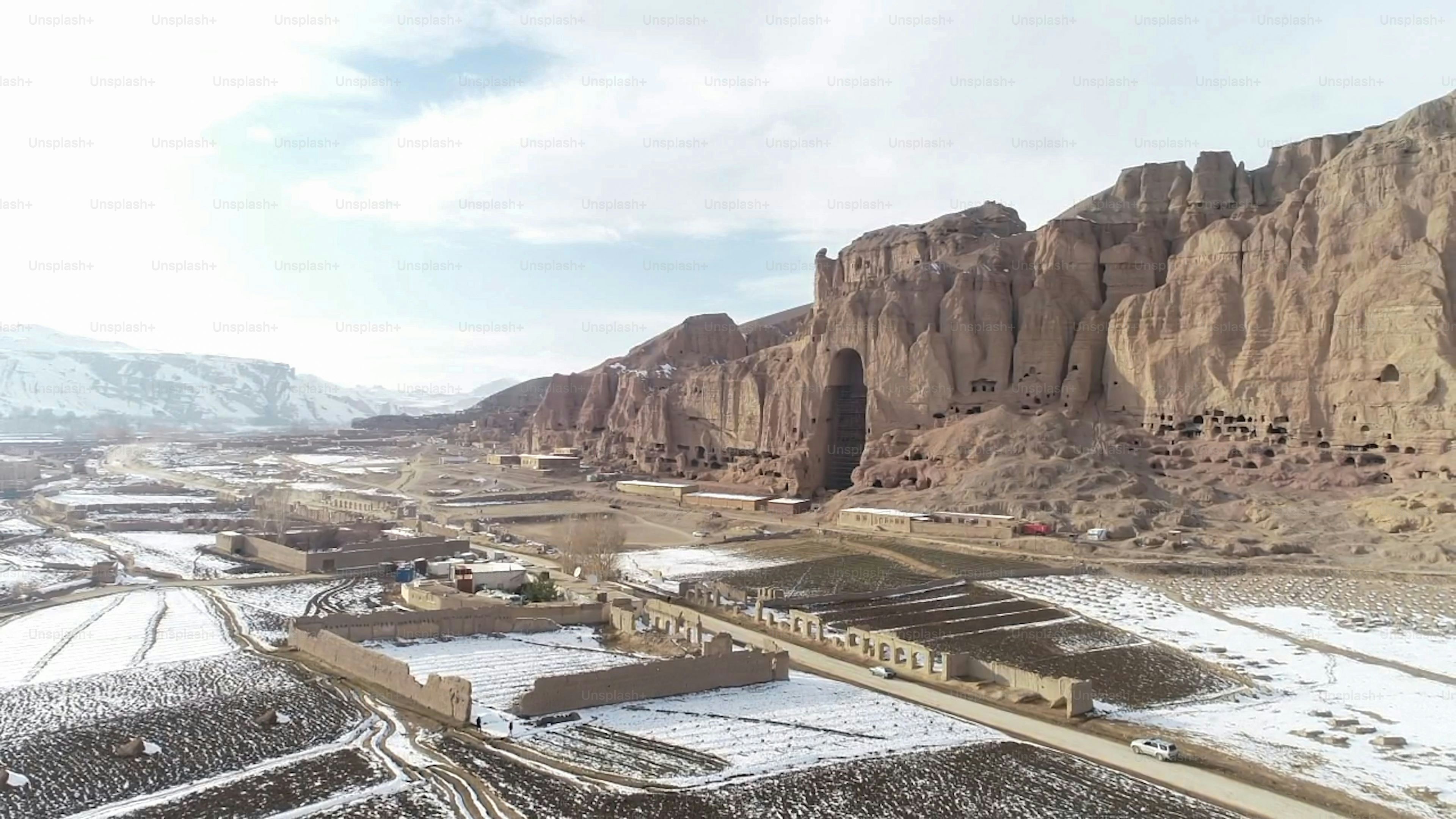
Bamyan Valley and Buddha Niches
- MorningBamyan Valley and Buddha niches, subject to access~$15
- AfternoonLocally arranged landscape excursion~$45
- EveningGuesthouse dinner~$12
Bamyan ValleyBamyan townUse an arranged vehicle for rough roads; reported local private-vehicle costs can reach approximately $25–60 per day.
Budget$90Mid-range$220Luxury$500 - 6
Bamyan to Mazar-e-Sharif
- MorningConfirmed domestic flight or arranged transfer~$100
- AfternoonHotel check-in and lunch~$20
- EveningBlue Mosque visit, subject to permission~$15
Mazar-e-Sharif centerBlue Mosque districtIndicative domestic airfares are approximately $80–120 one way; verify schedules, baggage rules, and cancellations directly.
Budget$160Mid-range$300Luxury$650 - 7
Mazar Markets and Cultural Orientation
- MorningGuided market walk~$20
- AfternoonQabuli palaw or kebab lunch~$12
- EveningRest and pre-arranged city transfer~$25
Mazar-e-Sharif marketsCity centerAsk before photographing people, religious sites, or public buildings; preserve flexibility for changing local conditions.
Budget$85Mid-range$200Luxury$450 - 8
Mazar-e-Sharif to Herat
- MorningConfirmed domestic flight~$100
- AfternoonAirport transfer and hotel check-in~$30
- EveningHerati dinner~$15
Herat city centerAirport areaFlights may be limited or disrupted; confirm the itinerary and retain a contingency plan before committing to the route.
Budget$170Mid-range$320Luxury$650 - 9
Herat Citadel, Friday Mosque, and Bazaars
- MorningHerat Citadel or approved historic site~$20
- AfternoonFriday Mosque and bazaar visit, subject to permission~$25
- EveningAshak, mantu, or kebab dinner~$15
Herat Old CityHistoric bazaar districtRespect prayer times and photography rules; use a locally coordinated vehicle and guide.
Budget$90Mid-range$220Luxury$500 - 10
Return or International Departure
- MorningAirport transfer and document check~$30
- AfternoonContingency meal and airport waiting time~$20
- EveningDeparture
Herat airport or Kabul airportAllow substantial extra time for security screening, route delays, and schedule changes. Do not rely on unofficial border crossings or last-minute transport.
Budget$60Mid-range$180Luxury$400
Trip Summary
Trip starter
Turn this 10-day itinerary into a Hello trip
Start with a prefilled trip for Afghanistan, then add dates, invite friends, track expenses, and pick an eSIM before you land.
Name and destination carried into the app.
Split costs and settle up during the trip.
Choose data for the destination before departure.
TL;DR: Afghanistan in 10 Days—A Practical Travel Plan
A 10-day Afghanistan itinerary would traditionally combine Kabul, Bamyan, Mazar-e-Sharif, and Herat, with domestic flights or locally arranged road transfers connecting the major stops. However, as of September 22, 2026, the U.S. Department of State, the UK Foreign, Commonwealth & Development Office, and Australia’s Smartraveller all advise against travel to Afghanistan because of terrorism, kidnapping, wrongful detention, crime, civil unrest, and limited medical facilities. Treat the schedule below as a research framework for a future trip, not a recommendation to travel now. A realistic 2026 planning estimate is approximately $550–750 for a tightly managed budget trip, $1,800–2,500 for a comfortable trip, and $3,500 or more for a private, security-supported experience. Prices vary sharply by nationality, permissions, season, security arrangements, and transport availability. Build flexibility into every day, use a reputable locally connected operator, verify entry rules with an Afghan diplomatic mission, and check your own government’s advisory immediately before making plans.
Days 1–3: Kabul Arrival, Old City, Markets, and Local Heritage
The first three days of an Afghanistan 10 day itinerary are best reserved for Kabul acclimatization, because arrival procedures, permissions, traffic, and security arrangements can change with little notice. On Day 1, arrange a pre-booked airport transfer rather than searching for transport after landing; a basic city transfer may cost around $15–30, while a private vehicle with driver can cost substantially more. Spend the afternoon at a central market or craft district only with an approved local guide, then have a simple rice, kebab, or mantu dinner for approximately $5–12 in 2026. On Day 2, schedule a morning city orientation, a controlled visit to Darul Aman Palace if access is permitted, and an afternoon stop at a local museum or garden. Allow $10–25 for local transport and entry-related expenses. Day 3 can include Karte Sakhi or another accessible cultural site, followed by tea and a meal in a pre-vetted restaurant. Avoid photographing government buildings, checkpoints, security personnel, or demonstrations. Kabul traffic makes short journeys slow, so group nearby stops together. A budget day may cost $50–75, a mid-range day $120–180, and a private supported day $300–500, excluding international flights.
Days 4–5: Kabul to Bamyan and the Buddhas’ Valley
Bamyan is the most distinctive stop on this Afghanistan travel plan, but the journey should be attempted only when current security advice, road conditions, permissions, and a trusted operator all support it. A shared 4x4 transfer from Kabul may cost about $40–60 per person in a small group, while a private vehicle and driver can cost roughly $150–200 for the vehicle; prices are estimates, not fixed fares. On Day 4, leave early, carry water and food, and expect a long, tiring road journey with checkpoints and delays. After arrival, check into a locally confirmed guesthouse and keep the evening quiet. On Day 5, visit the Bamyan Valley and the niches of the former Buddha statues in the morning, then explore the surrounding landscape or Band-e Amir planning area only if access and road conditions are confirmed. A simple guesthouse room may be around $20–45, meals $5–12 each, and a local vehicle for sightseeing $25–60 per day. Women should obtain current, destination-specific guidance about dress, movement, photography, and accompaniment. Do not enter archaeological areas without permission, and never assume that a route described by an older guide remains open in 2026.
Days 6–7: Mazar-e-Sharif, Blue Mosque, and Northern Afghanistan
Mazar-e-Sharif works best as a short, carefully organized cultural stop after Bamyan, with the Blue Mosque as the principal attraction and the city’s markets providing the main everyday experience. On Day 6, use a confirmed domestic flight or operator-arranged transfer rather than relying on an improvised connection; indicative domestic airfares reported by travel sources range from roughly $80–120 one way, while road prices depend on vehicle type, route, and current conditions. After arrival, check in and visit the Shrine of Hazrat Ali, commonly called the Blue Mosque, only when local guidance confirms access and photography rules. Dress conservatively and ask before photographing people. Day 7 can include a morning market walk with a guide, a quiet lunch of qabuli palaw or kebab costing about $5–12, and an afternoon rest period. A basic day may total $60–90, a mid-range day $140–220, and a private supported day $350–550. Keep passports, cash, and medication secured, and do not discuss politics publicly. Because flight schedules may change or be canceled, retain at least one buffer day or be prepared to shorten the route. A 10-day schedule should never depend on making every connection exactly as planned.
Days 8–10: Herat’s Timurid Heritage and Return to Kabul
The final three days can focus on Herat’s historic architecture, but Herat should be included only after confirming flights, permissions, local security, and onward departure arrangements. On Day 8, take a confirmed domestic flight when available; indicative one-way fares reported for Kabul–Herat are around $80–120, although availability and prices can change quickly. Visit the Herat Citadel or nearby historic sites in the morning if access is authorized, then eat ashak, mantu, rice, or kebab at a vetted restaurant for about $5–15. Day 9 can be devoted to the Friday Mosque and traditional bazaars, with strict respect for prayer times, photography restrictions, and local instructions. Reserve the evening for repacking, document checks, and confirming the airport transfer. On Day 10, return to Kabul only with a ticket that leaves ample contingency time, or depart internationally from Herat if an independently verified itinerary permits. A basic Herat day may cost $60–90, a mid-range day $150–250, and a private supported day $350–600. Keep an emergency reserve in U.S. dollars, but verify accepted denominations and current exchange practices locally. Do not use unofficial border crossings or unlicensed transport to rescue an over-ambitious itinerary.
Afghanistan Itinerary Costs: Daily Budget and Transport Guide
For 2026, transport and security—not sightseeing—drive the cost of an Afghanistan 10 day trip, so travelers should budget by travel style and keep a substantial contingency reserve. The figures below exclude international airfare, visas, insurance, specialist security arrangements, and unexpected evacuation or route changes. They are planning estimates assembled from reported local transport and travel costs, not guaranteed quotations. Local taxis and rickshaws inside cities can be inexpensive, but foreigners may pay more when vehicles, interpreters, or security coordination are required. Long-distance road travel is usually priced by vehicle, while flights are subject to limited schedules. Hello’s expense tools can help separate shared vehicle costs, meals, accommodation, and exchange-rate changes: the app supports AI receipt scanning in multiple languages and currencies, voice expense entry, bank statement import, automatic categorization, and multi-currency tracking. Use it as an organizational tool, not as a substitute for carrying cash or maintaining offline records.
| Travel style | Typical daily allowance | Approximate 10-day total | Best suited to |
|---|---|---|---|
| Budget, locally arranged | $55–75 | $550–750 | Simple guesthouses, shared vehicles, basic meals |
| Mid-range, guided | $180–250 | $1,800–2,500 | Better hotels, domestic flights, private guiding |
| Luxury or security-supported | $350–600+ | $3,500–6,000+ | Private vehicle, specialized coordination, flexible routing |
A practical daily breakdown is $20–60 for lodging, $15–40 for meals, $10–30 for city transport, and $10–70 for activities or guide costs before intercity travel. Ask for written quotations and clarify whether fuel, driver accommodation, permits, translator fees, and airport transfers are included.
Common Questions About an Afghanistan 10 Day Itinerary
The most important question is not how to fit every attraction into 10 days, but whether current official advice, entry permission, insurance, transport, and local security arrangements make the trip responsible and feasible at all. As of September 22, 2026, major government advisories continue to say do not travel to Afghanistan. That warning applies despite the country’s significant historical and cultural attractions.
Is Afghanistan safe for tourists in 2026? Official advisories identify terrorism, kidnapping, wrongful detention, crime, civil unrest, and limited health facilities as serious risks. Recheck your government’s guidance immediately before any decision.
What visa does a visitor need? Requirements vary by nationality and entry route. Current travel reporting says Afghanistan introduced an e-visa in 2026 that is valid only for entry through Kabul International Airport, with reported validity of 30 days within a 90-day entry window. Confirm this directly with an Afghan embassy or consulate because rules can change.
Can I travel independently? Independent movement may create avoidable security, language, transport, and permission problems. A reputable operator with current local knowledge is more practical, but it cannot remove the underlying risk.
Should I use mobile data? If travel is lawful and independently assessed as appropriate, arrange connectivity before departure. Hello eSIM for Afghanistan offers plans with instant activation, while the Hello app also supports trip planning and expense splitting. Download essential maps and documents offline because coverage and electricity are not guaranteed.
What should I wear? Conservative, loose clothing is essential, and women should obtain current local guidance about head covering, movement, and accompaniment before planning any visit.
Explore These Destinations
Stay Connected
🌍 eSIM Plans for Afghanistan
Make the most of Afghanistan
From eSIM connectivity to expense tracking, Hello is the all-in-one companion that keeps your trip stress-free.
Related Articles
Afghanistan Currency & Money Guide: Exchange, Cards, and Tips
Currency exchange, credit card acceptance, ATM tips, tipping culture, and money-saving advice for Afghanistan.
23 July 2026
Afghanistan Safety Guide: Tips for a Safe Trip
Safety tips, health advisories, emergency contacts, common scams, and travel insurance advice for Afghanistan.
15 July 2026
Afghanistan Visa & Entry Requirements for Singapore Passport Holders
Visa requirements, passport validity, customs allowances, and entry tips for Singapore citizens travelling to Afghanistan.
6 July 2026