Sudan Travel Budget Guide: Daily Costs and Money Tips
How much does it cost to travel in Sudan? Daily budget breakdowns for budget, mid-range, and luxury travellers.
By Hello Travel Team
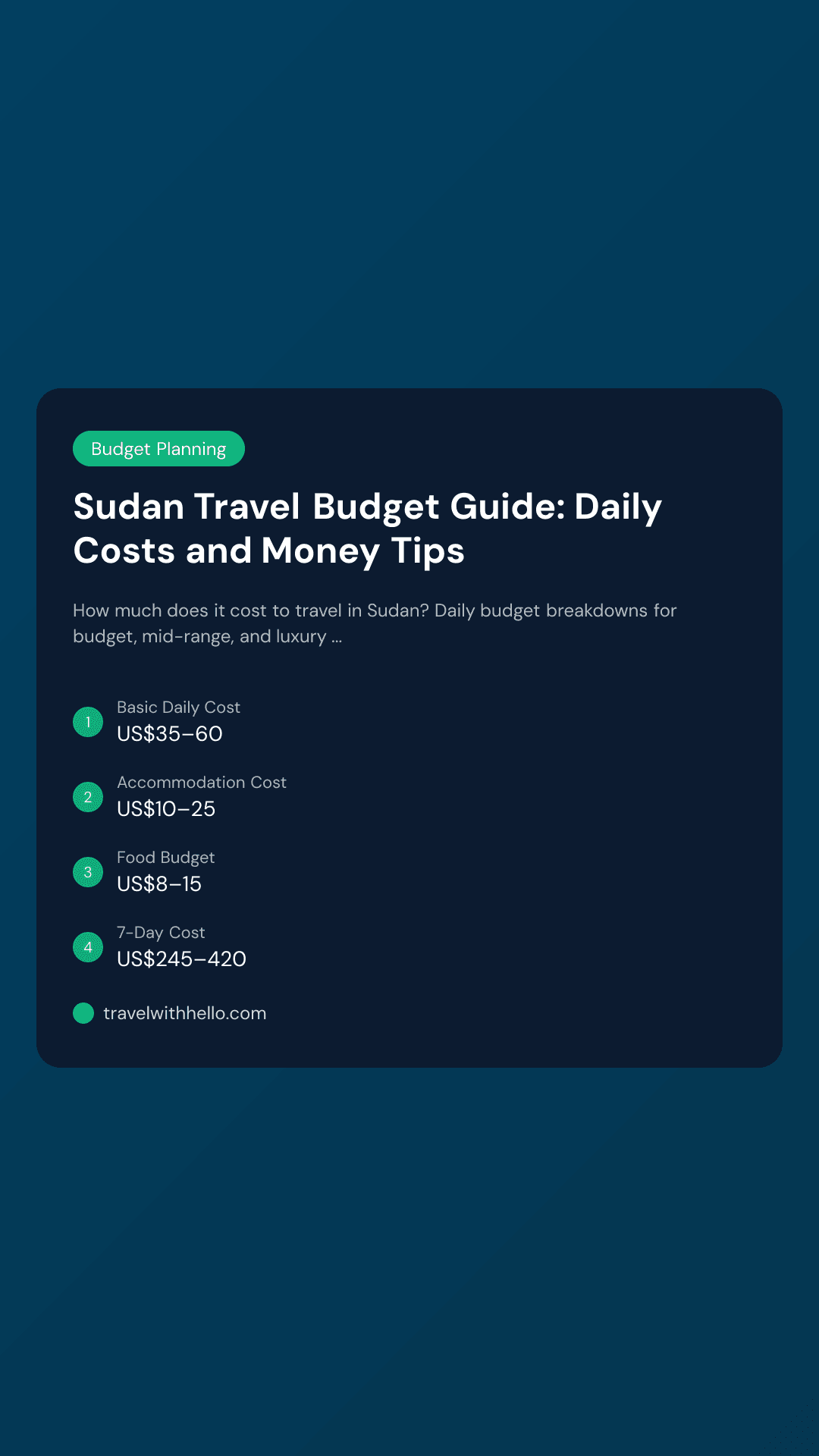
Sudan Travel Budget Guide: TL;DR
A realistic Sudan travel budget is difficult to fix because conflict, inflation, fuel shortages, limited transport, and rapidly changing exchange rates can alter prices from one week to the next. For planning purposes, allow approximately US$35–60 per person per day for a basic trip, US$65–155 for a mid-range arrangement, and US$180 or more for higher-comfort travel, excluding international flights and emergency costs.
Current safety conditions come first: the U.S. Department of State, UK Foreign, Commonwealth & Development Office, and Australian Smartraveller advise against travel to Sudan because of armed conflict, kidnapping, terrorism, crime, landmines, and serious health risks. Treat the figures below as an indicative Sudan budget guide for future planning or essential, professionally supported travel—not as encouragement to visit during active conflict. Prices can vary sharply between Port Sudan, safer operating areas, and regions affected by fighting.
Sudan Daily Expenses by Travel Style
A practical Sudan daily budget depends less on sightseeing than on accommodation availability, private transport, security arrangements, and access to cash. In 2026, a mid-range visitor should expect roughly US$65–155 per person per day, while independent budget travel may cost about US$35–60 where shared transport and simple rooms are available.
| Travel style | Accommodation | Food and drinks | Transport and activities | Suggested daily total |
|---|---|---|---|---|
| Basic budget | $10–25 | $8–15 | $10–20 | $35–60 |
| Mid-range | $25–60 | $15–30 | $10–25 | $65–155 |
| Higher comfort | $60–120+ | $30–60 | $40–100+ | $180–300+ |
These estimates are planning ranges in U.S. dollars, not guaranteed local prices. A private vehicle, driver, guide, security support, or last-minute accommodation can multiply the daily total. A 10-day mid-range itinerary could therefore cost approximately $650–1,550 before flights, visas, insurance, and contingency funds. Keep at least 20–30% extra because cancellations, route changes, fuel shortages, and emergency relocation may be unavoidable.
Sudan Accommodation Costs in Port Sudan and Other Locations
Accommodation is often the largest predictable part of a Sudan trip cost, but availability and security matter more than hotel-star ratings. For 2026 planning, simple guesthouses or basic rooms may cost around US$10–25 per night, reliable private rooms with air conditioning commonly fall near US$25–60, and better-equipped hotels can exceed US$60–120 per night.
Port Sudan is the most relevant base for many essential or future itineraries, yet prices can rise when arrivals increase or rooms become scarce. Khartoum and Omdurman remain especially unsuitable for ordinary tourism while conflict and security risks continue. In smaller towns, ask about water availability, electricity, air conditioning, mosquito protection, and whether the property can accommodate foreign guests legally and safely.
Before paying, confirm whether the quoted amount includes breakfast, taxes, generator electricity, bottled water, and transport from the airport or port. Carry a written booking confirmation and the property’s phone number because internet and payment systems may be unreliable. A refundable reservation is particularly valuable when road closures or official warnings can disrupt an itinerary without notice.
Food, Transport, and Sightseeing Costs in Sudan
Food can remain comparatively affordable, but transport and logistics often determine how much a Sudan trip costs. Allow approximately US$8–15 per day for simple local meals, US$15–30 for a mid-range food budget, and more when eating at hotels or relying on imported products. Local dishes may include ful medames, beans, flatbread, grilled meat, falafel, and tamarind drinks; bottled water should be treated as a daily essential.
Shared minibuses and coaches may provide the lowest-cost intercity option where services operate, while taxis and private vehicles can cost around US$10–25 per day for local movement. A private driver, long-distance vehicle, guide, or security-supported excursion can push transport above US$40–100 per day. Prices vary with fuel access, road conditions, distance, and negotiation.
Archaeological sites such as the pyramids at Meroë require careful planning, permits where applicable, and dependable transport rather than an unplanned day trip. Budget separately for guides, site fees, photography permissions, porterage, airport transfers, and tips. Confirm every price before departure and keep small notes for short rides and food stalls.
Sudan Money Tips: Currency, Cash, and Inflation
The safest Sudan money strategy is to carry a substantial emergency reserve in clean, widely accepted foreign currency while treating exchange rates as changeable rather than fixed. The Central Bank of Sudan reported that annual inflation reached 51.3% by June 2026, while its weighted commercial-bank and exchange-bureau rate reached SDG 3,743.23 per U.S. dollar at the end of that month. Other reporting has described much weaker informal-market rates, so the amount received can differ significantly by location and channel.
Use these practical habits:
- Bring small, undamaged U.S. dollar notes and keep them concealed in separate places.
- Exchange only through lawful, trusted channels and record the rate before handing over cash.
- Do not rely on international cards, ATMs, mobile wallets, or continuous internet access.
- Keep enough cash for food, water, accommodation, transport, medication, and onward travel.
- Track spending in both USD and Sudanese pounds because exchange-rate changes can distort your daily totals.
Hello’s app can help travellers log cash expenses with automatic exchange-rate conversion, AI categorisation, voice entry, receipt scanning, and bank-statement imports when those records are available. Split shared costs with travel companions in multiple currencies, but settle balances promptly when connectivity or banking access is uncertain.
How to Reduce Sudan Travel Costs Without Cutting Essential Safety
The most effective way to reduce Sudan daily expenses is to simplify logistics without compromising security, communications, food, or evacuation flexibility. Shared vehicles, longer stays in one location, locally available meals, and guesthouses with breakfast can lower costs, but the cheapest option is not automatically the safest or legally permitted.
Plan around these principles:
- Stay longer in one base instead of paying repeated airport transfers and last-minute rooms.
- Compare the total price of a shared vehicle with the separate cost of taxis, fuel, guides, and delays.
- Buy water, snacks, medication, and basic hygiene supplies before travelling between towns.
- Keep a contingency fund of at least 30% above the planned budget.
- Confirm travel permits, registration requirements, insurance exclusions, and local movement restrictions.
- Carry offline maps, printed contacts, a power bank, and a second method of communication.
For mobile data, an eSIM from Hello can provide a way to arrange connectivity before departure where service and activation are supported. See Sudan for destination planning and Hello eSIM for Sudan for current plan availability. Connectivity should complement—not replace—local safety advice, official instructions, and an offline emergency plan.
Common Questions About Sudan Travel Cost
The short answer is that a basic Sudan trip may require US$35–60 per day, but realistic costs can rise quickly because of private transport, security arrangements, inflation, scarce rooms, and emergency changes. Current government advisories continue to recommend against travel because of severe conflict and security risks.
How much does a 7-day Sudan trip cost? A basic seven-day estimate is approximately US$245–420, while a mid-range plan may be US$455–1,085. Add flights, visa charges, insurance, guides, permits, airport transfers, and a substantial emergency reserve.
Is Sudan expensive for budget travellers? Local food and shared transport can be inexpensive, but unreliable infrastructure and private logistics can make Sudan expensive overall. The daily room-and-meal price does not capture the cost of safe transport, permits, communications, or contingency planning.
Should travellers use cards or ATMs? No budget should assume dependable card or ATM access. Carry lawful emergency cash in separate locations and verify current rules before departure.
What is the biggest Sudan travel cost? For many itineraries, private vehicles, drivers, guides, security support, fuel, and last-minute accommodation exceed food costs. Inflation also means a price quoted today may not remain valid next week.
Can people travel to Khartoum or Meroë now? Government advisories warn against travel to Sudan, including areas around Khartoum, because conditions are violent, volatile, and unpredictable. Recheck official advice before making any booking.
Explore These Destinations
Stay Connected
Track your Sudan trip budget
Split expenses with friends, track spending by category, and see real-time currency conversions — all in one app.
Related Articles
Sudan in 5 Days: The Perfect Extended Itinerary
A detailed 5-day itinerary for Sudan with daily activities, costs, neighborhoods, and transport tips for an extended stay.
3 November 2026
Sudan Currency & Money Guide: Exchange, Cards, and Tips
Currency exchange, credit card acceptance, ATM tips, tipping culture, and money-saving advice for Sudan.
3 November 2026
Sudan Safety Guide: Tips for a Safe Trip
Safety tips, health advisories, emergency contacts, common scams, and travel insurance advice for Sudan.
3 November 2026