Getting Around Netherlands: Transport Guide for Travellers
Airport transfers, public transport, ride-hailing apps, inter-city travel, and driving tips for Netherlands.
By Hello Travel Team
This article contains affiliate links. If you book through them, Hello may earn a commission at no additional cost to you. Our editorial recommendations are independent. Learn more.
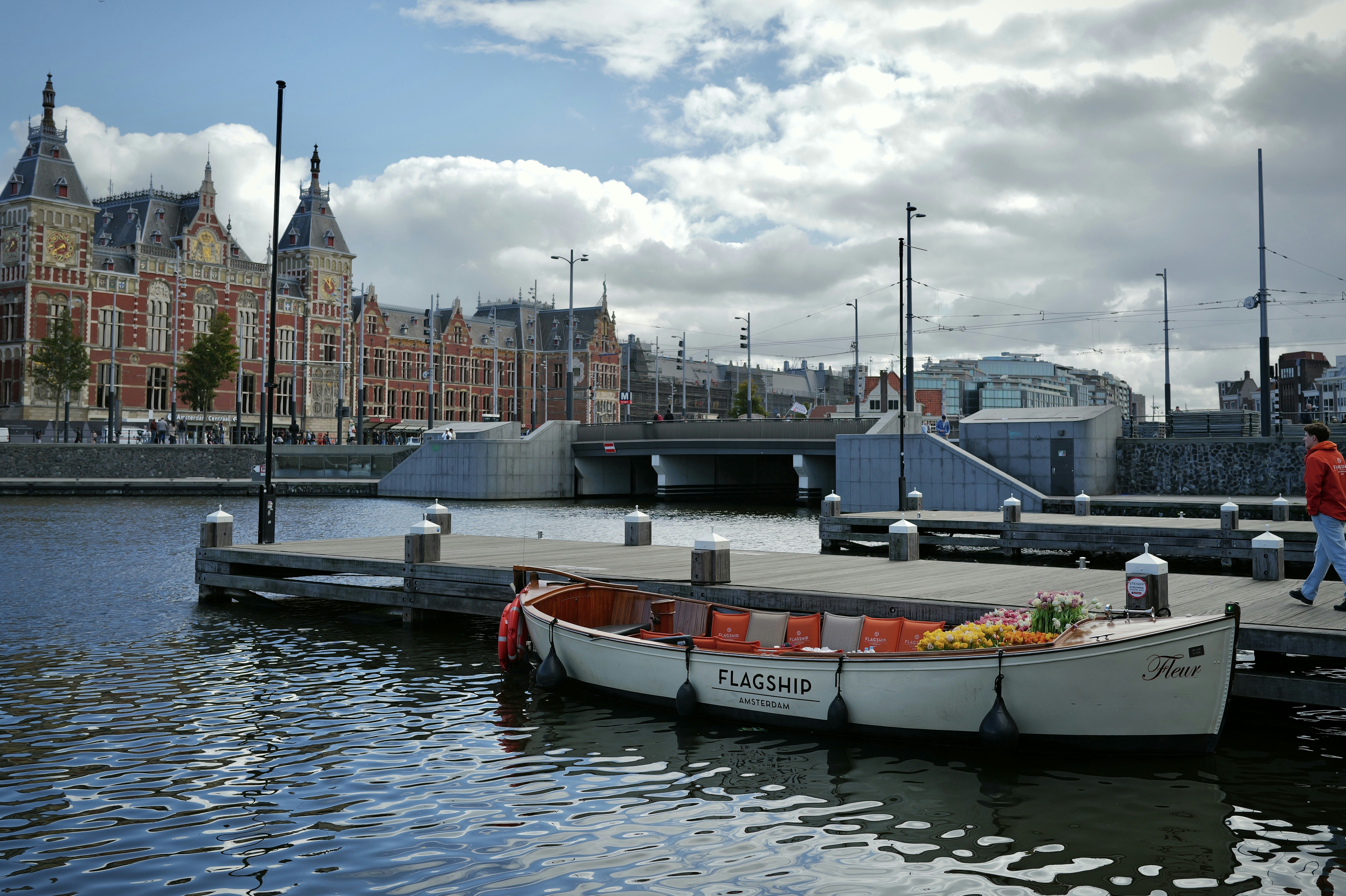
TL;DR: How to Get Around the Netherlands Easily
Getting around the Netherlands is straightforward: rely on the excellent trains for inter-city travel, tap in and out of local buses, trams, and metros with a contactless card, and use bikes or walking for short distances. For everything app-based, mobile data from a Hello eSIM keeps you seamlessly connected.
The Netherlands has one of Europe’s most efficient and punctual rail networks, with Dutch Railways (NS) reporting over 1.1 million train journeys per day in 2024 across the country. This makes trains the backbone of inter-city travel, backed up by dense local bus and tram systems in major cities like Amsterdam, Rotterdam, The Hague, and Utrecht.
For airport transfers, expect to pay around €5–€7 in 2026 for a train from Amsterdam Schiphol to Amsterdam Centraal, or €40–€60 for a metered taxi, depending on traffic and time of day. Public transport fares are typically charged per kilometre with a small boarding fee, making short hops inside cities surprisingly affordable.
Digital navigation, ticket apps, and ride-hailing all depend on reliable data, so many travellers pick up a Hello eSIM before arrival to land connected, check train platforms in real time, and order Ubers without hunting for Wi‑Fi. Combine that with Hello’s budget tracking tools and you can stay on top of daily transport costs as you go.
If you remember three things, it’s this: use trains between cities, tap on and off for local trams/metros, and only rent a car if you’re exploring rural areas or multiple small towns off the main rail lines.
Netherlands Airport Transfers: From Plane to City Centre
Airport transfers in the Netherlands are fastest by train, with Amsterdam Schiphol, Rotterdam The Hague Airport, and Eindhoven Airport all linked to their cities by public transport that usually beats taxis on both time and price for most travellers.
Amsterdam Schiphol Airport is directly connected to Amsterdam Centraal by frequent NS trains, with journeys taking about 15–20 minutes and costing roughly €5.90 in 2026 for a standard second-class ticket. Regional Sprinter and Intercity trains run all day, and Schiphol’s train station is directly under the terminal, well signposted in English.
Rotterdam The Hague Airport has no train station at the terminal, but you can take RET bus 33 to Rotterdam Centraal in about 20–25 minutes for around €4–€5 in 2026, then connect onwards by train or metro. Eindhoven Airport is linked to Eindhoven Centraal by bus 400/401 in roughly 20 minutes, with similar fares.
Taxis from Schiphol to central Amsterdam typically cost €40–€60 in 2026, depending on traffic and time, while official airport taxis in Rotterdam or Eindhoven often start around €25–€35 to central areas. Pre-booked shared shuttle services can be a middle ground, especially if you’re in a group.
For app-based transfers (like Uber at Schiphol), having data on arrival is critical. Many travellers activate a Hello eSIM before landing so they can compare train, bus, and taxi options in real time, check live delays, and message their accommodation as soon as they clear customs.
Using Netherlands Public Transport: Trams, Metros, Buses, and the OV-chipkaart
Public transport in the Netherlands is integrated and cashless, meaning you can ride trams, buses, and metros across most cities simply by tapping a card or phone when you board and again when you get off.
Most local public transport is organised by regional operators (like GVB in Amsterdam, RET in Rotterdam, and HTM in The Hague) but uses a shared back-end system, so you’ll see the same rules: always tap in and tap out, even on trams and buses. Since 2023–2024, the country has been shifting away from physical OV-chipkaart cards towards contactless payment with debit/credit cards and mobile wallets, though anonymous OV-chipkaarts are still available from major stations for travellers who prefer a dedicated card.
For typical 2026 fares, expect to pay a small boarding fee (around €1) plus a per‑kilometre rate, so a short tram or metro ride within a city often lands between €1.80 and €3.50. Day tickets in Amsterdam, Rotterdam, or The Hague usually cost about €9–€10 for unlimited travel on local trams, buses, and metros.
The classic OV-chipkaart costs around €7.50 for the card itself (non-refundable) before you load credit, so for short trips of 1–2 days many visitors now find contactless card payments simpler. The Dutch Ministry of Infrastructure has reported that over 60% of travelers in major cities now use contactless bank cards or phones instead of anonymous OV-chipkaarts, reflecting the rapid digital shift.
You’ll often want transit apps to see real-time arrivals and platform changes. These work best with stable mobile data, which you can get from a Hello eSIM so your navigation and transport passes keep working even when station Wi‑Fi cuts out.
Inter-city Travel: Trains, Buses, and When to Rent a Car
For inter-city travel in the Netherlands, trains are almost always the best choice, with fast NS Intercity services linking major cities in under an hour and regional Sprinters filling in the gaps between smaller towns.
Dutch Railways (NS) operates the majority of inter-city routes, and according to NS’s 2024 performance reports, average train punctuality remained above 90% on main lines, making rail travel one of the most reliable ways to cross the country. In 2026, you can expect to pay roughly €17–€22 one way for a second-class ticket between Amsterdam and Rotterdam, and around €10–€15 between Amsterdam and Utrecht, depending on departure time and discounts.
Here’s a quick comparison of common inter-city options for travellers:
| Route & Mode (2026) | Typical Time | Approx. Cost (one-way) | Best For |
|---|---|---|---|
| Amsterdam–Rotterdam train | 40–60 min | €17–€22 | Fast, frequent, city-centre to centre |
| Amsterdam–Utrecht train | 25–30 min | €10–€15 | Day trips, commuters |
| Amsterdam–The Hague train | 50–60 min | €15–€20 | Government, museums, beach access |
| Intercity bus (longer hops) | 1–3 hours | From €5–€15 (promo) | Budget travellers, flexible timing |
| Rental car (per day) | — | From €45–€70 + fuel | Rural areas, multi-stop itineraries |
International services like Thalys/Eurostar and ICE connect Dutch cities to Belgium, France, and Germany, with NS International reporting millions of cross-border passengers annually as travellers skip short-haul flights. Reserve these high-speed trains in advance for the best prices.
Rental cars are useful if you want to hop between small villages, national parks, or tulip fields beyond rail lines. But for most visitors sticking to the classic circuit of Amsterdam, Rotterdam, Utrecht, and The Hague, a car is more of a hassle than a help due to parking costs and one-way streets.
Ride-Hailing, Taxis, and Cycling: On-Demand Transport in Dutch Cities
Ride-hailing, taxis, and bikes are the flexible layer of Netherlands transport, ideal for late-night rides, heavy luggage, or short hops when the weather turns.
In Amsterdam and other major cities, traditional metered taxis operate from designated stands, with base fares around €3.50–€4.00 in 2026 and per‑kilometre charges of about €2.40–€3.00, plus time-based fees in heavy traffic. A typical 10–15 minute ride within central Amsterdam often falls between €15 and €25 depending on traffic and time of day.
Ride-hailing services like Uber are widely available in Amsterdam, Rotterdam, The Hague, and Utrecht, with dynamic pricing that can be cheaper than taxis off‑peak but more expensive during events or late nights. Some cities also have local app-based taxi cooperatives that work similarly. Because these apps require constant data, many visitors rely on a Hello eSIM so they can request rides and track drivers even if they’re away from hotel Wi‑Fi.
Cycling is arguably the most iconic way to get around Dutch cities. The Dutch Cycling Embassy notes that the Netherlands has more bicycles than residents, and over 25% of all trips nationwide are made by bike, the highest share in the EU. Rental bikes cost around €10–€18 per day in 2026, with multi-day discounts.
If you’re new to Dutch cycling culture, watch the bike lanes carefully, signal clearly, and remember that bikes have priority at many junctions. In cities like Amsterdam, cycling can be faster than taxis for distances under 3–4 kilometres, especially during peak-hour traffic.
Driving in the Netherlands: Rental Cars, Rules, and International Permits
Driving in the Netherlands is straightforward on well-maintained roads, but it’s often unnecessary unless you’re exploring rural areas, smaller towns, or multiple regions in a short time.
For most nationalities, a valid EU or standard driver’s license printed in Latin script is sufficient for short tourist stays; according to the Dutch government’s guidance as of 2025, visitors from many non‑EU countries can drive on their home licence for up to 185 days if it’s in English or accompanied by an official translation. An International Driving Permit (IDP) is recommended (and may be required by rental agencies) if your licence is not in Latin characters.
Typical rental car costs in 2026 start around €45–€70 per day for a compact car, excluding fuel, insurance upgrades, and extras like GPS or child seats. Fuel prices in Western Europe remain relatively high, so budgeting around €1.80–€2.00 per litre for petrol is sensible, and many motorways have service stations with card-only pumps.
Key rules to remember: drive on the right, seatbelts are mandatory for all passengers, and speed limits are usually 100 km/h on motorways during the day (sometimes 120–130 km/h in specific sections), 80 km/h on rural roads, and 50 km/h or less in built-up areas. Speed cameras are common, and fines can be substantial.
In cities, parking can be expensive and scarce; central Amsterdam often charges €6–€7.50 per hour for street parking in 2026, with park-and-ride (P+R) facilities on the outskirts offering cheaper daily rates if you combine them with public transport into the centre.
Common Questions About Getting Around the Netherlands
Most travellers get around the Netherlands using trains between cities and trams, buses, and metros within them, with contactless payment and strong English signage making the whole system easy even for first-time visitors.
Q: Is public transport in the Netherlands easy for tourists?
Yes. Signs and announcements in big cities are often in Dutch and English, ticket machines offer English, and you can simply tap a bank card or phone on most services. The Netherlands welcomed over 20 million international tourists in 2023 according to the Netherlands Board of Tourism and Conventions, and the system is built with visitors in mind.
Q: How much should I budget per day for transport?
If you’re staying in one city, budget around €8–€12 per day in 2026 for local public transport, plus occasional taxi or ride-hail spends if you’re out late. With regular inter-city trips, this might rise to €20–€35 per day depending on how often you move between cities.
Q: Do I need cash for buses and trams?
No. Dutch public transport has been largely cashless for years. You’ll pay with a contactless bank card, mobile wallet, or OV-chipkaart. Always tap in and out to avoid being charged the maximum fare.
Q: What’s the best way to stay connected for maps and transport apps?
Most visitors now use mobile data rather than relying on café or station Wi‑Fi. An eSIM from Hello lets you arrive connected, check train platforms in NS apps, order Ubers, and use Google Maps or Citymapper without hunting for a signal. You can browse Hello eSIM plans for the Netherlands before you fly.
Q: Can Hello help me track my transport budget?
Yes. The Hello app includes expense tracking, AI receipt scanning, and multi-currency budget tools, so you can log train tickets, bus passes, and taxis in euros while seeing how they fit into your overall trip budget, whether you’re in the Netherlands or hopping on to nearby Netherlands destinations.
Explore These Destinations
Stay Connected
Book this trip
Compare options on trusted travel sites
Plan car hire for this trip
Continue to a reviewed booking partner to check current vehicle availability, pickup details, and terms.

Stay connected in Netherlands
Get an eSIM before you land. Hello gives you instant data in 200+ countries — no SIM swaps, no roaming fees.
Related Articles
Netherlands Safety Guide: Tips for a Safe Trip
Safety tips, health advisories, emergency contacts, common scams, and travel insurance advice for Netherlands.
20 July 2026
Netherlands Visa & Entry Requirements for Singapore Passport Holders
Visa requirements, passport validity, customs allowances, and entry tips for Singapore citizens travelling to Netherlands.
11 July 2026
eSIM for Netherlands: Best Plans, Coverage, and Setup Tips
Everything you need to know about using eSIM in Netherlands. Best data plans, network coverage, and setup instructions.
2 July 2026