China Travel Budget Guide: Daily Costs and Money Tips
How much does it cost to travel in China? Daily budget breakdowns for budget, mid-range, and luxury travellers.
By Hello Travel Team
This article contains affiliate links. If you book through them, Hello may earn a commission at no additional cost to you. Our editorial recommendations are independent. Learn more.
TL;DR: Typical China Travel Costs Per Day
Most travellers spend $40–60 per day in China on a budget, $90–150 mid-range, and $200–400+ for luxury, excluding international flights. That covers accommodation, food, local transport, and most sightseeing in major cities like Beijing, Shanghai, and Chengdu.
China is one of the best value big destinations in Asia right now: recent 2025–2026 budget studies put the median daily spend for foreign travellers around ¥650–¥1,200 (roughly $90–$165) for comfortable travel, including hotels, meals, transport, and attractions. According to several China-focused travel guides, backpackers can keep costs to $30–50 per day, while luxury travellers can easily exceed $300+ per day when staying in 5-star hotels and booking private guides.
In this China budget guide, you’ll find daily expense ranges for budget, mid-range, and luxury travel, sample day itineraries with prices, a comparison table by travel style, and practical money tips — from using mobile payments to tracking your spending with the Hello app. Whether you’re planning a tight two‑week backpacking loop or a high‑end city break, this breakdown will help you answer the big question: how much will my China trip cost?
China Daily Budget Breakdown: Budget, Mid-Range, and Luxury
You can travel in China on $40–60 per day as a backpacker, $90–150 per day for mid-range comfort, or $200–400+ per day for luxury, based on 2025–2026 price data from multiple China travel budget studies.
Recent cost breakdowns show budget travellers spending roughly ¥250–400 ($35–55) per day, mid‑range travellers ¥500–900 ($70–125), and luxury travellers ¥2,500+ ($350+) per day when including nicer hotels, high‑speed trains in premium class, and private tours. These figures align with other guides that place backpacker budgets at $30–50/day, mid‑range at $80–150/day, and luxury at $200–300+ per day.
Here’s a simple comparison of typical China daily expenses by travel style:
| Travel Style | Daily Budget (CNY) | Daily Budget (USD) | Typical Experience |
|---|---|---|---|
| Budget / Backpacker | ¥250–400 | $35–55 | Hostel dorms, street food, metros, free/cheap sights |
| Mid-Range | ¥500–900 | $70–125 | 3★ hotels, local restaurants, high‑speed trains (2nd class) |
| Comfort / Premium | ¥1,000–2,000 | $140–280 | 4★ hotels, taxis/Didi, guided day tours |
| Luxury | ¥2,500+ | $350+ | 5★ hotels, business‑class trains, private guides, fine dining |
Most travellers fall into the mid-range category: expect a comfortable hotel, two restaurant meals, public transport plus occasional taxis, and at least one paid attraction per day to land around $100–150 per person.
Category-by-Category China Budget Guide: Where Your Money Goes
A typical mid-range traveller in China spends around ¥640–1,130 ($90–160) per day, with the biggest slice going to accommodation, followed by food, transport, and attractions. Understanding these categories makes it much easier to plan a realistic China travel budget.
Recent China travel budget breakdowns estimate that for most visitors:
- Accommodation accounts for roughly 35–45% of your daily budget.
- Food and cafés take 20–30%.
- Transport (city and intercity) uses 10–15%.
- Tickets/tours absorb 10–20%.
- Miscellaneous (SIM/eSIM, snacks, small shopping) makes up 5–10%.
Typical price ranges in 2025–2026:
-
Accommodation per night
- Budget: ¥60–150 ($8–20) for hostel dorms or basic guesthouses.
- Mid-range: ¥350–700 ($50–100) for 3★ city hotels.
- Luxury: ¥1,200–3,500+ ($170–500+) in Beijing/Shanghai.
-
Food per day
- Budget: ¥60–100 ($8–14) with street food and local canteens.
- Mid-range: ¥150–250 ($20–35) including one sit‑down dinner.
- Luxury: ¥400–800 ($55–110) with fine dining and wine.
-
City transport
- Metro/bus: ¥3–6 per ride; a typical day comes to ¥15–25 ($2–4).
- Occasional taxis/Didi: add ¥40–80 ($6–11) for mid‑range.
Plan on ¥300/day ($42) if you’re traveling lean, and around ¥1,050/day ($145) if you want a comfortable pace with good meals, taxis, and top attractions.
Sample Daily Costs in Beijing, Shanghai, and Chengdu
In popular cities like Beijing, Shanghai, and Chengdu, most mid-range travellers spend around ¥500–800 ($70–110) per day, while careful backpackers can keep daily costs closer to ¥300–450 ($40–60) with hostels and street food.
To make things concrete, here’s a sample budget day in Beijing (mid-range, 2026 prices):
- 3★ hotel near Dongcheng: ¥450 ($65) per night.
- Breakfast from a street stall (baozi, soy milk): ¥15 ($2).
- Metro rides (Tiananmen, hutongs, Sanlitun): total ¥12–20 ($2–3).
- Lunch in a local noodle shop: ¥30–40 ($4–6).
- Forbidden City ticket: around ¥60–70 ($8–10).
- Taxi/Didi in the evening: ¥40–60 ($6–9).
- Dinner (Peking duck shared, beer): ¥120–160 ($17–23).
That adds up to roughly ¥727–815 ($100–115) for the day.
In Shanghai, substitute the Forbidden City for the Shanghai Museum (often free) and an observation deck ticket at the Shanghai Tower (around ¥160–180), and your total comes to a similar mid‑range daily spend of ¥700–900 ($97–125).
In Chengdu, lower hotel and restaurant prices mean you can enjoy a mid-range day — including the Giant Panda Base ticket (¥55), hotpot dinner (¥100–150), and taxis — for around ¥500–700 ($70–100).
Across these cities, a very disciplined backpacker staying in dorms and using only street food and metros can realistically stay under ¥350/day (~$50).
Money, Payments, and Connectivity in China: Practical Tips
Most foreign travellers in China spend ¥300–1,200 per day ($40–165) depending on travel style, but how you pay — and how you stay connected — can make managing that budget much easier.
China is now heavily mobile-payment oriented. Locals use WeChat Pay and Alipay for almost everything: metro rides, restaurant bills, even small street stalls. As a visitor, you can now link international cards to these apps in many cases, but you’ll still want a bit of cash (¥100–200) for older vendors and rural areas.
To keep your China travel cost under control, two things help enormously:
-
Reliable data: having mobile data means you can translate menus, check metro routes, and use map apps and ride‑hailing instead of overpaying taxis. An eSIM from Hello lets you arrive connected, with instant activation and data plans starting from 5GB, so you don’t have to navigate Chinese app stores on day one. For more details, see Hello eSIM for China.
-
Real‑time budget tracking: prices in China are usually lower than in Western countries, but they add up fast when you’re tapping for coffee, snacks, and Didi rides. The Hello app includes multi‑currency expense tracking with automatic exchange rates and AI-powered categorization, so you can record each spend (or scan each receipt) in yuan and see your daily total in your home currency.
Combine mobile payments with a Hello eSIM and diligent expense tracking, and it’s surprisingly easy to stay within a target of, say, $80–100 per day without feeling restricted.
Planning Your China Trip Budget: Length, Style, and Hidden Costs
A typical 10–14 day China itinerary costs around $800–1,400 for budget travellers, $1,400–2,500 for mid-range, and $3,000+ for luxury, before international flights, based on common daily ranges for 2025–2026.
Several long‑form trip analyses suggest that a week of backpacking in China — staying in hostels, using public transport, and visiting paid attractions selectively — comes to ¥2,800–3,500 (about $390–490) per person. For a two‑week mid‑range trip (think Beijing–Xi’an–Shanghai or Beijing–Chengdu–Shanghai), planning $100–150 per day puts you at a comfortable total of $1,400–2,100, not including flights.
Remember to factor in hidden or irregular costs:
- Domestic flights or high‑speed trains between cities: ¥300–800 ($40–110) per leg in 2nd class, more for business class.
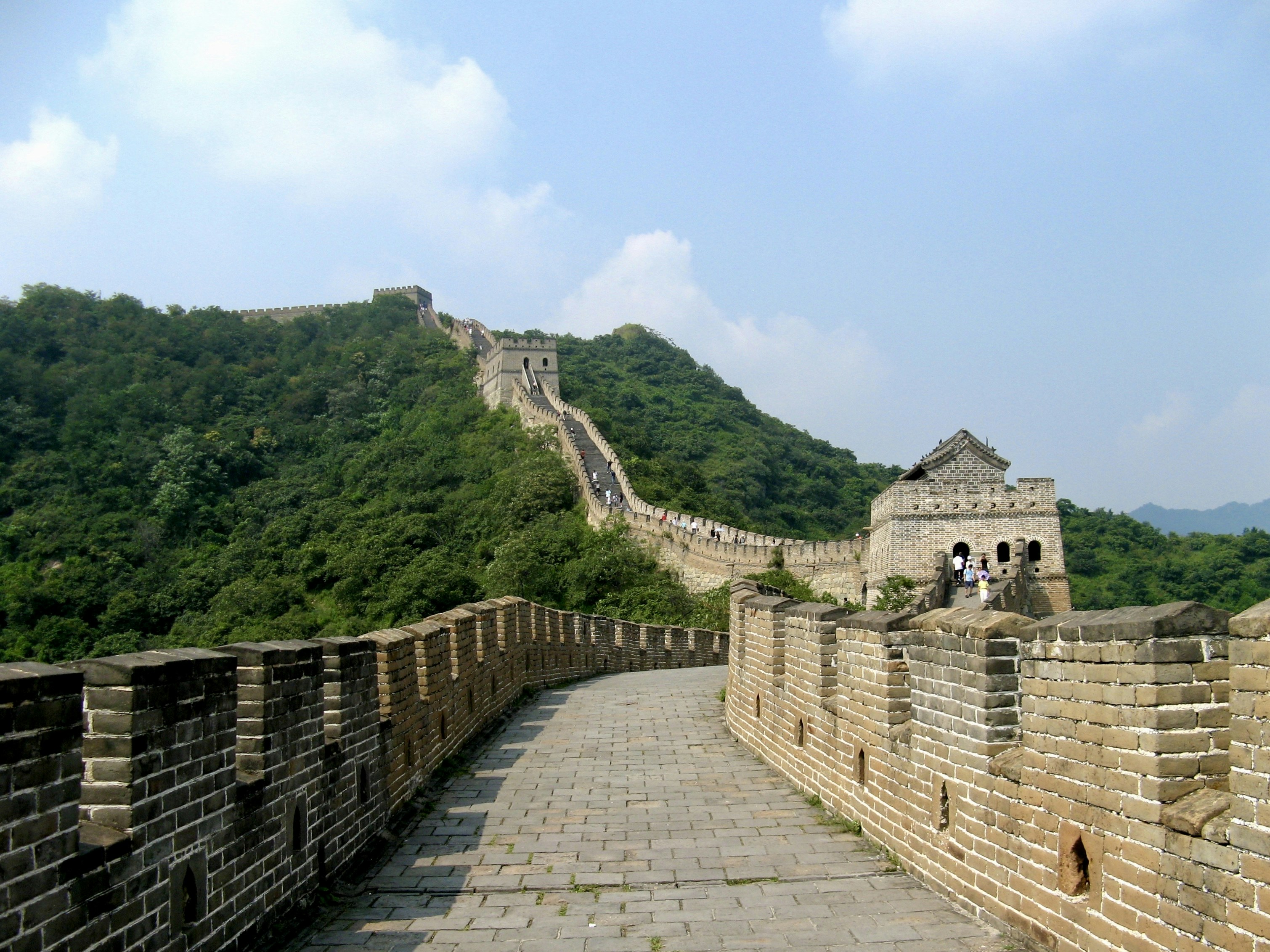
- Big‑ticket attractions (e.g., sections of the Great Wall with cable cars, acrobat shows, panda volunteer programs) can add ¥150–500 ($20–70) per experience.
- Visas for many nationalities, which might cost $100–150 depending on where you apply.
- Travel insurance and any required health checks or permits.
This is where the Hello app’s budget tracking and expense splitting features are handy: you can import bank statements, track expenses in multiple currencies, and split shared items (like train tickets and hotel rooms) with friends using automatic exchange rates. Decide on a daily cap — for example ¥600/day (~$85) for a budget couple — then use Hello to see in real time whether your spending matches your plan.
Common Questions: How Much Does a Trip to China Cost?
Most travellers ask variations of the same question: expect to spend around $40–60 per day in China on a budget, $90–150 per day mid-range, and $200–400+ for luxury, with some regional variation between big cities and smaller towns.
Q: Is China cheaper than other popular destinations like Japan or Thailand?
China is generally cheaper than Japan for daily expenses and roughly comparable to mid‑range travel in Thailand’s big cities. Recent data shows average China daily costs of $80–120 for comfortable mid‑range travel, while Japan’s mid‑range often lands higher, especially in Tokyo and Kyoto. Thailand can be cheaper for backpackers, but high‑speed rail and modern infrastructure in China offset that value with convenience.
Q: What’s a realistic daily budget for backpacking China in 2026?
Most backpackers report spending $35–55 per day, sticking to hostel dorms (¥80–150 per night), street food (¥15–40 per meal), and public transport like metros and regular trains. Careful spending in smaller cities can push this closer to the $30–40 range.
Q: How much should I budget for a 2‑week China trip?
If you target $50/day as a backpacker, two weeks will cost around $700 plus flights. At $110/day for mid‑range, you’re looking at about $1,500–1,600. Luxury trips with top hotels and private guides easily reach $4,000+ over 14 days.
Q: How can I keep my China daily expenses under control?
Stay in mid‑range local hotels rather than international chains, use metros and high‑speed trains instead of flights where possible, eat at local restaurants, and track everything in the Hello app, using receipt scanning and multi‑currency budgets to avoid overspending.
Explore These Destinations
Stay Connected
Book this trip
Compare options on trusted travel sites
Plan flights for this trip
Continue to a reviewed booking partner to check current routes, fares, and terms.

Plan stays for this trip
Continue to a reviewed booking partner to check current property details and terms.
Track your China trip budget
Split expenses with friends, track spending by category, and see real-time currency conversions — all in one app.
Related Articles
China Currency & Money Guide: Exchange, Cards, and Tips
Currency exchange, credit card acceptance, ATM tips, tipping culture, and money-saving advice for China.
25 July 2026
China Safety Guide: Tips for a Safe Trip
Safety tips, health advisories, emergency contacts, common scams, and travel insurance advice for China.
16 July 2026
China Visa & Entry Requirements for Singapore Passport Holders
Visa requirements, passport validity, customs allowances, and entry tips for Singapore citizens travelling to China.
7 July 2026