Angola Cultural Guide: Etiquette, Customs, and Tips
Essential do's and don'ts, greeting customs, dress codes, local phrases, and cultural tips for Angola.
By Hello Travel Team
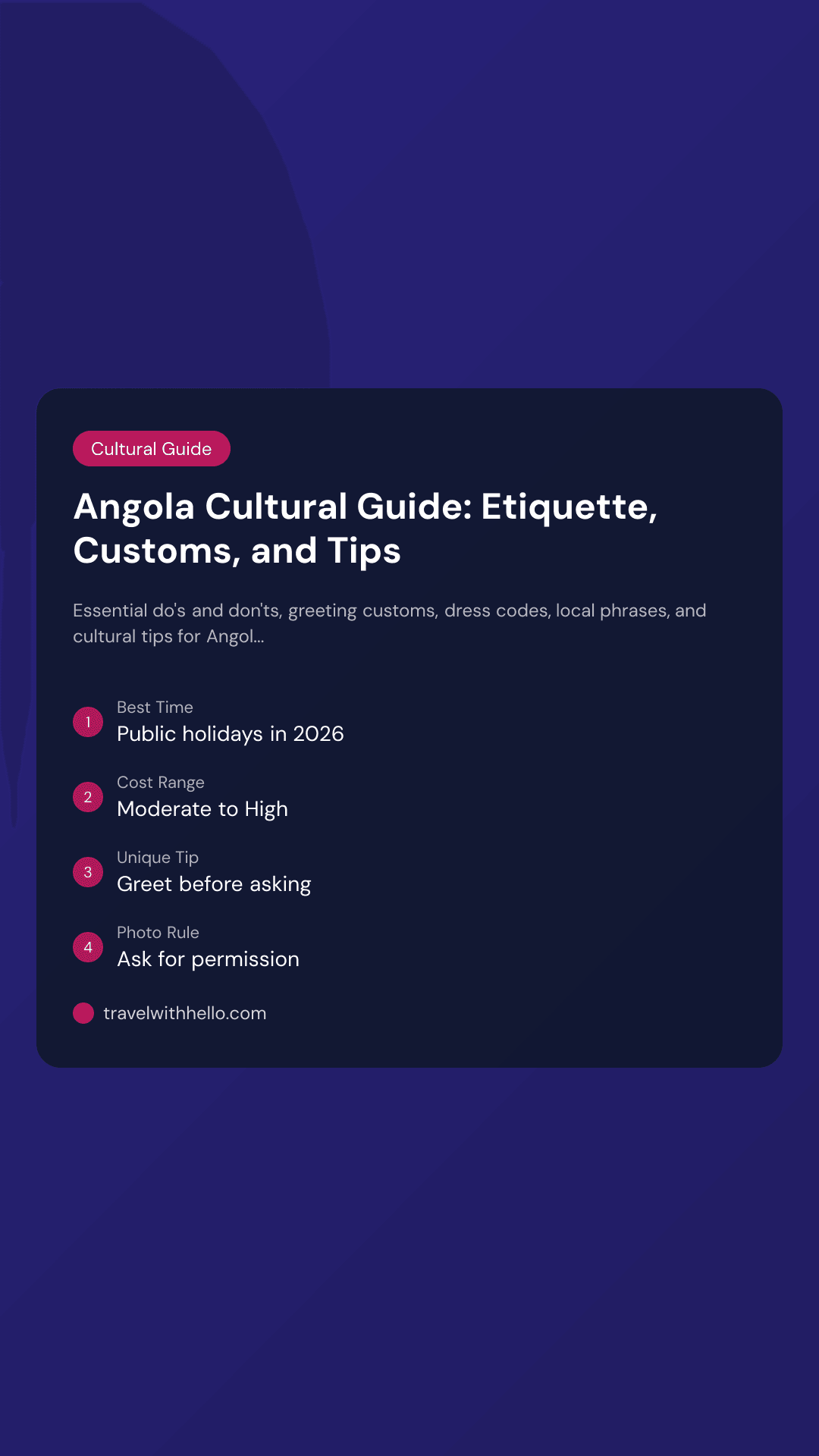
TL;DR: Angola Culture and Etiquette at a Glance
Angola rewards travellers who lead with courtesy: greet people before asking questions, use Portuguese where possible, show extra respect to elders, and request permission before taking photographs. Angola culture combines Portuguese influences with diverse regional traditions, so avoid assuming that one custom represents the entire country. In 2026, plan around public holidays such as Carnival on February 17, National Hero Day on September 17, and Independence Day on November 11, when transport, offices, and attractions may operate differently. Useful Angola dos and donts include dressing neatly, accepting offered refreshments graciously, avoiding sensitive photography, and keeping conversations about politics and recent history tactful. Luanda is cosmopolitan, while smaller communities may follow more formal social conventions. An eSIM from Hello for Angola can help with translation, maps, ride coordination, and checking opening hours after arrival.
Angola Greetings, Portuguese Phrases, and Everyday Customs
The safest greeting in Angola is a warm verbal acknowledgement followed by a handshake, with more familiar social contacts sometimes exchanging cheek kisses; allow the other person to set the level of familiarity. Portuguese is the official language, and even a few phrases can make interactions smoother. Say bom dia for good morning, boa tarde for good afternoon, boa noite for good evening or night, por favor for please, obrigado if you are male or obrigada if you are female, and desculpe for excuse me or sorry. “Olá, tudo bem?” means “Hello, how are you?” When meeting an older person or someone senior, use a formal tone and avoid rushing into first-name familiarity. Greeting everyone present is polite at a small gathering, especially in a home or business setting. If offered coffee, water, or food, accept when practical or decline gently with thanks rather than ignoring the offer. Use your right hand for handshakes and exchanges, and avoid pointing directly at people. These simple habits demonstrate respect more effectively than trying to imitate customs you do not fully understand.
Angola Dos and Don’ts: Dress, Hospitality, and Respect
Dress neatly and modestly in Angola, especially when visiting churches, memorials, rural communities, or family homes; lightweight clothing is practical, but beachwear belongs at the beach. In Luanda, smart-casual clothing is generally suitable for restaurants and museums, while business settings often call for polished trousers, a shirt, dress, or equivalent professional attire. Cover shoulders and knees when entering religious or culturally significant places, and carry a light scarf or overshirt for flexibility. Hospitality is important, so show appreciation when a host offers refreshments, but do not assume every invitation has the same meaning or level of formality. Ask before touching personal belongings, entering private areas, or joining ceremonies. Avoid loud public arguments, mocking accents or clothing, and treating poverty or traditional practices as tourist entertainment. Do not presume that all Angolans share the same customs: traditions vary across provinces, languages, faiths, and urban and rural settings. For a practical overview, remember these Angola dos and don’ts: greet first, ask permission, dress appropriately, keep promises, and remain patient when plans change.
Photography Rules and Cultural Sensitivity in Angola
Ask permission before photographing people, and never assume that a public location is automatically safe or legal to photograph. Travellers should avoid photographing airports, government buildings, military personnel, police activity, ports, bridges, major roads, communications installations, and other infrastructure; official travel advice warns that restrictions can extend to historic or abandoned stations and other seemingly ordinary sites. Drones, binoculars, maps, and GPS equipment may also attract scrutiny near protected infrastructure. A polite “Posso tirar uma fotografia?”—may I take a photograph?—is useful, but consent should be clear and enthusiastic. If someone declines, lower the camera immediately and thank them. At markets, festivals, churches, and ceremonies, ask an organiser or local companion first, since permission from one person may not cover everyone present. Avoid photographing children without a parent or guardian’s permission. Keep identification documents and equipment secure, and do not argue with officials about a restriction. Angola’s landscapes and cultural events can be visually striking, but respectful observation matters more than obtaining a particular image.
Business Etiquette, Gifts, and Handling Money in Angola
Successful business interactions in Angola depend on relationship-building, patience, and visible respect for seniority rather than rushing straight to the transaction. Begin meetings with greetings and brief conversation before discussing prices, contracts, or deadlines. Arrive on time, while allowing room for schedules to move more slowly than expected, and confirm appointments in advance. Dress professionally and exchange business cards with the text facing the recipient. Address senior people formally until invited to use first names, maintain attentive eye contact, and avoid interrupting. Portuguese is valuable in formal settings, although international companies may also use English. A small, tasteful gift can be appropriate after a successful meeting or when visiting a home; good options include quality chocolates, coffee, tea, or a modest item representing your region. Avoid expensive presents that could create discomfort or appear transactional. Give and receive gifts graciously, and do not expect them to be opened immediately. For budgeting, retain receipts and track kwanza, card, and cash spending separately. Hello’s app can scan receipts in different languages and currencies, split shared costs, import bank statements, and apply automatic exchange-rate conversions—useful when several travellers are paying for meals, taxis, or guides.
Angola Public Holidays and Travel Planning for 2026
Check Angola’s public-holiday calendar before booking domestic transport or scheduling government, banking, and business appointments, because closures and heavier local travel can affect plans. Key 2026 dates include New Year’s Day on January 1, Liberation Movement Day on February 4, Carnival on February 17, International Women’s Day on March 8, Southern Africa Liberation Day on March 23, Good Friday on April 3, Peace and National Reconciliation Day on April 4, Labour Day on May 1, National Hero Day on September 17, All Souls’ Day on November 2, Independence Day on November 11, and Christmas Day on December 25. Some holidays have observed days off when they fall on weekends; verify dates close to departure because official calendars can change. Carnival may bring celebrations and altered opening hours, while Independence Day can increase public events, security controls, and demand for accommodation. Book intercity transport early around major holidays, keep flexible arrival buffers, and confirm attraction hours locally. A connected phone helps with Portuguese announcements, map updates, and contacting hotels. Hello eSIM for Angola offers an option to arrange mobile data before departure, so travellers can arrive ready to check schedules and coordinate changes.
Common Questions About Angola Etiquette
Most etiquette questions have a simple answer: be courteous, ask before acting, and follow the lead of local people when a situation is unfamiliar. What should visitors say when greeting someone? Use bom dia, boa tarde, or boa noite, then offer a handshake; allow friends or hosts to initiate cheek kisses. Is Portuguese necessary? No, but Portuguese phrases such as por favor and obrigado or obrigada are appreciated and useful outside tourist-facing businesses. Can visitors photograph people? Only after receiving permission, and never photograph restricted infrastructure or security personnel. What should tourists wear? Choose clean, modest clothing; cover shoulders and knees at religious sites and dress more formally for business meetings. Should visitors tip? Tipping practices vary by venue and service, so ask discreetly or follow the establishment’s guidance rather than assuming a fixed percentage. Are gifts expected? No, but a modest item such as coffee, tea, or chocolates is suitable when visiting a home. What is the biggest cultural mistake to avoid? Do not reduce Angola to stereotypes or treat communities, ceremonies, or hardship as photo opportunities. Patience, consent, and respectful curiosity are the most reliable guides to Angola customs.
Explore These Destinations
Stay Connected
Make the most of Angola
From eSIM connectivity to expense tracking, Hello is the all-in-one companion that keeps your trip stress-free.
Related Articles
Getting Around Angola: Transport Guide for Travellers
Airport transfers, public transport, ride-hailing apps, inter-city travel, and driving tips for Angola.
4 November 2026
Angola Food Guide: Must-Try Dishes, Prices, and Tips
Best local dishes, street food, restaurant prices, dietary options, and food safety tips for Angola.
4 November 2026
Angola in 5 Days: The Perfect Extended Itinerary
A detailed 5-day itinerary for Angola with daily activities, costs, neighborhoods, and transport tips for an extended stay.
3 November 2026